


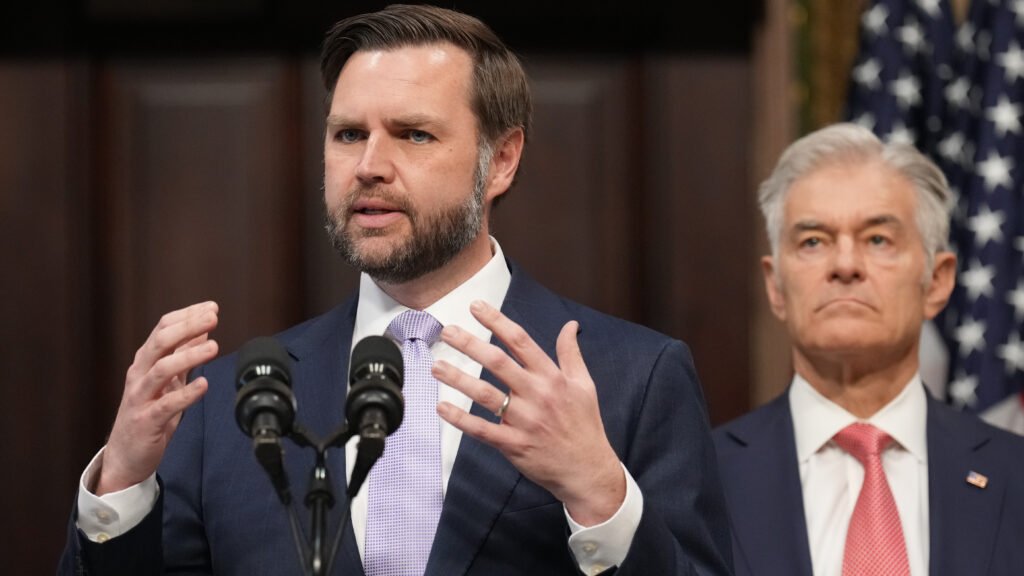
WASHINGTON – Vice President J.D. Vance on Wednesday announced new steps in the Trump administration’s effort to root out fraud in federal health care programs, including deferring $1.3 billion in Medicaid reimbursements to California.
“These fraudulent health care providers are getting rich by giving people drugs they don’t need,” Vance said at a White House event, adding that taxpayers and program beneficiaries are falling victim to these scams.

Medicare suspends enrollment of new hospice and home health care providers
The Republican administration has also imposed a six-month freeze on some new Medicare enrollments and warned states that they risk losing funding if they don’t investigate Medicaid fraud, officials said.
The move is part of Vance’s anti-fraud task force, which is accelerating messaging ahead of the November election. The commission, set up by President Donald Trump, aims to crack down on possible misuse of public funds.
Mr. Vance, who could be considered for the White House in 2028, used his high-profile assignment from President Trump to remind Americans struggling with high costs that Mr. Trump is trying to get taxpayer dollars back. Mr. Vance, who has been promoting the task force’s efforts during the campaign suspension for Republican candidates, is expected to focus on Thursday’s efforts in Maine, where he has been closely watching the primary election scheduled for June 9.
The action comes as people across the country express concerns about rising health care costs and barriers to access, in some cases due to the federal government’s own actions. For example, new work requirements in Medicaid are expected to strain hospitals across the country and result in millions of enrollees losing their health insurance.
The government claims its vigorous anti-fraud efforts will help prevent fraud in Medicaid and Medicare while preserving funding and resources for those most in need.
California defers $1.3 billion in payments


STAT Plus: The Trump administration said home care fraud is “rampant.” What does the data show?
Dr. Mehmet Oz, who heads the Centers for Medicare and Medicaid Services, said the administration is making the “largest deferral of Medicaid funds ever” and that it is justified.
“We want the state to at least come to the table and explain how these unusual payments came about,” he said.
The total cost of California’s Medicaid program, including state and federal funding, is expected to be about $222 billion in the budget year that begins July 1.
California Democratic Gov. Gavin Newsom’s office and the state Department of Treasury did not immediately respond to calls and emails regarding the announcement.
Nationwide freeze on new enrollments for some Medicare providers
Oz’s agency also announced a six-month pause nationwide on all new Medicare enrollments by hospice and home care providers.

People with disabilities feel singled out as Trump administration cracks down on health care fraud
“Today, we are closing the door on fraud. We will prevent new bad actors from entering Medicare, while aggressively identifying, investigating, and eliminating those who are already abusing it,” he said in a statement.
Existing hospice and home health care providers will continue to operate as usual. But CMS said it would “intensify targeted investigations, deploy advanced data analytics, and accelerate removal” of providers in categories suspected of fraudulent activity.
Tricia Newman, senior vice president and executive director of Medicare policy programs at the health care research nonprofit KFF, said such a freeze is not unprecedented. She said President Bill Clinton’s Democratic administration also imposed a moratorium on home health agencies.
“The short-term moratorium will give the government time to crack down on real fraud and prevent new fraud groups from emerging,” she said.
There have been several prosecutions for alleged fraud schemes in the hospice and home health care sector, and states have acknowledged that is a legitimate concern. But some people have pushed back against the administration’s aggressive tactics, raising concerns that the sweeping approach could unnecessarily punish law-abiding health care providers trying to serve patients.
Also Wednesday, the Department of Health and Human Services’ internal watchdog agency sent a letter to state attorneys general warning that they risk losing federal funding if they don’t vigorously investigate possible fraud.
The move is part of a months-long push by the federal government
In recent months, CMS has suspended payments to hundreds of hospice and home care agencies in Los Angeles over alleged fraud and ordered suppliers of durable medical equipment, prosthetics, orthotics and certain other Medicare supplies to suspend payments for an additional six months.
The administration also approached at least five states for investigations into possible health care fraud and suspended about $243 million in Medicaid payments to Minnesota, citing fraud concerns. Last month, Mr. Oz announced that CMS would increase its oversight and require all 50 states to share how they plan to reauthorize some Medicaid providers.
In at least one case, the administration erred in its accusations against the state. In April, CMS admitted to The Associated Press that there were significant errors in the numbers it used to justify its fraud investigation in New York. This realization deepened suspicions about the administration’s methods and prompted a common criticism that has been made of the second Trump administration: its tendency to attack first and fact-check later.
— Ali Swenson and Michelle L. Price
Swenson reported from New York. Associated Press writers Jeff Mulvihill in Haddonfield, New Jersey, Patrick Whittle and Joey Cappelletti in Portland, Maine, contributed to this report.
