


NEW YORK — About 70,000 Americans died from drug overdoses last year, down about 14% from the year before, according to preliminary government data.
It was the third straight year of declines and the longest decline in decades, according to federal statistics released Wednesday. The 2025 total is about the same as the 2019 total before the COVID-19 pandemic.
Reductions were seen for many types of drugs, including fentanyl, cocaine, and methamphetamine. Preliminary data from the Centers for Disease Control and Prevention shows that overdose deaths declined in a majority of states, but seven saw at least a slight increase, including increases of more than 10% in Arizona, Colorado and New Mexico.
“I’m cautiously optimistic that this represents a really fundamental change in the arc of the overdose crisis,” said Brandon Marshall, a Brown University researcher who studies overdose trends.
But the number of Americans dying from overdoses remains high, and the rate of decline in deaths has slowed in the last year. Marshall and other researchers say a variety of factors could cause deaths to rise again, including changes in government policy and changes in drug supplies.

Trump administration’s drug strategy contradicts recent actions on funding and policy
“The rapid decline in deaths means that deaths could rise just as rapidly if we let off the gas,” Marshall said.
Overdoses on the rise at the height of the pandemic
Overdose deaths in the United States, which have generally been on the rise for decades, rose sharply during the pandemic, peaking at nearly 110,000 in 2022. The pandemic surge was associated with social isolation and difficulty accessing addiction treatment.
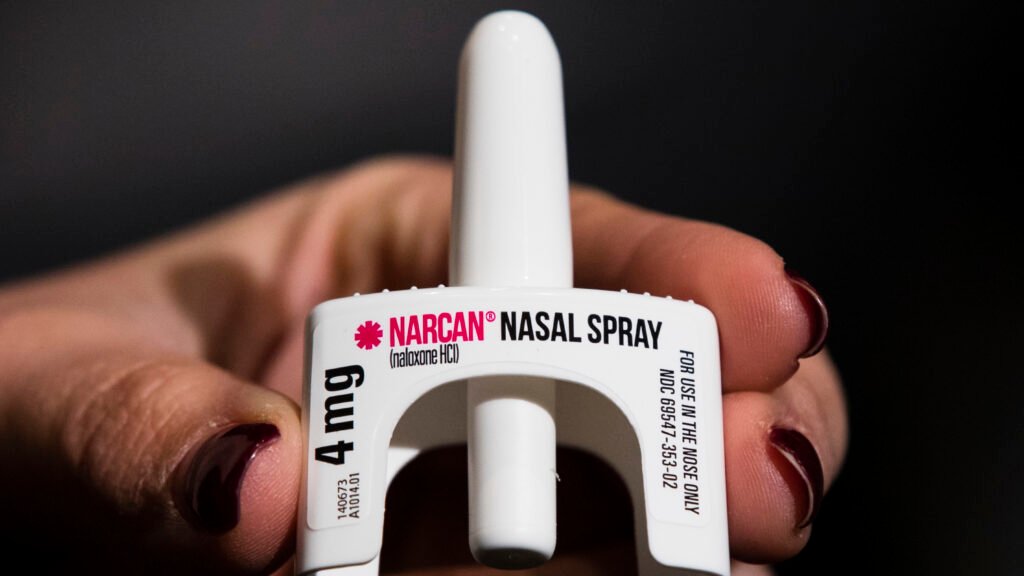
The number of deaths decreased as the pandemic subsided. Researchers point to a number of possible factors, including increased availability of the overdose-reversing drug naloxone, expanded addiction treatment, changes in the way people use drugs, and the growing impact of billions of dollars in opioid lawsuit settlements.
Some studies also suggest that the number of people who might overdose is decreasing because fewer teens are taking drugs and more illegal drug users have died. Another theory suggests that regulatory changes in China several years ago appear to have reduced the availability of precursor chemicals used to make fentanyl.
The country’s decades-long overdose epidemic has unfolded at different paces in different parts of the country, at least in part because of differences in the supply of illegal drugs and what people are using. Marshall speculated that the increase in deaths last year in Arizona, Colorado and New Mexico may be due to recent increases in the use of fentanyl and methamphetamine in those areas.
New substances are entering the U.S. drug supply
Health officials and law enforcement officials have been sounding the alarm in recent months about a new class of drugs that will increasingly be detected in 2025.

Trump administration warns against using federal funds for fentanyl test strips
Alex Klotulski is director of the Center for Forensic Research and Education, a federally funded toxicology laboratory in Horsham, Pennsylvania. The laboratory is an important part of the national illegal drug early warning system.
In all last year, the lab identified 27 new drugs. With less than five months to go until 2026, the institute has already identified 23 people, he said.
Among the lab’s hot drugs is cyclofin, a powerful synthetic opioid said to be up to 10 times more potent than fentanyl. Experts say it is being used as a cutting agent in addition to other illegal drugs, without the knowledge of the purchaser.
“The supply of medicines continues to change and evolve,” Klotulski said.
Trump administration cuts some programs
Meanwhile, the Trump administration has cut programs aimed at reducing overdose deaths and infections related to drug use. The federal Substance Abuse and Mental Health Services Administration told federal grant recipients in a letter last month that the government will no longer pay for test strips and kits that help drug users find out whether their drugs contain deadly additives.
Officials say they are moving away from services that facilitate illegal drug use, such as clean syringes and hotlines people can dial while using drugs.
Last week, a group of women who lost children to overdose spoke to reporters to protest government policies that emphasize punishment and imprisonment.
Kimberly Douglas founded an organization called Black Mamas Against Overdose after the death of her 17-year-old son.
“Overdoses are starting to decline in some areas, and that’s because of harm reduction services like the ones targeted by the Trump administration,” she said.
— Mike Stobbe
