


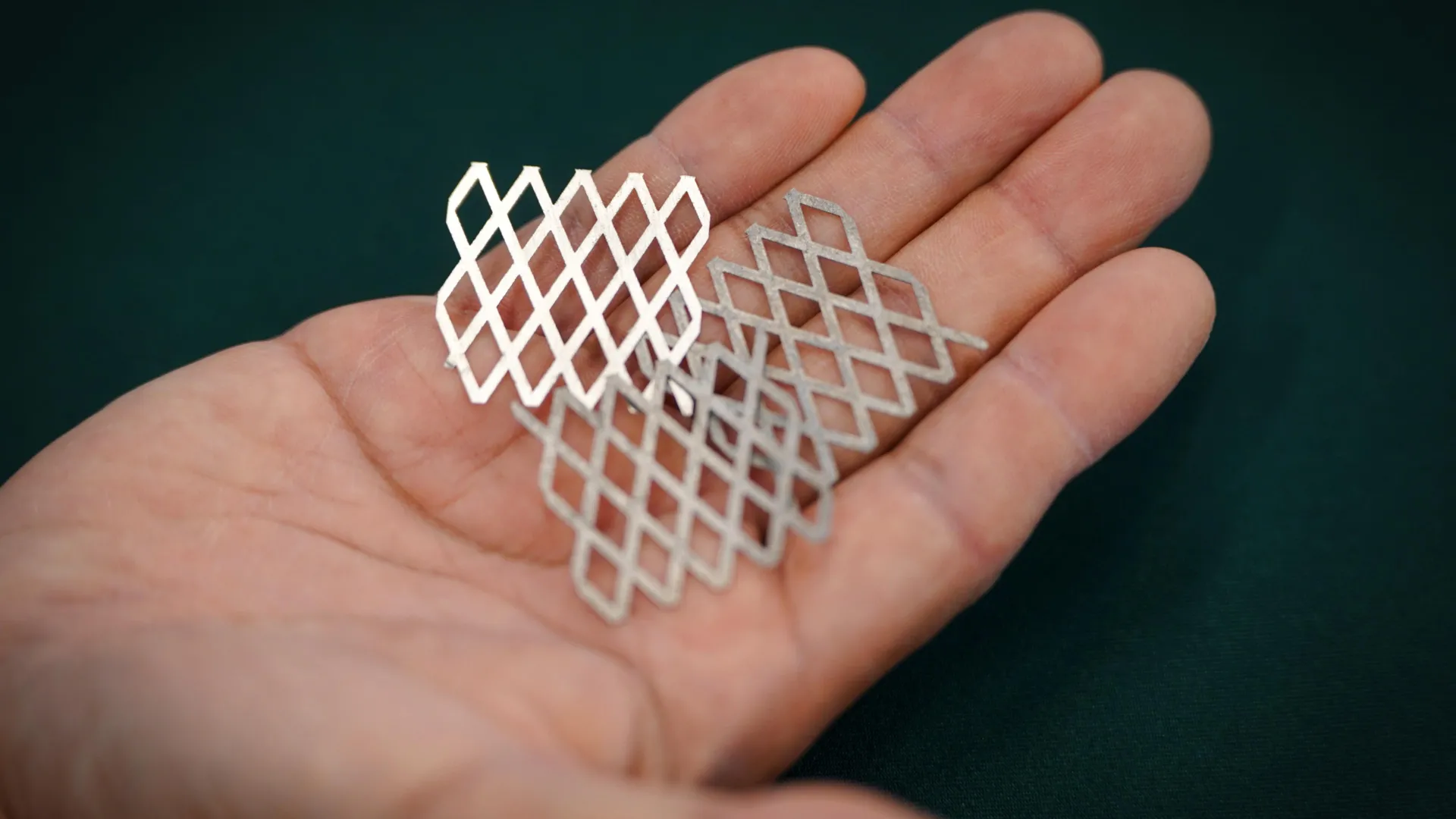
A breakthrough in stainless steel from the University of Hong Kong (HKU) could help solve one of the biggest problems facing green hydrogen: how to build electrolysers that are tough enough to withstand seawater but cheap enough for large-scale clean energy.
A team led by Professor Ming-Hsin Huang from the University of Hong Kong’s School of Mechanical Engineering has developed a special stainless steel (SS-H2) for hydrogen production. The material is corrosion resistant under conditions that would normally exceed the limits of stainless steel, making it a promising candidate for producing hydrogen from seawater and other harsh electrolyser environments.
This discovery is today’s material The study, “Sequential double passivation strategy for designing stainless steels for use above hydroxide,” builds on Huang’s long-running “Super Steel” project. The same research program previously produced COVID-19 stainless steel in 2021 and ultra-strong and ultra-tough supersteel in 2017 and 2020.
A cheaper path to green hydrogen
Green hydrogen is produced by splitting water into hydrogen and oxygen using electricity, ideally from renewable sources. Seawater is a particularly attractive raw material due to its abundance, but it poses serious material problems as salts, chloride ions, side reactions, and corrosion can rapidly damage electrolyzer components.
Recent reviews on direct seawater electrolysis continue to highlight the same core challenges. Although this technology has the potential to provide a more sustainable route to hydrogen, corrosion, chlorine-related side reactions, catalyst degradation, precipitation, and limited long-term durability remain major obstacles to commercial use.
That’s where SS-H2 could become important. The HKU team found that in brine electrolyzers, this new steel can perform as well as titanium-based structural materials used in current industrial settings for hydrogen production from desalinated seawater or acids. The difference is cost. Titanium parts coated with precious metals such as gold or platinum are expensive, while stainless steel is much more economical.
For a 10 MW PEM electrolysis tank system, the total cost is estimated at approximately HK$17.8 million at the time of the HKU report, with structural components accounting for 53% of that cost. According to the research team’s calculations, replacing these expensive structural materials with SS-H2 could potentially reduce structural material costs by approximately 1/40.
Why is regular stainless steel no good?
Stainless steel has been used in corrosive environments for over a century to protect itself. The main component is chromium. When chromium (Cr) oxidizes, it forms a thin passive film that protects the steel from damage.
But its familiar protection system incorporates a ceiling. In traditional stainless steel, the chromium-based protective layer can be destroyed at high potentials. The stable Cr2O3 is further oxidized to soluble Cr(VI) species, which can cause permeable passive corrosion at about 1000 mV (saturated calomel electrode, SCE). This is significantly lower than the approximately 1600 mV required for water oxidation.
Even 254SMO Super Stainless Steel, the benchmark chromium-based alloy known for its strong pitting corrosion resistance in seawater, reaches this high voltage limit. While it may work well in normal marine environments, the extreme electrochemical environment of hydrogen production presents other challenges.
Steel for building a second shield
The HKU team’s answer was a strategy called “sequential dual passivation.” Instead of relying solely on the usual chromium oxide barrier, SS-H2 forms a second protective layer.
The first layer is the familiar Cr2O3-based passive film. Then, at approximately 720 mV, a manganese-based layer is formed on top of the chromium-based layer. This second shield helps protect the steel in chloride-containing environments that reach ultra-high potentials up to 1700 mV.
That’s why this discovery is so impressive. Manganese is not usually considered a corrosion-resistant friend of stainless steel. In fact, the idea that manganese weakens it is common.
“Initially, we did not believe that, as the general consensus is that manganese impairs the corrosion resistance of stainless steel. Manganese-based passivation is a counterintuitive finding and cannot be explained with current knowledge of corrosion science. , we were convinced when the large number of atomic-level results were presented. We were more than amazed and can’t wait to take advantage of the mechanism,” said lead author of the paper, Dr. Kaiping Yu, who is also supervising the Ph.D. Mr. Huang.
6 years of work from surprise to application
The journey from initial observations to publication was not a quick one. The research team spent almost six years moving from the initial discovery of this unusual stainless steel to a deeper scientific description and possible publication and industrial use.
“Unlike the current corrosion community, which is primarily focused on resistance at natural potentials, we specialize in developing high potential resistant alloys. Our strategy overcomes the fundamental limitations of traditional stainless steels and establishes a paradigm for alloy development applicable at high potentials. This breakthrough is exciting and opens up new applications,” said Professor Huang.
Research goes beyond the lab. The research results have been patented in multiple countries, and two patents have already been granted at the time of HKU’s announcement. The team also reported that large quantities of SS-H2-based wire were produced in factories in mainland China.
“From experimental materials for water electrolyzers to actual products such as mesh and foam, difficult challenges still lie ahead. Now, we have taken a major step towards industrialization. Tons of SS-H2-based wire are being produced in cooperation with factories in mainland China. We are advancing more economical applications of SS-H2 in hydrogen production from renewable sources,” added Professor Huang.
Why timing still matters
Although the SS-H2 study was published in 2023, its core questions are only becoming more relevant. New seawater electrolysis research continues to focus on the same bottlenecks: corrosion-resistant materials, long-lasting electrodes, chlorine suppression, and system designs that can withstand real seawater rather than ideal laboratory solutions. 2025 Nature review materials The review states that direct electrolysis of seawater is promising, but corrosion, side reactions, metal deposits, and lifetime limitations still hold back realization.
Other recent research has investigated stainless steel-based electrodes with protective catalyst layers, such as NiFe-based coatings and Pt atomic clusters, to improve their durability in natural seawater. The researchers also reported a corrosion-resistant anode strategy built on stainless steel substrates, indicating that stainless steel remains a key focus in efforts to make seawater electrolysis more practical.
This new study does not replace the discovery of SS-H2. Rather, it highlights why the HKU team’s approach is important. The field is still looking for materials that can withstand the harsh conditions of a mix of saltwater chemistry, high voltage, and industrial operating demands. SS-H2 stands out because it addresses the problem with a new alloy design strategy that changes the way stainless steel itself is protected, not just coatings and catalysts.
Breakthrough in steel with potential for clean energy
SS-H2 is not yet a plug-and-play solution for the hydrogen economy. The research team acknowledges that turning experimental materials into actual electrolyser products, such as mesh or foam, still requires difficult engineering work.
Still, the promise is clear. Stainless steel, which can withstand high-voltage seawater conditions while replacing expensive titanium-based components, could make hydrogen production cheaper, more scalable, and easier to combine with renewable energy.
For a field where cost and durability often determine whether technology can make it out of the lab, the steel that builds its own second shield may be more than a materials science surprise. This could be a practical step towards cleaner hydrogen on an industrial scale.
