


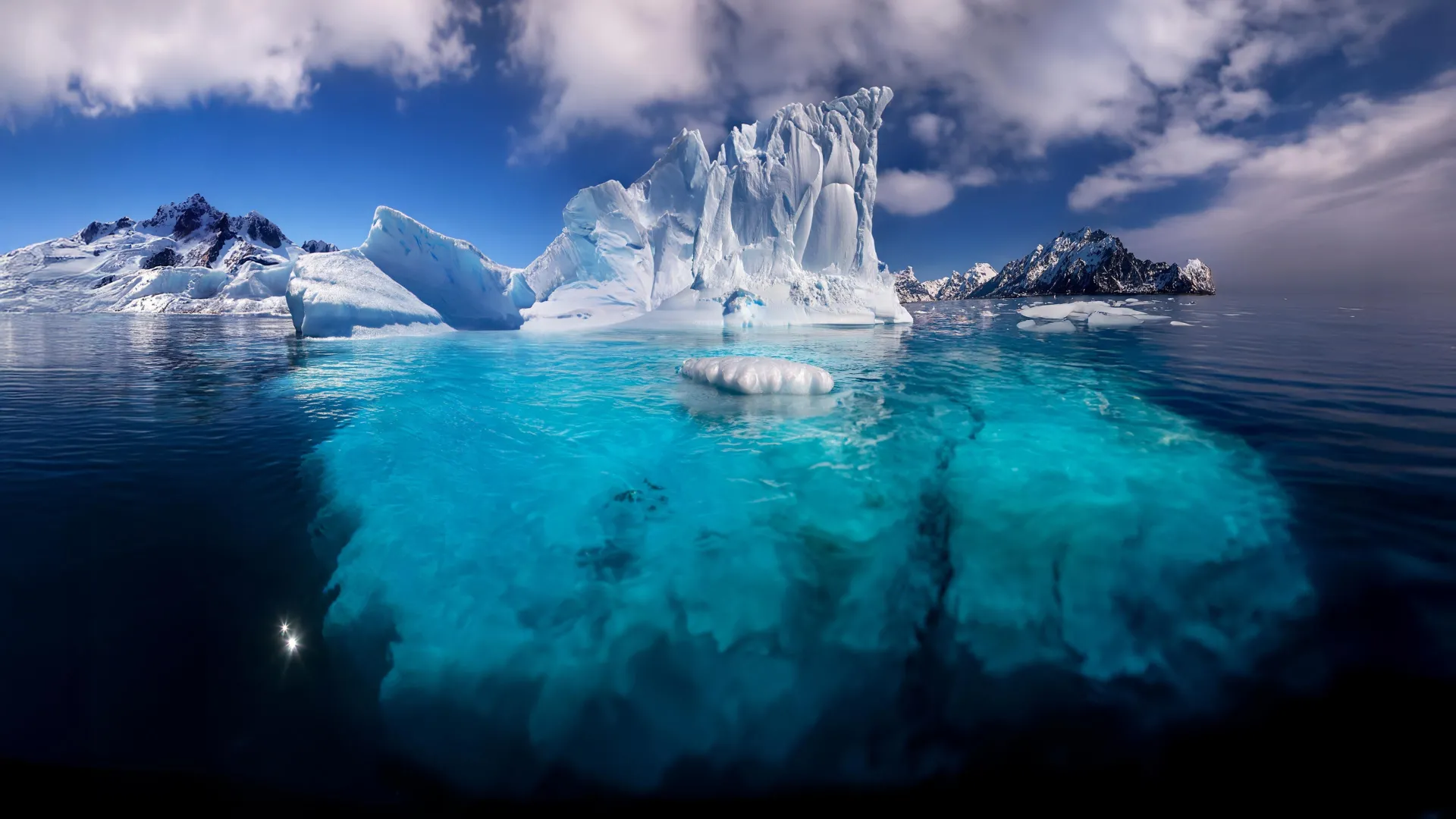
A new study suggests that global sea levels could be rising faster than scientists previously expected, as Antarctic ice shelves may be melting from below at a much faster rate than once believed.
Ice shelves are giant floating extensions of glaciers that help slow the movement of vast amounts of ice into the ocean. Norwegian scientists have identified a process that may be accelerating its deterioration. Long channels carved into the underside of these ice shelves can trap relatively warm ocean water and accelerate melting in certain areas, according to the study.
The discovery is causing concern far beyond Antarctica. As ice shelves become thinner and weaker, they lose some of their ability to hold back the glaciers behind them. This could cause more land ice to slide into the ocean, accelerating global sea level rise.
Researchers say this type of instability has already been seen in other parts of Antarctica. The Intergovernmental Panel on Climate Change (IPCC) previously identified weakening polar ice shelves as a major uncertainty in sea level projections and a potentially serious climate risk.
Waterways hidden under Antarctic ice
The study focused on the Fimbrizen Ice Shelf in East Antarctica. Scientists have discovered that the shape of an ice shelf’s underside has a significant impact on the circulation of ocean water beneath it.
When deep channels exist beneath the ice, ocean currents can form small circulation patterns that keep warm water trapped in the ice rather than moving away quickly. This concentrated warmth dramatically increases melting in the area.
The researchers found that melting within these channels could increase by about an order of magnitude in some areas. In other words, the ice shelf structure itself helps determine where heat collects and how much damage that heat causes.
“We found that the shape of the ice shelf’s underside is not just a passive feature; it can actively trap ocean heat precisely where excess melt is most important,” explains lead author Tore Hattermann from the iC3 Polar Research Hub in Tromsø, Norway.
The Fimbrisen Ice Shelf is located in East Antarctica, a colder region that is generally considered to be less vulnerable than other parts of the continent.
“We observed that below the Fimbrisen Ice Shelf, even a small amount of warm water can significantly increase the melt in the channel,” says Tore Hattermann. “The result could be widening of the channel and, in the worst case scenario, weakening the stability of the entire ice shelf.”
Chin Zhou, co-lead of the study, added: “What’s surprising is that even a small influx of warmer deep water can have a big impact when the base of an ice shelf moves. This means that parts of the ice shelf that scientists normally think of as cold may be more fragile than expected.”
How scientists studied ice shelves
To investigate this process, the team combined highly detailed maps of the underside of the Fimbrizen Ice Shelf with high-resolution computer models of the ocean cavities beneath.
The researchers tested both a smoother ice shelf base and a more realistic channel formation under cool and slightly warm ocean conditions. By comparing different scenarios, we were able to isolate the influence of waterways on ocean circulation, mixing, and melting.
The study also incorporates early field observations collected in the region. Researchers say a combination of long-term measurements and advanced modeling is essential to understanding the small-scale features hidden beneath Antarctic ice shelves. Hatterman himself has spent hundreds of days living and working on Antarctic ice shelves during research expeditions.
Why it’s important that Antarctic ice melts faster
Scientists have warned that intensified melting within waterways could create dangerous feedback effects. As channels deepen and widen, sections of the ice shelf may thin unevenly, reducing the structural stability of the entire shelf.
If an ice shelf weakens enough, it may no longer be able to effectively slow down glaciers flowing into the ocean behind it.
“Current climate models do not capture this effect,” Tore Hattermann warns. “This means that ‘cold’ ice shelves along the East Antarctic coastline are at risk of being underestimated in response to small changes and warming in coastal waters. Such changes have already been observed and are predicted to increase further in the future.”
Researchers say the discovery is important not only for improving climate and ice sheet models, but also for coastal planning and adaptation efforts around the world, which rely on accurate sea-level rise predictions. This change could also affect ocean circulation patterns and the marine ecosystem surrounding Antarctica, as meltwater flows into the Southern Ocean.
The study, “Channeled topography amplifies the melting susceptibility of Antarctic cold ice shelves,” was published in the journal Nature Communications.
The study was led by Tore Hattermann from the iC3 Polar Research Hub and Qin Zhou from Akvaplan-niva (co-first author). Both scientists are based in Tromsø in the Norwegian Arctic. Hatterman also serves as assistant leader of the iC3 research group, which focuses on developing new technologies for cryosphere science.
