


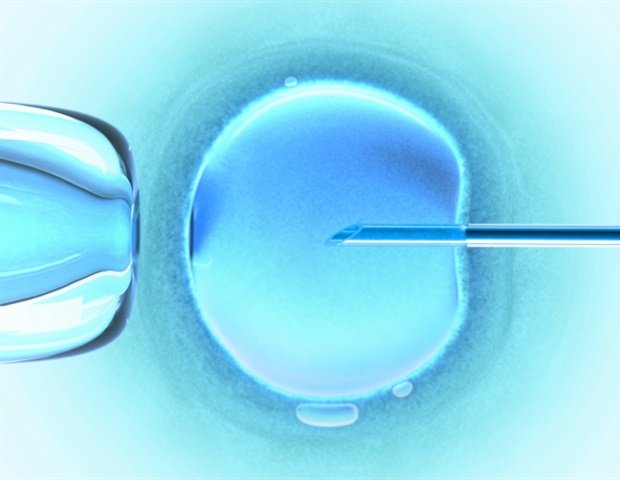
The causes of male infertility can be difficult to diagnose, and many tests cannot detect genetic abnormalities. In some cases, infertility may not be caused by the genes themselves. This can occur due to improper folding of the father’s DNA within the sperm. When a couple becomes pregnant, this incorrectly packaged DNA can compromise the child’s lifelong health.
Father’s health is very important for sperm quality and child’s health. Understanding DNA packing and folding in sperm cells is a fundamental problem in modern biology. ”
Tetsu Namekawa, Professor of Microbiology and Molecular Genetics, University of California, Davis
Mr. Namekawa and PhD student Yu-Han Yeh announced an important new piece of this puzzle. They identified a protein called DAXX that guides how sperm DNA is structured. DAXX silences thousands of genes so that they do not interfere with reproduction. It also keeps a small number of important genes turned on and shapes the delicate early stages of embryonic development. This work was recently published genes and development.
This discovery may shed light on the causes of male infertility. Treatment could improve for couples struggling to have children. And in the long term, it may also help biologists understand how paternal health and chemical exposure can negatively impact the health of future generations.
Sperm packs DNA to help them swim longer
The DNA in every human cell is wrapped in spools of thousands of proteins called histones. This helps control which genes are turned on or off.
Genes can be silenced by wrapping the DNA tightly around a particular histone, or they can be kept “on” by wrapping the DNA more loosely using another spool of histones, allowing the cell’s machinery to enter and read the gene. Biologists call this the “epigenetic” code. This is because this code is superimposed on the DNA without changing the genetic sequence.
By regulating genes, epigenetic states help determine whether cells grow into nerves, muscles, or other tissues. It is also important for reproduction.
“When a baby is conceived, the sperm and egg transmit not only the parents’ genes, but also their epigenetic status,” says Namekawa. Correct packaging of DNA is critical to raising healthy offspring.
Epigenetic patterns are already hardwired into immature, round sperm cells. The protein machine combs through the DNA and removes one histone spool, H3.4, and replaces it with an H3.3 histone spool. When the sperm cell then rectifies into the classic tadpole shape, 90 percent of the H3.3 histones are replaced by smaller spool proteins, further compacting the DNA.
Compacting large portions of DNA is important because it silences thousands of genes that can prevent sperm from fertilizing an egg cell. This occurs with all DNA-containing chromosomes, but especially with the X or Y chromosomes, which determine sex.
By the time a sperm is ready to swim, its DNA has only a few H3.3 histones located at strategic points left.
“They may bookmark the genes that are expressed first in the newly fertilized embryo,” Ye said, preparing the body and organs for development.
This process of replacing histones and bookmarking sperm DNA can easily go wrong, with potentially major consequences. “We’re trying to define the mechanisms of how these changes occur,” Namekawa said.
From mice to fertility clinics
Namekawa and Yeh now show that DAXX proteins play a key role in this packing process. When they deleted the DAXX gene in male mice, they found that fewer H3.3 histones were inserted into sperm DNA, which caused the mice to produce fewer sperm and those sperm to be poorly shaped.
When Ye took a closer look at the sperm’s DNA, she found that the sex chromosomes were not completely compacted as normal. Across the genome, more than 1,000 genes were abnormally activated and nearly 2,000 genes were abnormally turned off.
“So DAXX serves two roles,” Yeh said. “It silences many genes, including the sex chromosomes, and leaves others bookmarked and on.”
Yeh and Namekawa found that in the absence of DAXX, abnormal gene expression persists in the developing embryo after fertilization. This suggested that early development, important for forming body and organ patterns, could be disrupted in offspring. Consistent with that idea, the number of mouse pups born to DAXX-deficient males was small.
Understanding how DAXX shapes epigenetic inheritance may improve how we diagnose and treat male infertility. Men with low fertility may have abnormal histone patterns in their sperm DNA.
The new findings could also help scientists optimize in vitro fertilization methods that sometimes rely on immature sperm cells whose DNA is not fully bookmarked.
“If we can identify that this is a human fertility problem, then we can look for ways to solve it,” Namekawa says.
Health and obesity across generations
Although Namegawa and Ye specifically study sperm development, their work could help other scientists in the burgeoning field of “intergenerational health,” the study of obesity and other problems that are passed from parents to children.
Exposure to “endocrine disrupting” chemicals, such as the insecticide DDT and the antifungal drug vinclozolin, may play a role. This is because animals exposed to these chemicals have abnormalities in histone and gene regulation, resulting in decreased sperm production.
Their offspring then inherit these abnormal epigenetic conditions, which can subsequently develop obesity, kidney disease, infertility, and even be passed on to the next generation. Understanding the role of DAXX could give biologists a new focus for deciphering how paternal health affects epigenetic inheritance.
The research by Namekawa’s team was funded by the National Institutes of Health, the Taiwan Yen Chuan Fellowship, and the University of California, Davis Startup Fund.
Other authors of this paper include: Mengwen Hu (University of California, Davis and Guangdong Second Provincial Hospital of Jinan University, China); Brooke M. Alger, Shruti S. Nene, and Han Wang (University of California, Davis). Mr. Kai Otsuka and Mr. Hajime Maezawa (Tokyo University of Science)
sauce:
University of California, Davis
Reference magazines:
Yes, Y.-H., others. (2026). DAXX directs a dual mode of H3.4 to H3.3 histone replacement in the male germline. genes and development. DOI: 10.1101/gad.353435.125. https://genesdev.cshlp.org/content/early/2026/04/13/gad.353435.125.abstract
