


Listen to the audio version of this article (generated by AI).
Several of the largest lobbying firms in the United States that work on behalf of chemical industry interest groups fighting strict regulations for harmful “permanent chemicals” in drinking water also represent local governments tackling health and water quality issues caused by pollution, according to a new report.
The report, released Tuesday by F Minus, a nonprofit that tracks lobbyists, and Mothers Out Front, a child health and climate justice group, examines federal lobbying disclosure forms for 2024 and 2025 and examines the findings of four lobbying firms whose clients include the chemical industry. Holland & Knight, CGCN Group, Melman Consulting, and Marshall & Popp) also represent several medical organizations and nonprofit organizations that advocate on behalf of people dealing with cancer and other related health issues. Per- and polyfluoroalkyl substances, or PFAS. In addition to some cancers, PFAS have been linked to high cholesterol, reduced immune responses to vaccines, liver damage, thyroid problems, reproductive problems, and other health problems.
“We were surprised to see how successful some companies were at representing chemical interests while also representing local governments dealing with the effects of permanent chemicals in drinking water,” said James Browning, Founder and Executive Director of F-Minus.
“We were surprised to see how successful some companies were at representing chemical interests and local government at the same time.” – James Browning, F-minus
There is currently a patchwork of state regulations regarding PFAS in drinking water that can directly impact local governments and their water utilities. At the federal level, the U.S. Environmental Protection Agency (EPA) was proposed last month It repealed limits set during the Biden administration for four PFAS in drinking water, arguing the changes were hasty and did not comply with federal law. The American Chemistry Council (ACC), a multi-company client of the new report, was filing the lawsuit jointly with the National Association of Manufacturers. oppose the EPA Beyond regulations.
New Lede contacted all lobbying firms mentioned in the report, but none of the companies responded to requests for comment. However, F minus is A similar report was made in March. The report focused on PFAS lobbying conflicts of interest in six states, and in response to the report, Holland & Knight published The guardian The company said it followed “rigorous ethics and dispute review procedures” and said the report was based on the false premise that lobbying firms advocate on behalf of their clients on all policy issues.
But Browning and colleagues say these conflicts of interest show that major U.S. lobbyists are following the chemical industry’s strategy of opposing regulations to limit PFAS contamination, while also advocating for public funding to treat PFAS-contaminated water.
“Communities grappling with the economic and health impacts of PFAS face a sinister obstacle in their fight to regulate these chemicals: their own lobbyists who benefit from both sides in the fight against PFAS,” the report states.
The report alleges that Holland & Knight has the most egregious conflicts of interest with its clients. The firm represented The Chemours Company, Corteva Agriscience, and ACC, which has been the most vocal opponent of federal PFAS regulations.
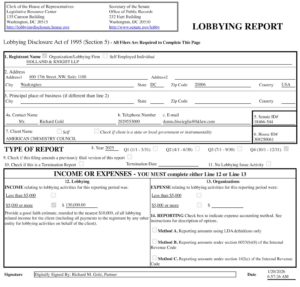 According to the report, Holland & Knight received $520,000 from the ACC to work on issues related to “plastic and polymer composite utility vehicle, lightweight plastic and polymer composite provisions.” Lobbying Disclosure. Chemours paid Holland & Knight $380,000 to address issues that included: Clean Air Act and PFAS water regulations.
Meanwhile, the firm also represents 34 municipalities, including three in Savannah, Georgia, on issues related to water infrastructure and cleanup. 65 Complaining about PFAS Manufacturer. Cincinnati, Ohio, has been dealing with high levels of damage. PFAS levels in water.
Other customers included 14 healthcare customers as well as health-focused nonprofit organizations such as the American Cancer Society Cancer Action Network and Black Women’s Health Imperative, which are working on PFAS-related cancers.
Holland & Knight weren’t alone. In 2024, lobbying firm Marshall & Popp lobbied 3M, one of the original PFAS manufacturers, on “issues related to EPA health advisory levels” for two notorious PFAS chemicals, PFOA and PFOS. In 2025, the company will provide biotechnology company Grail with the following: Early detection cancer screening bill.
Melman Consulting approached the ACC in 2025 on “issues of importance to the chemical industry involving perfluoroalkyl and polyfluoroalkyl substances.” That same year, the company also lobbied 24 healthcare clients.
Alcalde & Fay received $240,000 from the Sustainable PFAS Action Network, an industry group that has opposed federal and state bills aimed at regulating PFAS. He also represented several Florida municipalities, including Coral Springs, Palm Bay, and Fort Lauderdale, in improving water and wastewater treatment as part of addressing PFAS contamination. Similarly, Ballard Partners lobbied ACC and 3M in addition to local companies. Governments such as Winter Haven, Fla., and Martin County, Fla., are both facing rising costs for PFAS treatment. 2025.
Craig Holman, a government affairs lobbyist who focuses on ethics, lobbying and campaign finance rules for Public Citizen, said the report raises serious conflicts of interest, but “whether conflicting services are above the law depends on who is actively involved at the lobbying firm.”
“If a lobbying group puts up a firewall between lobbyists working on different aspects of the same issue, that doesn’t necessarily mean the company is breaking any legal obligations,” he said. “Nevertheless, it is very likely that the information is being shared among internal lobbyists, which…would constitute a violation of the trust of the company’s hostile customers.”
“If a lobbying company puts up a firewall between lobbyists working on different sides of the same issue, that company is not necessarily breaking its legal obligations.” – Craig Holman, Private Citizen
“There’s a reason you don’t have the same attorney to prosecute and defend a case, and there’s a reason you have separate agents to buy real estate,” said Jenny Zimmer, co-executive director of Mothers Out Front.
“We hope this report will help shed light on conflicts of interest and assist local leaders and advocates in choosing lobbyists who are truly on their side,” she added.
“We are desperately seeking any kind of help.”
Browning said local governments often look to them for help raising funds, and these well-known companies “have relationships with key players in Congress and agencies like the (Environmental Protection Agency).”
“There is a real danger that local authorities, who desperately need all the help they can get to deal with this problem, will not necessarily have all the information they need to make good decisions here,” he said.
Zimmer acknowledged that organizations and local governments may seek out top lobbyists with connections, but cautioned that “access doesn’t necessarily equal influence.”
“If we’re choosing that level of access over our dedication to prioritizing the health and safety of our families and communities… that’s a problem,” she says.
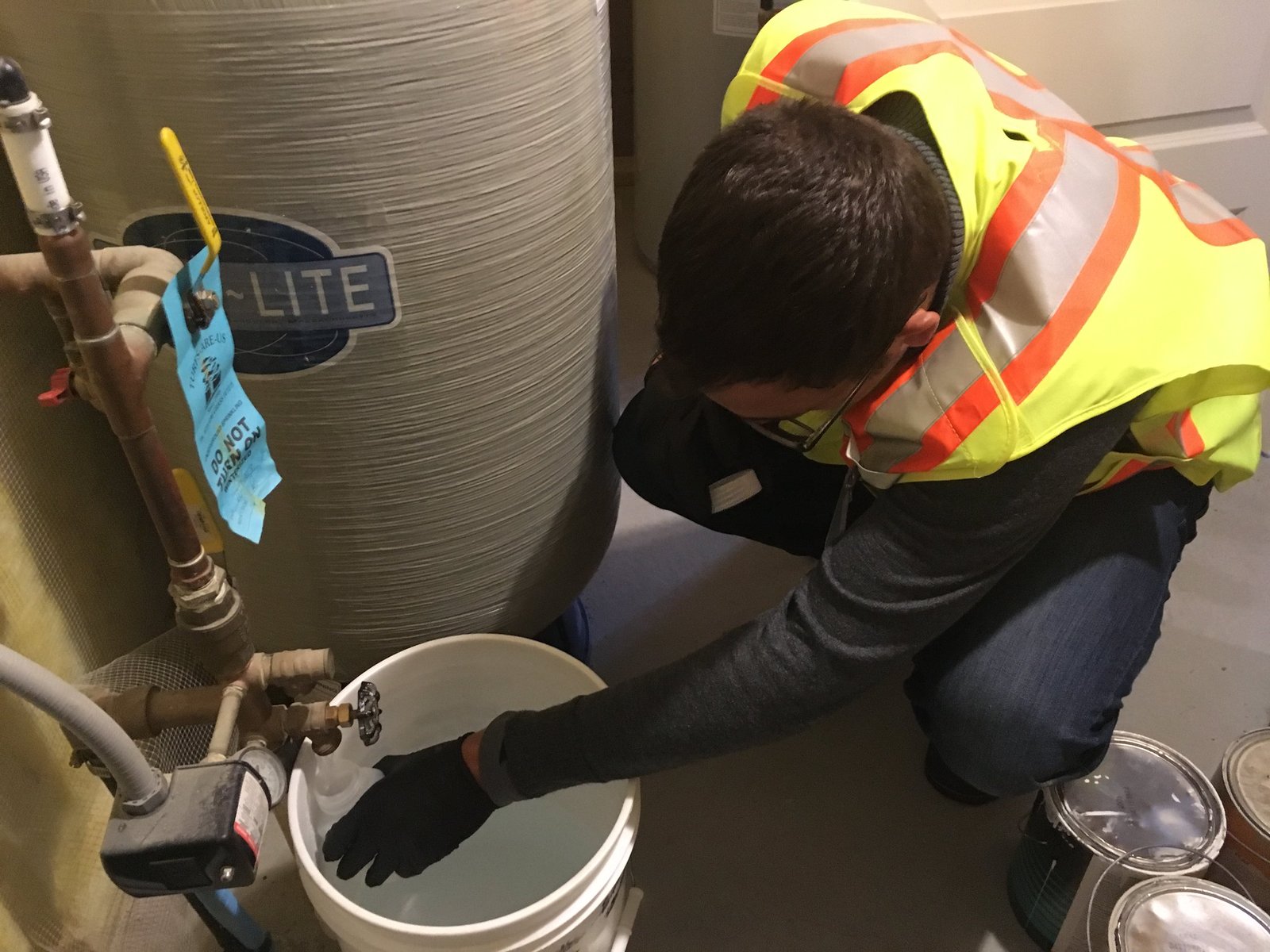
Featured image: A Michigan contractor collects raw water samples for PFAS analysis from residents’ basements. (Credit: Department of Environment, Great Lakes and Energy)
-

Brian Bienkowski is the editor-in-chief of The New Lede. He is a veteran journalist with over 15 years of experience covering the environment and human health. Prior to joining TNL, he was a senior editor at Environmental Health News for nearly a decade, overseeing the newsroom and two local bureaus. He was also the founder, producer, and host of the EJ podcast Agents of Change from 2020 to 2024.
Bienkowski has received multiple awards for her editing and reporting, including honors from the Healthcare Journalists Association, Columbia School of Journalism, Hunter College, and the Environmental Journalists Association. He has a master’s degree in environmental journalism from Michigan State University and lives in northern Michigan.
