


The alarm about plastic in the brain has largely been about how much plastic enters the body, how quickly its concentration increases, and whether it eventually crosses a certain threshold where it begins to damage cells.
Particle size has received less attention. New research suggests that may be wrong.

Even though the 50-nanometer and 250-nanometer plastic particles were made from the same material and administered at the same dosage, they behaved differently in brain cells. Only small particles caused changes.
plastic in the brain
For years, the brain seemed off-limits to these types of invaders. A dense cell wall called the blood-brain barrier blocks what passes through, keeping most circulating debris away from nerve tissue.
But then a study revealed the presence of plastic debris in brain samples.
Not all plastic bits are the same size. The largest category, microplastics, can be smaller than a grain of dust.
At less than a thousandth of a millimeter, nanoplastics are small enough to slip through barriers and enter single cells.
Researchers at the University of Eastern Finland (UEF) set out to investigate whether size alone can change the effect of plastic on nerve cells.
The study was led by Veronica Golova, a postdoctoral researcher at the AI Virtanen Institute for Molecular Science, and colleagues.
Pay attention to subtle changes
Golova’s team used primary cortical neurons, fresh nerve cells taken from mouse embryos rather than robust laboratory-grown strains.
Most early plastics research relied on administering large doses and large particles to cancer cell lines that behaved little like the developing brain.
Inside the dish were three sizes of polystyrene spheres, 50, 100, and 250 nanometers wide, packaged in foam packaging or disposable cups.
Even the largest particles used in the study were invisible to the naked eye. The width of a human hair is approximately 80,000 nanometers, which is several hundred times larger.
Importantly, doses remained low. Rather than injecting water into the cell to force a reaction, the researchers targeted a realistic amount and observed it for 24 hours.
The researchers were looking for quiet changes rather than overt addiction.
inside the cell
Under a powerful microscope, large spheres lodged inside the neurons were clearly visible.
When more plastic is suspended in a liquid, cells take up more plastic. The smallest spheres were too small to image, but the researchers suspected they may have slipped in as well.
Going inside meant no harm. At these low doses, neurons maintained normal metabolism and showed no signs of dying. Their basic machinery was running as if nothing had changed.
The damage only appeared when the team increased the dosage far beyond the intended range. When enough plastic was piled up, the cells wobbled. But not at the level actually used in the study.
neurons are forced into hyperproliferation
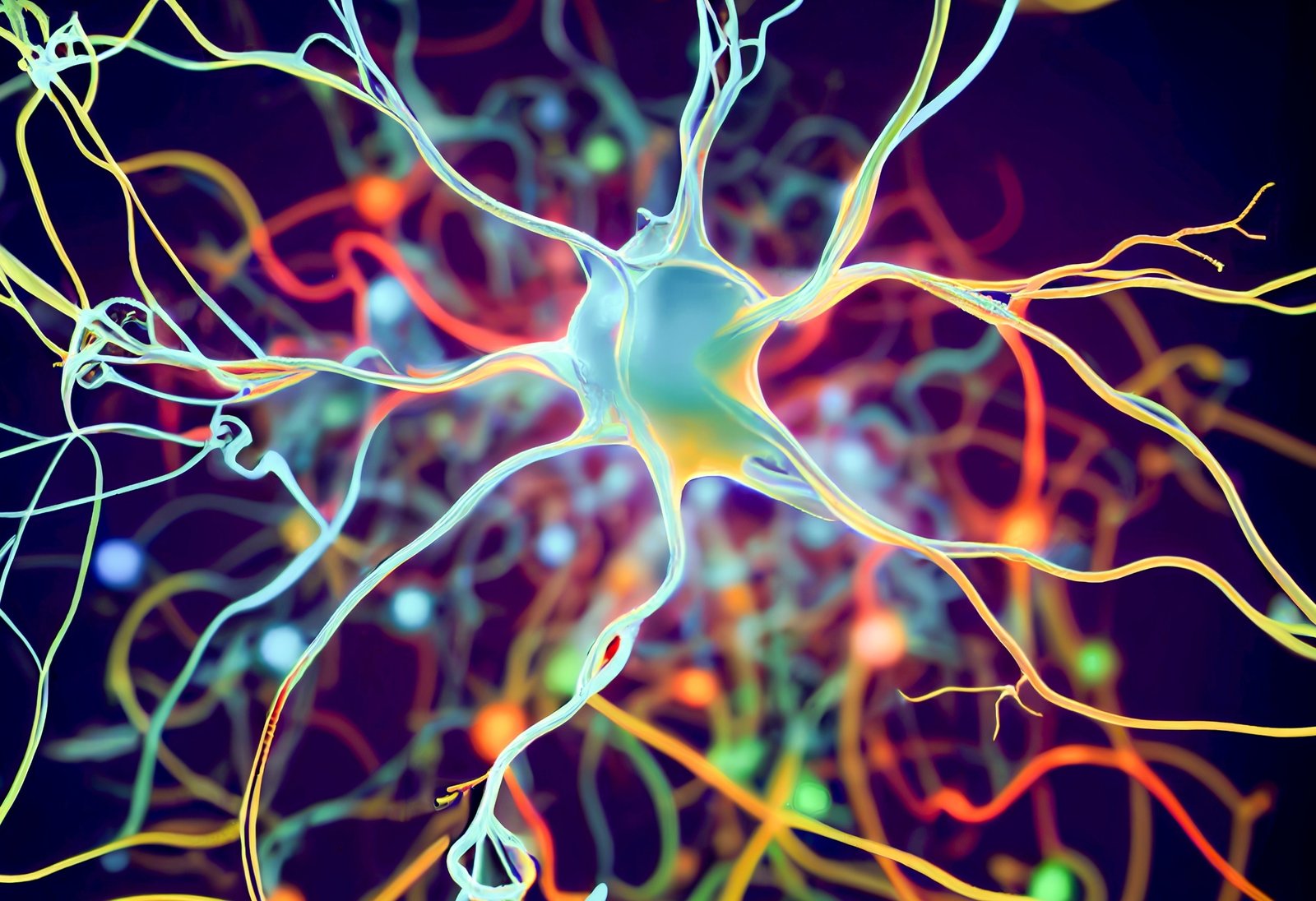
The real surprise came in the physical shape of the cells. Neurons sprout long, thin outgrowths called neurites.
They make up the wiring that connects one brain region to another, and how far they reach helps determine how young brains connect.
After exposure, the team measured those branches. Neurons that encountered 50-nanometer spheres grew significantly longer neurites than untreated cells, but not 100- and 250-nanometer spheres.
Only the smallest size caused overgrowth of branches.
Longer is not necessarily better. In a developing network, overgrowth of branches can disrupt the attentive patterns that the brain relies on.
Previous animal studies suggested that smaller particles cause more damage. Until this study, no one had shown that size alone could cause healthy neurons to overproliferate.
Gene activity and signal transduction rate
To determine the cause of the abnormal growth, the research team read the neuron’s transcriptome, or the genetic instructions the cells are using.
The 50-nanometer plastic altered genes associated with branch growth, including genes associated with calcium-dependent neurite outgrowth. The larger spheres left those genes intact.
Plastic left the electrical chatter of cells intact. Neurons communicate by emitting tiny sparks.
On sensor plates that could record them, firing rates and signal strengths remained stable throughout the day. Treated cells produced signals similar to untreated cells.
The results are amazing. The tiniest plastic particles changed the structure of neurons and altered patterns of gene activity without affecting the way the cells emit electrical signals in the first 24 hours.
It is still unclear why size alone makes such a difference.
Particle size changes the story
It’s easy to take home. In the case of plastic, the diameter of the particles determines whether brain cells barely notice or silently change the way they grow.
Particles closer to 50 nanometers crossed a line that 250 nanometer particles did not.
“It is important to understand that not only the concentration and material are important, but also the size of the particles,” Golova says.
The effect remains subtle, but becomes clearer as the particles shrink.
These are isolated cells observed in a petri dish for just 24 hours, so the long-term effects remain unknown. Still, this study showed that particle size alone can influence neuron growth.
Future research on plastics and the brain will need to track not just how much the particles penetrate, but also how small they are.
This finding may be particularly important for young brains, which are still wiring themselves and are likely to encounter the tiniest plastic particles most often.
The research will be published in a journal nano impact.
—–
Like what you read? Subscribe to our newsletter for fascinating articles, exclusive content and the latest updates.
Check us out on EarthSnap, the free app from Eric Ralls and Earth.com.
—–
