


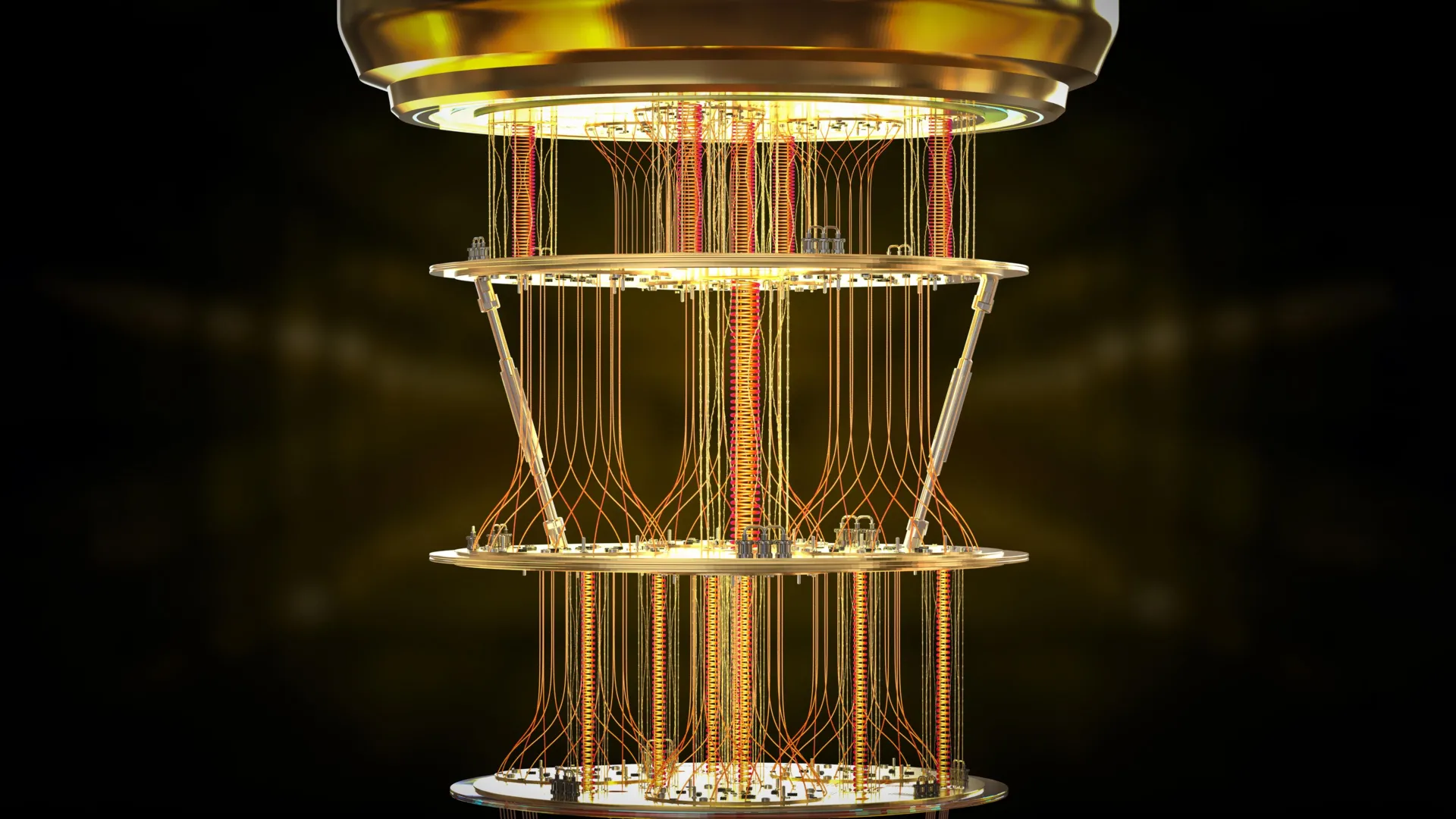
Researchers at the Jülich Supercomputing Center and NVIDIA have achieved a major milestone in quantum computing by fully simulating the first 50-qubit universal quantum computer. This achievement was achieved using JUPITER, Europe’s first exascale supercomputer, which was officially launched at the Jülich Movement Center last September.
This achievement surpasses the previous record of 48 qubits, set in 2019 by Jülich scientists using Japan’s K computer. In addition to setting new benchmarks, this breakthrough highlights the enormous capabilities of JUPITER and could accelerate the development of future quantum algorithms and technologies.
Why quantum simulation is important
Quantum computer simulations play an important role in advancing quantum research. Scientists use them to test algorithms, validate experimental results, and explore how future quantum systems will behave before real-world hardware is powerful enough to handle such tasks.
Algorithms of interest to researchers include variational quantum eigensolvers (VQEs), which are useful for studying molecules and materials, and quantum approximate optimization algorithms (QAOAs), designed to solve optimization problems in fields such as logistics, finance, and artificial intelligence.
The big challenge of simulating quantum systems
Re-creating a quantum computer on a classical supercomputer is extremely difficult because the complexity increases exponentially with each additional qubit. Each new qubit doubles both the memory and computational power required for the simulation.
A standard laptop can manage a simulation containing about 30 qubits. However, a 50-qubit simulation requires about 2 petabytes of memory, which is roughly 2 million gigabytes.
“Currently, only the world’s largest supercomputers can offer such capabilities,” says Professor Christel Michelsen, director of the Jülich Supercomputing Center. “This use case illustrates how advances in high-performance computing and quantum research are intertwined today.”
Simulations model the detailed quantum behavior of real processors. Every operation, such as applying a quantum gate, affects more than 2,000 trillion complex values (“2” with 15 zeros). To accurately reproduce the behavior of real quantum processors, these values must be kept synchronized across thousands of computing nodes.
NVIDIA GH200 superchip made recording possible
This breakthrough relied heavily on the NVIDIA GH200 superchip used within the JUPITER system. These chips tightly connect the central processing unit (CPU) and graphics processing unit (GPU), allowing data that exceeds the GPU’s memory capacity to be temporarily stored in CPU memory while maintaining high performance.
To take advantage of this architecture, engineers at the NVIDIA Applications Lab, an initiative between the Julich Supercomputing Center (JSC) and NVIDIA, upgraded Julich’s quantum simulation software, the Julich Universal Quantum Computer Simulator (JUQCS). The updated version, called JUQCS-50, can perform quantum computations efficiently even when some of the data is transferred to CPU memory.
The researchers also introduced a byte-encoding compression technique that reduces memory requirements by a factor of eight, along with a dynamic optimization system that continuously improves data exchange between more than 16,000 GH200 superchips.
“JUQCS-50 allows us to emulate a universal quantum computer with high fidelity and tackle problems that cannot yet be solved with existing quantum processors,” said Professor Hans de Reet of the Jülich Supercomputing Center, lead author of the study published as a preprint.
Expanding access to quantum research
JUQCS-50 will also be made available to external research institutes and companies through JUNIQ, the Jülich unified infrastructure for quantum computing. Researchers hope it will serve as a scientific tool and a benchmark for evaluating future supercomputers.
This project was developed as part of the JUPITER Research and Early Access Program (JUREAP). “The early collaboration allowed us to co-design the hardware and software during the construction phase of JUPITER, in close collaboration between Jülich experts and NVIDIA. This is an important step in realizing the full potential of this exascale system,” explains Dr. Andreas Herten, member of the Jülich JUPITER project team and co-author of the study.
JUPITER is co-funded by multiple organizations. Half of the funding will come from the European High Performance Computing Joint Venture (EuroHPC JU). A quarter will be provided by the Federal Ministry for Research, Technology and Space (BMFTR, formerly BMBF), and the remaining quarter will be provided by the Ministry of Culture and Science of North Rhine-Westphalia (MKW NRW) through the Gauss Supercomputing Center (GCS).
