

Close Menu

    Subscribe to Updates

    Get the latest creative news from FooBar about art, design and business.

    What's Hot

    Scientists warn that the world’s rivers are running out of oxygen

    May 17, 2026

    Scientists discover why some cancers survive chemotherapy

    May 17, 2026

    Four decades of data show that high-status voters, not the working class, are reshaping American politics.

    May 17, 2026
    Facebook X (Twitter) Instagram
    Facebook X (Twitter) Instagram
    Health Magazine
    • Home
    • Environmental Health
    • Health Technology
    • Medical Research
    • Mental Health
    • Nutrition Science
    • Pharma
    • Public Health
    • Discover
      • Daily Health Tips
      • Financial Health & Stability
      • Holistic Health & Wellness
      • Mental Health
      • Nutrition & Dietary Trends
      • Professional & Personal Growth
    • Our Mission
    Health Magazine
    Home » News » These “smart” crystals bend and snap back when exposed to light
    Nutrition Science

    These “smart” crystals bend and snap back when exposed to light

    healthadminBy healthadminMarch 31, 2026No Comments3 Mins Read
    These “smart” crystals bend and snap back when exposed to light
    Share
    Facebook Twitter Reddit Telegram Pinterest Email


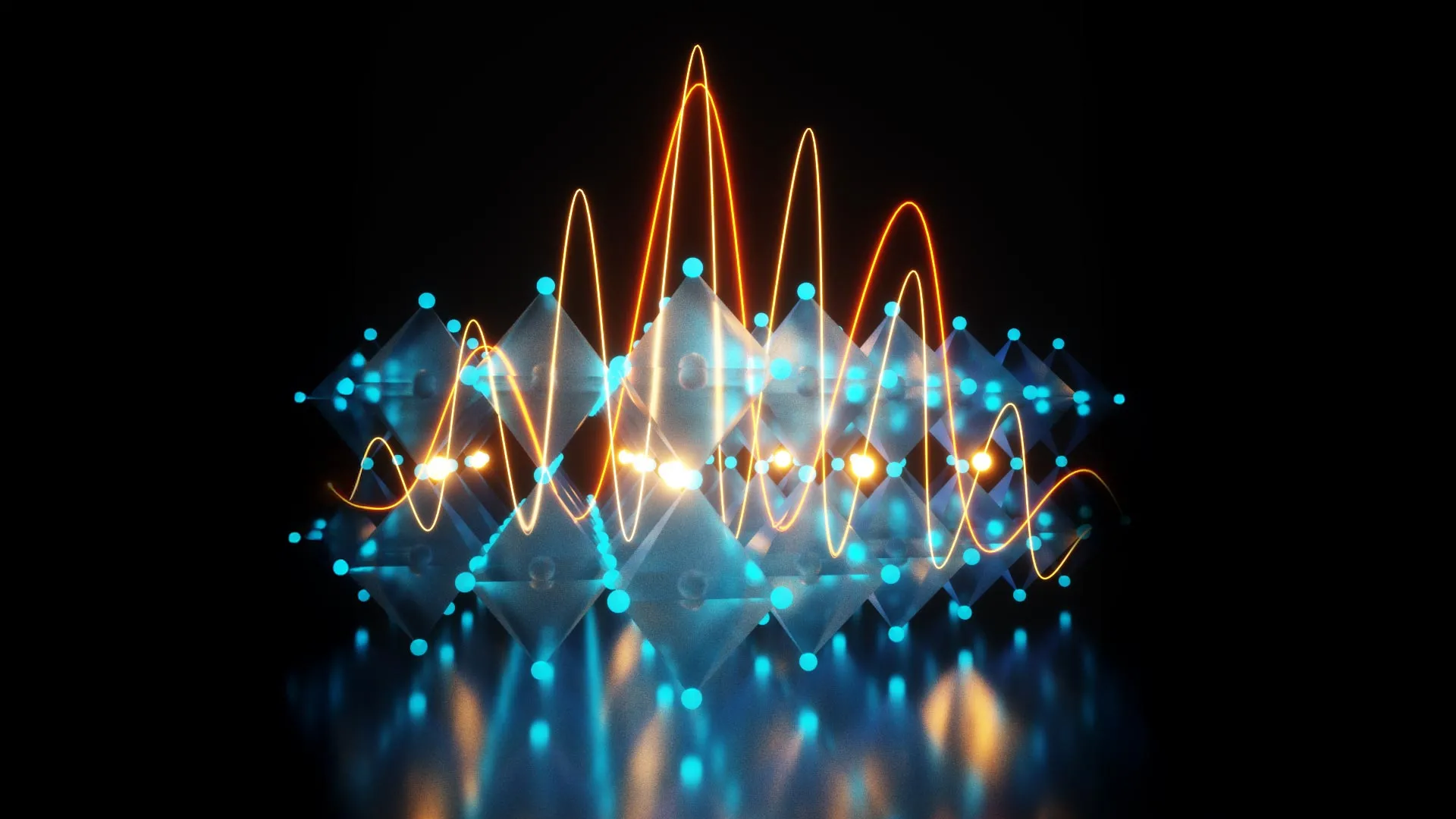
    Researchers at the University of California, Davis have identified surprising properties in a type of material known as perovskite that could pave the way for a new generation of optically controlled semiconductor devices. Their findings were published on March 3. advanced materialsshow that halide perovskite crystals can change shape when exposed to light and then return to their original shape.

    Perovskites are a type of semiconductor, but they behave very differently from traditional materials such as silicon and gallium arsenide. These can be made from a mixture of organic and inorganic ingredients and are often cheaper to produce. These differences make them particularly attractive for next-generation technologies.

    “These are ‘smart materials’ that can be tuned to respond to stimuli in ways that we can control,” said Marina Leite, professor of materials science and engineering at the University of California, Davis, and senior author of the paper. “Their chemistry is very different in ways that could be beneficial for creating devices that we couldn’t build before.”

    All perovskites share a common structure known as ABX3. At the atomic level, this can be visualized as a central atom surrounded by an octahedron (two pyramids attached to the base) formed by six atoms. All of these atoms are enclosed within a cube with an atom in each corner. Because of this structure, perovskites are already widely explored for use in optoelectronics and cutting-edge solar cells.

    Light causes rapid and reversible crystal changes

    To investigate how these materials react to light, graduate student Mansha Dubey illuminated perovskite crystals with laser light and used X-ray measurements to observe how their atomic structure changed. The crystals themselves were created by collaborators Bekir Tuledi, Andriy Kanak, and Professor Maksim Kovalenko from Switzerland’s ETH Zurich.

    Experiments revealed that when a crystal is exposed to light, its internal lattice changes rapidly. When the light is removed, the structure returns to its original configuration. This cycle can be repeated many times.

    “When you shine light on it, you see a dramatic change in the lattice, which is a unique phenomenon not seen in silicon or gallium arsenide,” Leite said. This photostrictive effect is reversible and can be repeated over and over again, she said.

    Adjustable response depending on light and configuration

    One of the most promising aspects of perovskites is their flexibility. By adjusting the chemical composition, scientists can control the wavelengths of light that a crystal absorbs and emits, a property known as its bandgap. Different compositions respond differently to light, especially at frequencies above the bandgap.

    The researchers also discovered that they could tune the strength of the shape change. Both the color and intensity of the light affect how strongly the material reacts.

    “This is not a binary on/off effect; it can be a scaled response, like a dimmer, depending on the light shining on it,” she said.

    To devices and new technologies that control light

    This ability to use light to precisely control how a material changes shape could lead to new types of devices. Leite suggests that perovskites could be used in sensors and actuators that are activated or regulated by light instead of electricity.

    This research was supported by the Defense Advanced Research Projects Agency program focused on developing materials for switchable photonic devices and the National Science Foundation. The team also utilized the Advanced Materials Characterization and Testing (AMCaT) Laboratory at the University of California, Davis, which was established with support from NSF.


    Source link

    Visited 4 times, 1 visit(s) today
    Share. Facebook Twitter Pinterest LinkedIn Telegram Reddit Email
    Previous ArticlePresident Trump’s raid on illegal Medicaid enrollees yields few violators
    Next Article Nonprofit sues CMS over AI pre-authentication demonstration
    healthadmin

    Related Posts

    Scientists warn that the world’s rivers are running out of oxygen

    May 17, 2026

    Scientists discover why some cancers survive chemotherapy

    May 17, 2026

    Scientists discover hidden brain nutritional deficiencies that can fuel anxiety

    May 16, 2026

    Scientists reversed memory loss by recharging the brain’s tiny engine

    May 16, 2026

    First direct image of cosmic web reveals hidden cosmic highways

    May 16, 2026

    The real reason you get stronger when you exercise isn’t what you think

    May 16, 2026
    Add A Comment

    Comments are closed.

    Categories

    • Daily Health Tips
    • Discover
    • Environmental Health
    • Exercise & Fitness
    • Featured
    • Featured Videos
    • Financial Health & Stability
    • Fitness
    • Fitness Updates
    • Health
    • Health Technology
    • Healthy Aging
    • Healthy Living
    • Holistic Healing
    • Holistic Health & Wellness
    • Medical Research
    • Medical Research & Insights
    • Mental Health
    • Mental Wellness
    • Natural Remedies
    • New Workouts
    • Nutrition
    • Nutrition & Dietary Trends
    • Nutrition & Superfoods
    • Nutrition Science
    • Pharma
    • Preventive Healthcare
    • Professional & Personal Growth
    • Public Health
    • Public Health & Awareness
    • Selected
    • Sleep & Recovery
    • Top Programs
    • Weight Management
    • Workouts
    Popular Posts
    • 1773313737_bacteria_-_Sebastian_Kaulitzki_46826fb7971649bfaca04a9b4cef3309-620x480.jpgHow Sino Biological ProPure™ redefines ultra-low… March 12, 2026
    • the-pros-and-cons-of-paleo-dietsThe Pros and Cons of Paleo Diets: What Science Really Says April 16, 2025
    • pexels-david-bartus-442116The food industry needs to act now to cut greenhouse… January 2, 2022
    • 1773729862_TagImage-3347-458389964760995353448-620x480.jpgDespite safety concerns, parents underestimate the… March 17, 2026
    • 1773209206_futuristic_techno_design_on_background_of_supercomputer_data_center_-_Image_-_Timofeev_Vladimir_M1_4.jpegMulti-agent AI systems outperform single models… March 11, 2026
    • Improve Mental Health10 Science-Backed Practices to Improve Mental Health… March 11, 2025

    Demo
    Stay In Touch
    • Facebook
    • Twitter
    • Pinterest
    • Instagram
    • YouTube
    • Vimeo
    Don't Miss

    Scientists warn that the world’s rivers are running out of oxygen

    By healthadminMay 17, 2026

    Climate change is steadily robbing rivers around the world of oxygen, according to a new…

    Scientists discover why some cancers survive chemotherapy

    May 17, 2026

    Four decades of data show that high-status voters, not the working class, are reshaping American politics.

    May 17, 2026

    Brain response to fearful faces predicts risk of psychiatric hospitalization

    May 17, 2026

    Subscribe to Updates

    Get the latest creative news from SmartMag about art & design.

    HealthxMagazine
    HealthxMagazine

    At HealthX Magazine, we are dedicated to empowering entrepreneurs, doctors, chiropractors, healthcare professionals, personal trainers, executives, thought leaders, and anyone striving for optimal health.

    Our Picks

    Brain response to fearful faces predicts risk of psychiatric hospitalization

    May 17, 2026

    How personality traits and attachment styles shape women’s reactions to infidelity

    May 16, 2026

    Study finds that updating Wikipedia pages increases public trust in scientific organizations

    May 16, 2026
    New Comments
      Facebook X (Twitter) Instagram Pinterest
      • Home
      • Privacy Policy
      • Our Mission
      © 2026 ThemeSphere. Designed by ThemeSphere.

      Type above and press Enter to search. Press Esc to cancel.