


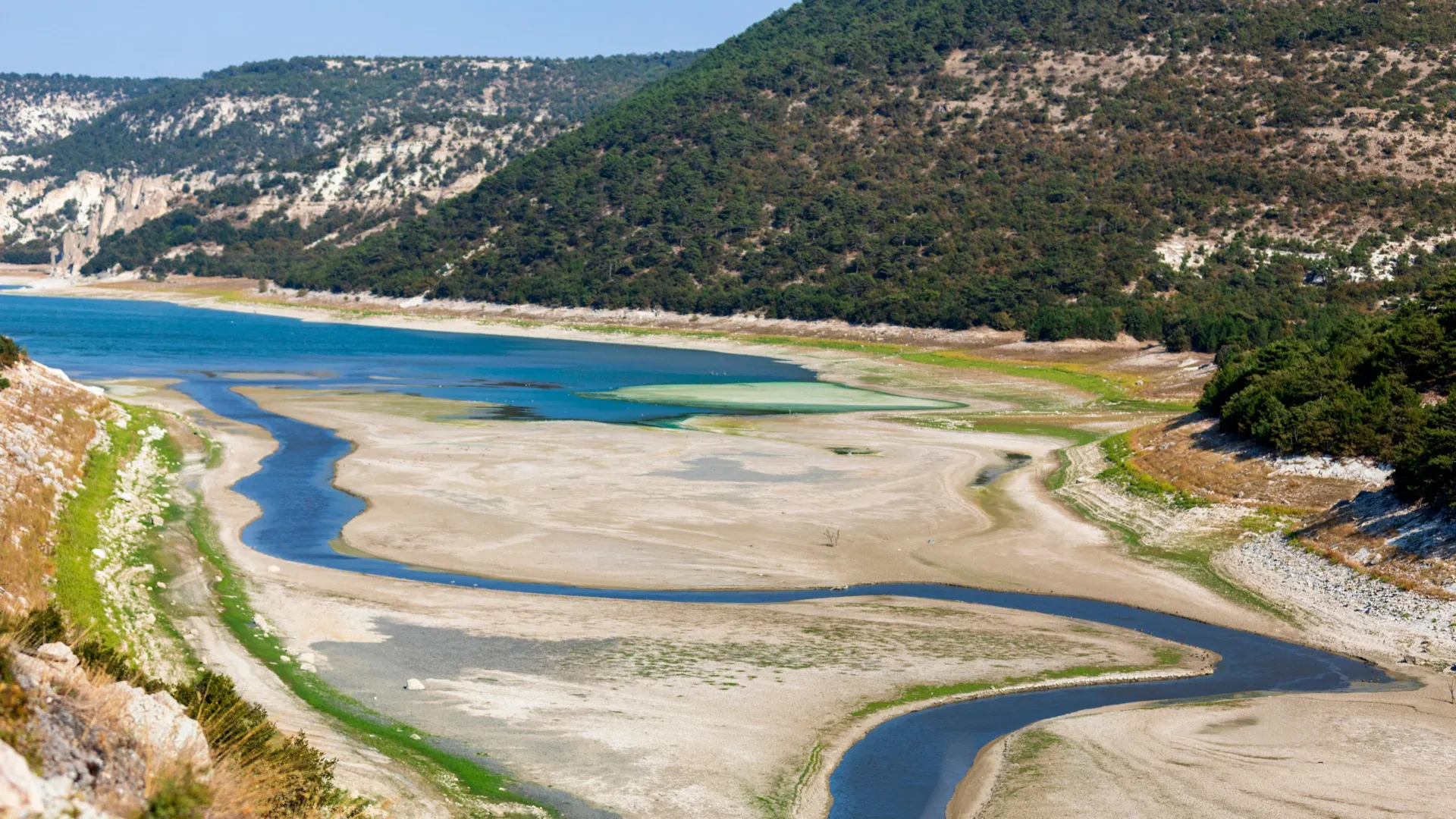
Climate change is steadily robbing rivers around the world of oxygen, according to a new study published on May 15th. scientific progress. The researchers found that this long-term oxygen loss occurs in most river systems, with tropical rivers being the most vulnerable. This finding indicates that strategies aimed at slowing oxygen loss in freshwater ecosystems are urgently needed.
The research was led by Professor Kun Shi of the Nanjing Institute of Geography and Limnology, Chinese Academy of Sciences (NIGLAS). Dr. Qi Guan served as lead author, and researchers from Tongji University also participated in the project.
A river loses its essential elements for life
Dissolved oxygen plays an important role in maintaining healthy river ecosystems. It supports aquatic life, helps maintain biodiversity, and influences important biogeochemical processes. Lower oxygen levels can worsen river conditions and put fish and other freshwater species at risk.
To examine how river oxygen levels have changed over time, the researchers used a machine learning stacking algorithm to analyze observations from 21,439 river basins around the world collected over nearly 40 years (1985 to 2023).
Their analysis revealed clear global trends. River oxygen levels decreased at an average rate of -0.045 mg L-1, and 78.8% of the rivers included in the study showed signs of deoxygenation.
Tropical rivers hit hardest
The strongest oxygen losses were found in tropical rivers between 20 degrees south and 20 degrees north latitude, including rivers in India. The results surprised the researchers, as they had previously expected rivers in high latitudes, where warming is often more intense, to face the greatest risk of deoxidation.
Rather, the study showed that tropical rivers already tend to have low oxygen levels, making them especially vulnerable if oxygen levels continue to decline. Coupled with faster deoxidation rates, these conditions increase the likelihood of hypoxia events, where oxygen is too scarce to support many forms of aquatic life.
River flows and dams affect oxygen loss
The researchers also investigated how river flow patterns and dam storage affect oxygen depletion.
Both low and high flow conditions appeared to partially reduce deoxygenation compared to normal flow conditions. Rivers under low flow conditions had an 18.6% decrease in deoxygenation rate, while high flow conditions had a 7.0% decrease in deoxygenation rate.
Dam storage had different effects depending on the depth of the reservoir. In shallow reservoirs, water storage accelerated oxygen loss. However, deeper reservoirs helped reduce deoxygenation of the impounded area.
Heat wave accelerates river deoxygenation
Further analysis found that reduced oxygen solubility due to climate warming was the main cause of global oxygen decline, accounting for 62.7% of the observed change.
Ecosystem metabolism was influenced by factors such as temperature, light, and water flow, and contributed to 12% of deoxygenation.
The research team also investigated the role of heat waves. Their results showed that heatwave events accounted for 22.7% of global river deoxygenation. The heat wave increased the deoxygenation rate by 0.01 mg L-1 10 years-1 compared to conditions under average climatic temperatures.
Overall, the findings highlight the increasing impact of climate warming on freshwater flow ecosystems, also known as watershed ecosystems. Researchers say tropical rivers should be considered as a top priority for mitigation measures aimed at preventing oxygen depletion from worsening. This study also provides a scientific foundation that policymakers can use to develop strategies to address deoxygenation in rivers around the world.
