


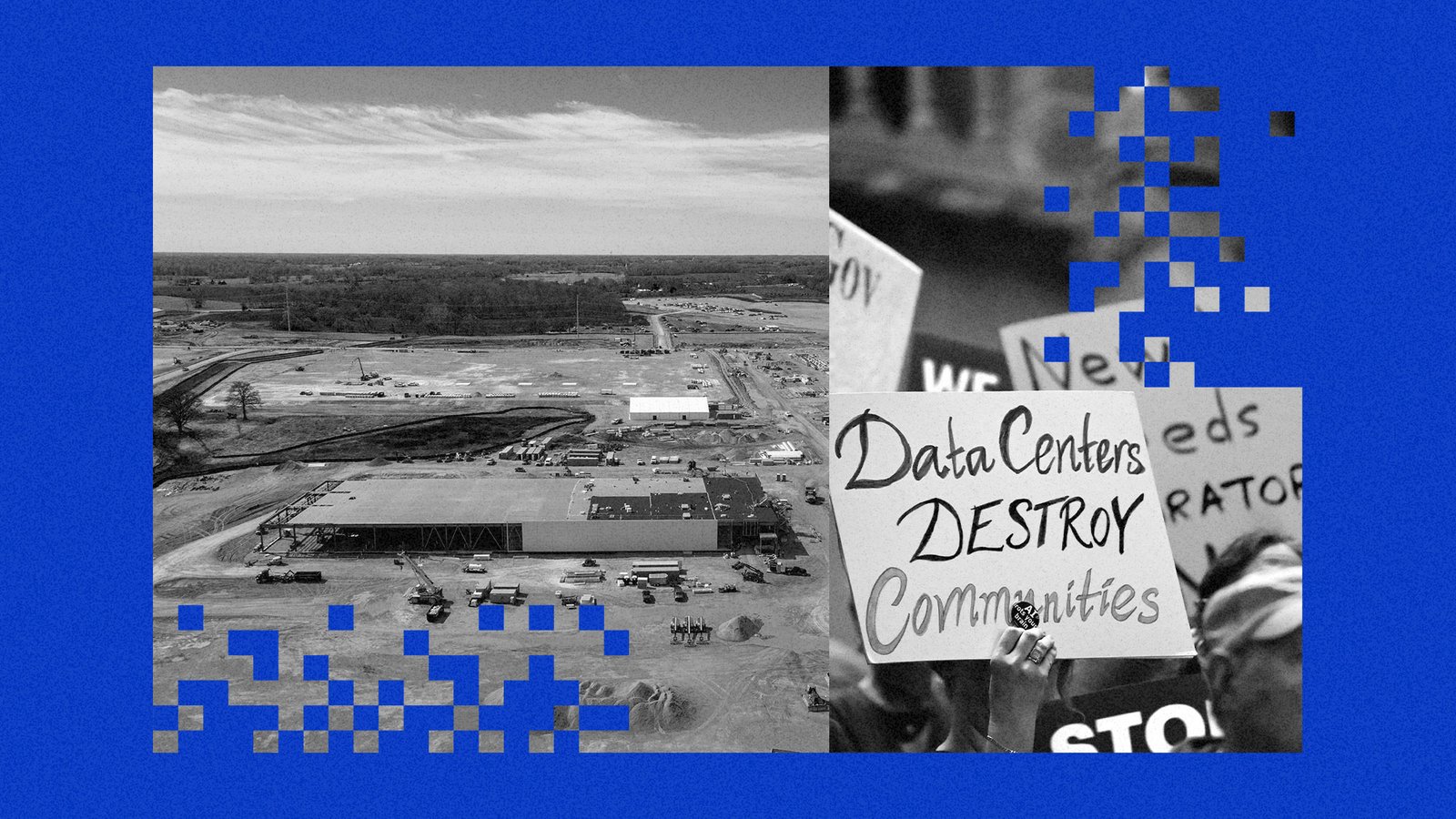
Texas Governor Greg Abbott, an ardent supporter of President Donald Trump, this month issued a comprehensive set of recommendations to curb rampant data center development, urging Texas lawmakers to aggressively regulate the tech industry in a state with a reputation for welcoming new developments with open arms. At the same time, New York Gov. Kathy Hochul, a Democratic leader in a state known for its regulatory policies, declined to say whether she would sign the first bill passed by the state Legislature imposing a one-year moratorium on large data centers.
Welcome to the strange world of data center politics. There, the usual partisan framework around energy and natural resources does not yet apply.
Facilities housing massive amounts of computing equipment are springing up across the United States to feed the tech industry’s insatiable thirst for artificial intelligence. These AI-enabled data centers consume more energy than the traditional cloud computing centers that already exist to host and store many aspects of modern digital life, but they have become a political flashpoint with lightning speed, reshaping every corner of local and state politics as Americans grapple with high energy costs, natural resource depletion, and the effects of mega-development.
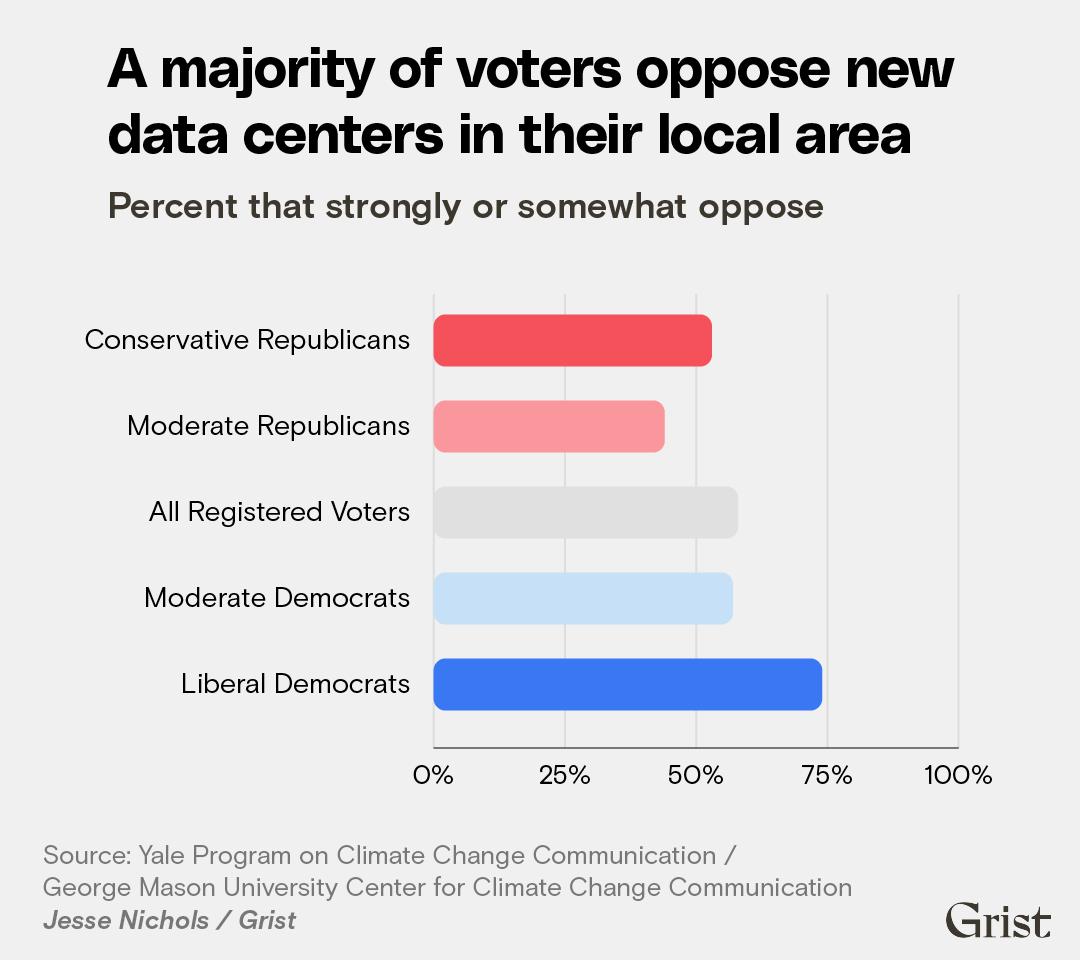
At a time when political polarization is nearing record levels, the data center backlash represents a rare area of agreement on both sides of the political divide. According to a Gallup poll, about 70% of Americans oppose building local AI data centers, with 75% of Democrats and 63% of Republicans opposed. Digging a little deeper into additional research data makes data center politics even more surprising. More conservative Republicans (53%) than moderate Republicans (44%) oppose local data centers. That means die-hard conservatives are actually closer to Democrats in their opposition.
“I’ve never seen a graph where conservative Republicans are closer to liberal Democrats than liberal (and) moderate Republicans,” said Anthony Leizerowitz, director of Yale University’s Climate Change Communication Program.
A bipartisan anti-data center movement has emerged as one of the only antidote to the relentless rise of AI. In the first three months of 2026 alone, at least 75 data center projects worth approximately $130 billion were halted or blocked. Political scientists and organizers who have been tracking the backlash say they are not driven by a single ideology but by a series of recurring local grievances, including rising electricity costs, water scarcity, noise, land use, tax breaks, mistrust of tech companies and the billionaires who own them, and fear that communities are being asked to share their resources with an industry that offers little in return.
Still, the same experts say it’s too early to tell whether the outrage over data centers will mean a permanent break in America’s partisan apparatus. This backlash could spark widespread questioning of Big Tech’s power in American life, and perhaps bring real guardrails to an industry where few currently exist. Or it may be in a pre-partisan stage, waiting to be absorbed into the political tribalism that has shaped fights over climate, energy, housing, and the many other issues that have fallen victim to the culture wars.
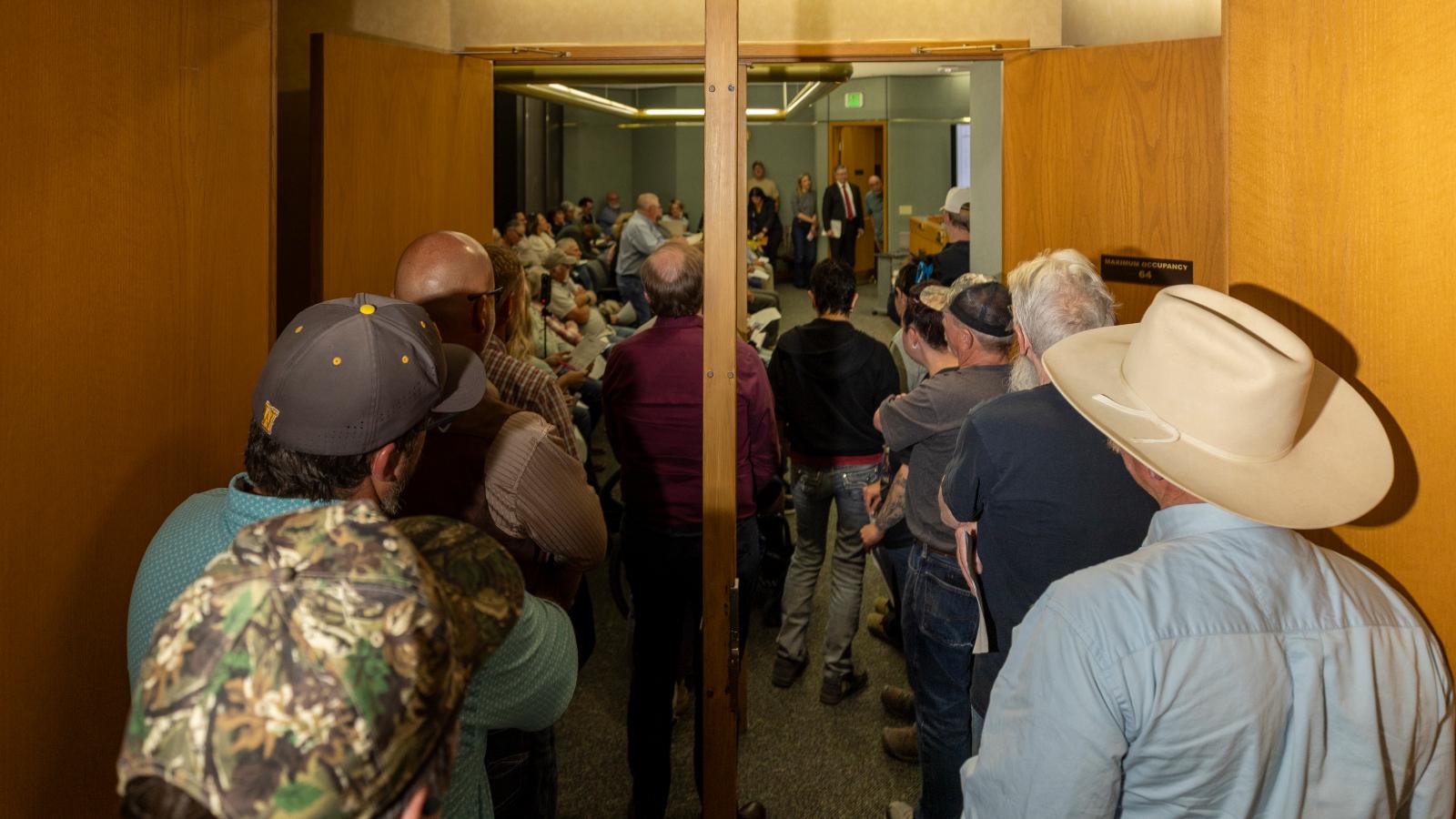 Members of the public flock to a Planning and Zoning Commission meeting to discuss the Prometheus Hyperscale Data Center on May 27 in Evanston, Wyoming.
Natalie Bering/Getty Images
One reason AI data centers are politically different is that they are relatively new and unencumbered by the political baggage that affects other issues. Experts say the proliferation of AI and the scale of the associated opposition is creating an extraordinary scale and political power of the backlash. More than 800 organizations in 49 states are currently campaigning against the approximately 1,500 proposed data centers.
But what may look like a unified anti-data center movement from a distance is actually a series of different battles unfolding simultaneously. The concerns motivating communities in Virginia to oppose data centers may be different from those motivating municipalities in California to fight the same battle. Even within local fights, people often join for a variety of reasons, including light pollution, greenhouse gas emissions, and existential anxiety about AI.
Some research shows that Republicans and Democrats emphasize different risks when talking about data centers. “Republican officials often express concerns about tax incentives and straining the energy grid, while Democrats tend to focus on environmental impact and resource consumption,” said a report from Data Center Watch, a project run by AI company 10a Labs that monitors local data center activity.
In Box Elder County, Utah, where President Trump ran away with nearly 80% of the vote in 2024, a 40,000-acre data center project backed by celebrity investor Kevin O’Leary faces fierce opposition from rural conservative voters over its impact on the rapidly drying Great Salt Lake and the project’s electricity and property tax breaks. Earlier this month, voters in left-leaning Monterey Park, California, approved a ballot measure permanently banning data centers to “protect air quality, drinking water resources, and public health.”
Read next
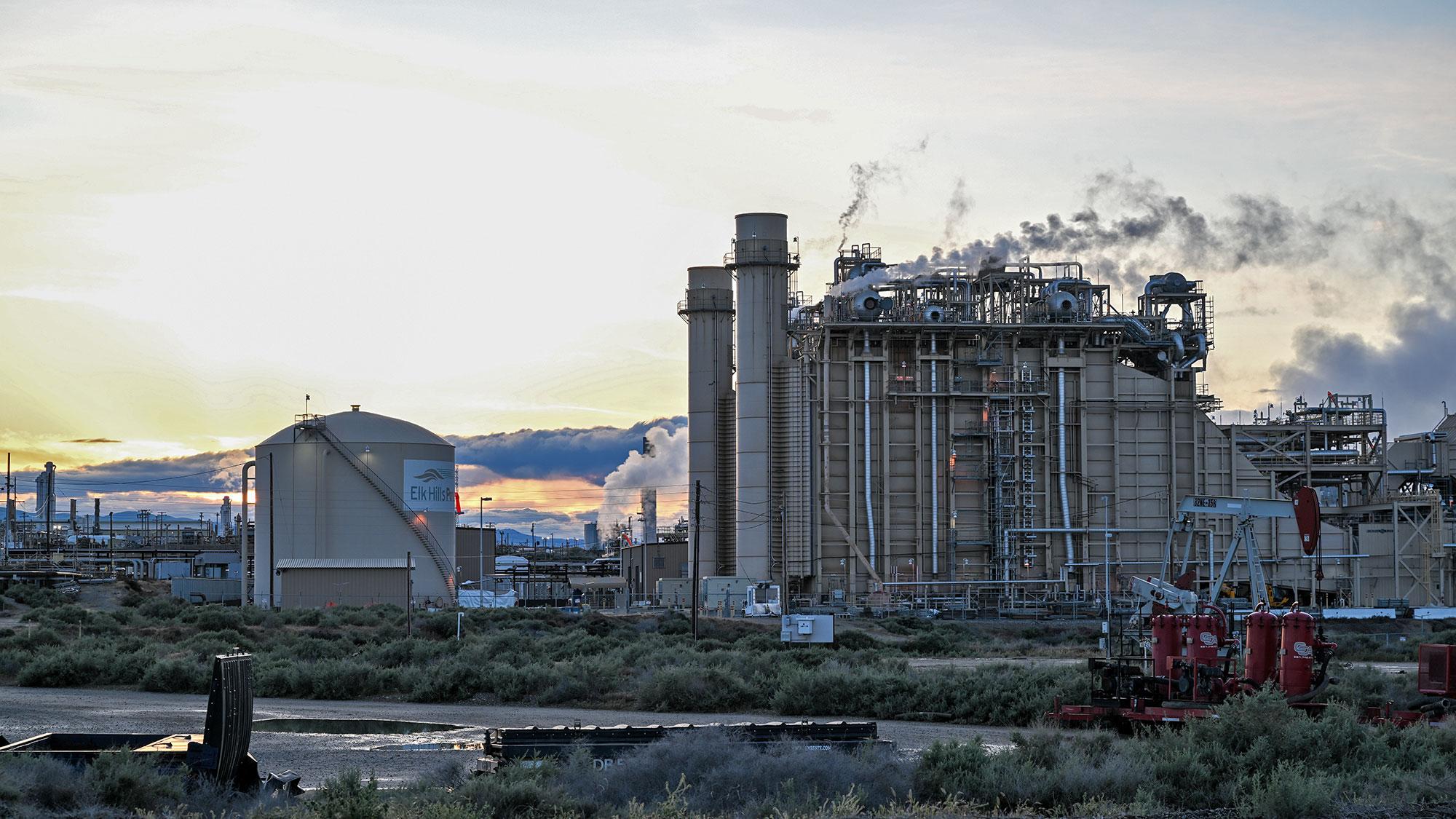
Is there a solution to data center backlash? Put it in the oil field.
Although local protests vary by location, there are converging national political undercurrents that may intensify opposition regardless of location or party. The executives driving the data center boom, including Tesla and SpaceX’s Elon Musk (who last week became the world’s first billionaire), Meta’s Mark Zuckerberg and OpenAI’s Sam Altman, are far more familiar to Americans than the leaders of most major industries.
“No one can say the name of the CEO of Exxon Mobil,” said Alex Beauchamp, northern regional director for Food and Water Watch, a nonprofit advocacy group that is pushing for a moratorium on New York’s data centers. This is not the case for CEOs of technology companies. “They’re the real villains for a lot of people,” he added.
For years, technology moguls have sought to position themselves as visionary leaders ushering in a more just future by hiring large numbers of workers for companies that promise to have altruistic intentions. But the tide of political opinion has shifted as tech companies have gotten bigger, more powerful, and more tied to the federal government, while laying off tens of thousands of workers and spending billions of dollars on data centers (just four tech companies are expected to spend a total of $670 billion on AI-related infrastructure this year).
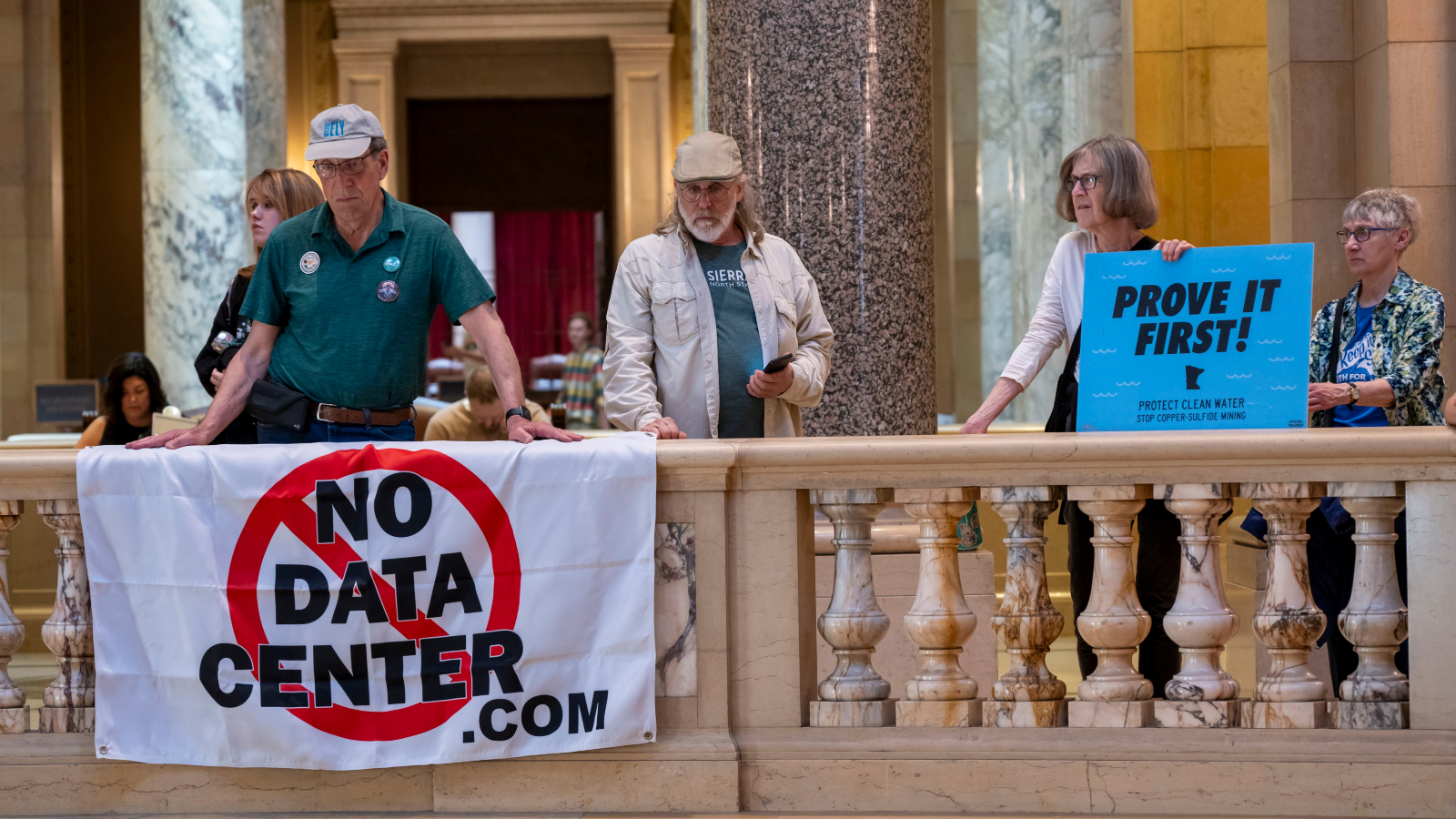 Demonstrators in St. Paul, Minnesota gather at the state Capitol in support of a two-year data center shutdown.
Michael Silk/UCG/Universal Images Group/Getty Images
Polls show Americans increasingly distrust Big Tech and its ever-increasing concentration of technological, economic, and political power. In a recent survey, only 7% of voters said they trust tech CEOs to make decisions that affect their lives.
Additionally, there is a broader context of rising costs of living currently motivating so many American voters, making local communities particularly sensitive to the impact data centers have on electricity bills and public resources.
Dana R. Fischer, director of the Center for Environment, Community and Equity at American University, said, referring to the Iran war, “The war has raised the prices of everything, and the price of energy has gone up, so people are very aware that building other infrastructure in their towns may preclude their access to cheap energy.” “I think it works very well across ideological lines.”
Still, experts warn that as the 2026 midterm elections approach and politicians seek to use the issue to their advantage, the bonds that unite a broad swath of America’s political forces against the AI boom could fray. “Issues that can unite people across party lines, once they get widespread political attention, tend to have partisan power overpowering everything else,” said Megan Mullin, a professor of public policy at the University of California, Los Angeles.
Food and Water Watch’s Beauchamp remembers the lessons learned from New York’s anti-fracking campaign. In 2014, New York became the first state with underground gas reserves to ban the practice of spraying water at high speed horizontally into buried rock to extract natural gas deposits. In the years leading up to the ban, a broad political coalition of New Yorkers shared many of the same concerns that data center activists have today. Hydraulic fracturing poses serious risks to local water supplies, contributes to air and noise pollution, and brings heavy industrial activity to rural areas unaccustomed to industry.
After New York banned the practice, Beauchamp predicted other states would follow suit. But the issue quickly became deeply partisan, as fossil fuel lobbyists and Republican officials sought to cast the anti-fracking movement as a green ploy to undermine energy production and harm working-class communities. As of today, only five states have banned fracking on the books. Politicians who had been positive about banning the practice came to regret that position. Kamala Harris’ 2019 campaign promise to ban fracking was one of Trump’s favorite offensive cudgel as the two candidates square off in the 2024 presidential race.
Read next

What do climate protests actually accomplish? More than you think.
“This feels like the early days of the fracking battle to me,” Beacham said. “Many Republicans were initially very upset about this, but then it slowly became a partisan issue.”
Data centers may soon find themselves caught up in the same right-versus-left vortex, but some activists are leaving open the possibility that new coalitions may emerge from it. “It’s time to realign people’s minds and build new coalitions across party lines,” said Evan Sutton, founder of communications consulting firm Firekit Campaigns. He has helped connect data center opponents across the United States. “This is a wonderful and perhaps very rare opportunity to create something different.”
What you need to know about data centers
A data center is a warehouse-like facility that houses the servers needed to store and process vast amounts of digital information. They’ve been around for decades, but the rise of artificial intelligence in recent years has led to a surge in new construction. Here we present some of the latest reports on the key issues surrounding its development.
This information was last updated on February 27, 2026.
