


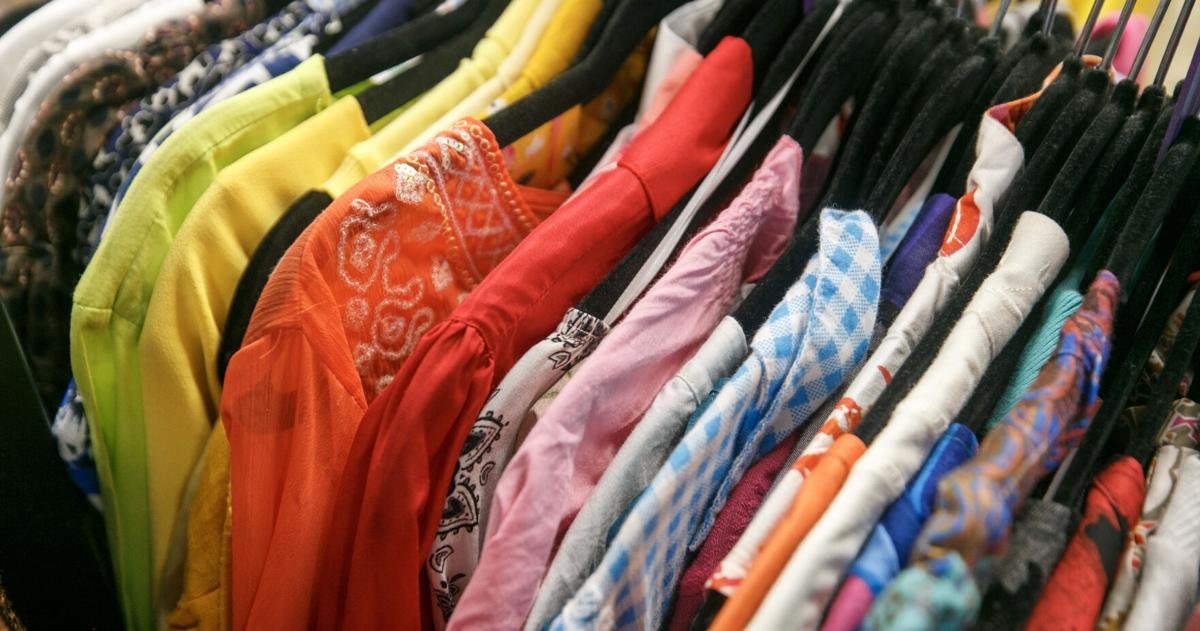
Katie McCormick was working at H&M when she started wondering where the clothes she was lining the floor with ended up going. As the issue of textile waste began to bother her, she began shopping at local thrift stores.
“As I had just graduated from university and had an entry-level job, buying ethically sourced and made clothes was expensive,” she said.
Then she started striking gold.

Microplastic fibers are found in water samples taken from Shem Creek. The black rectangle is approximately 3.1 mm x 3.1 mm.
“We were finding more expensive items, especially near the Johns Island Friendly District and Kiawah, because all the wealthy people were getting rid of their clothes,” she said.
Since then, McCormick’s love of thrifting has turned into a full-fledged side hustle. She goes by the name “FAR OUT FINDZ” and upcycles, repairs, and restores vintage clothing she finds at local thrift stores. She specifically looks for damaged parts that she can breathe new life into.
“I think this is a rebellion,” she said of thrifting and restoring clothing. “It’s much cheaper. Plus, you create trends, so you’re kind of a trendsetter. You can’t have what everyone has.”
Sara Mazza, who owns the Shmazzy Threads brand, explains that Charleston has an entire community dedicated to the art of breathing new life into disused objects. Mazza’s work involves printing flowers onto recycled canvas clothing using cyanotype, a 19th century photography technique.

Microplastics are everywhere, and a big culprit is laundry. Clothing is often made of polyester fibers, some of which are washed away during the rinse cycle. These fibers eventually reach our waterways, where they break down into microscopic pieces.
For those interested, Mazza said local craft markets and vintage festivals can be a great route to finding sustainable clothing options.
“It’s like Picker’s Hullabaloo (a North Charleston flea market),” she said. “People put it on their calendars and get super excited about it because they can find these well-worn things and really unique items that you don’t get these days. I just feel like it’s all very cheaply made.”
