


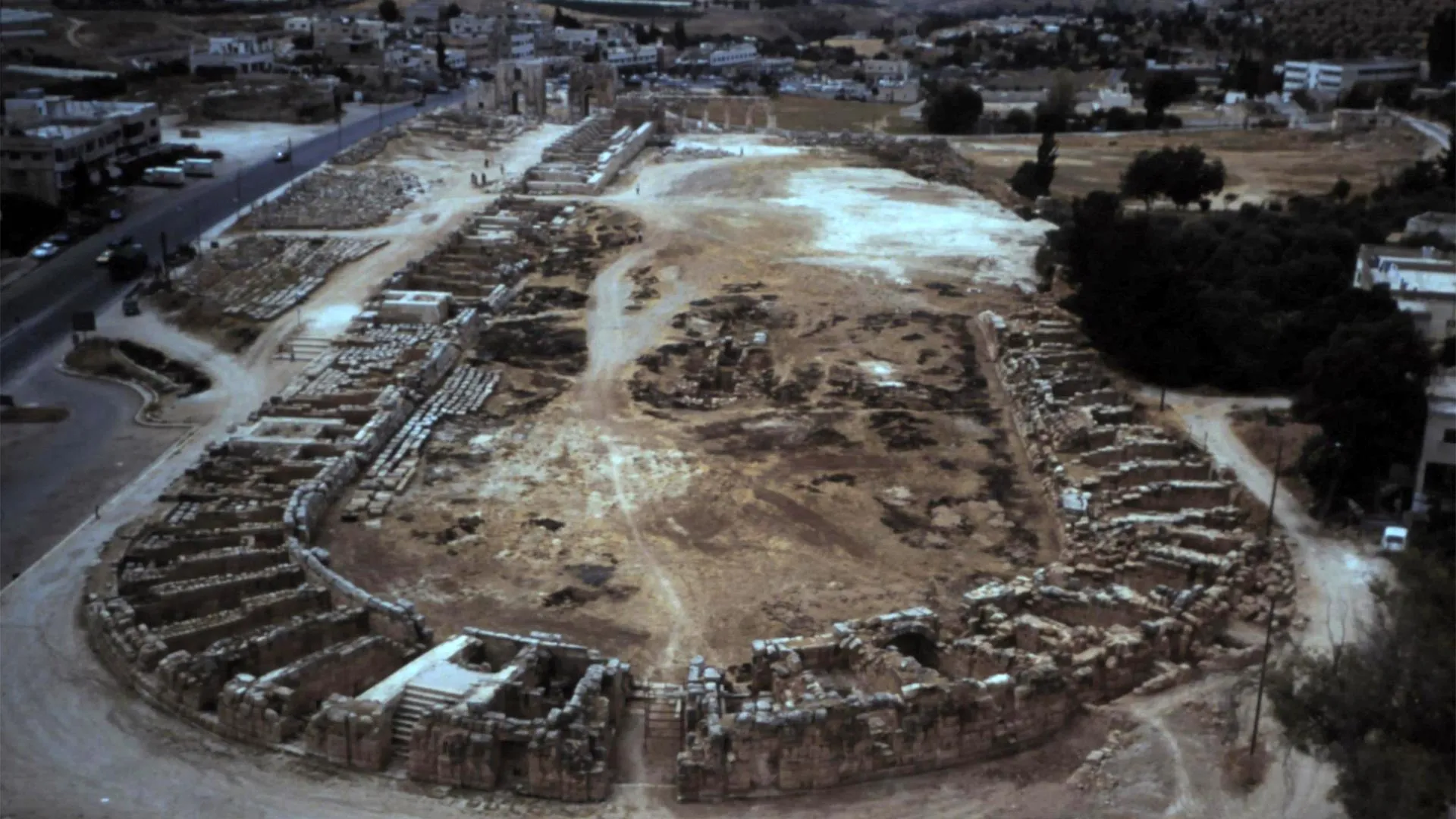
“A plague is upon us” may have been a familiar cry in ancient Jordan, where a mysterious disease killed large numbers of people and left a lasting mark on society and history.
Now, researchers are uncovering new details about the crisis. An interdisciplinary team at the University of South Florida is studying the Justinian plague and its far-reaching impact. The group, led by Associate Professor Reyes HY Zhang from the College of Public Health, published the third paper in an ongoing series investigating what is believed to be the first bubonic plague outbreak recorded in the Mediterranean.
Their latest study, “Bioarchaeological traces from the Justinian Plague (541-750 AD) in Jerash, Jordan,” was published in the Journal of Archaeological Science. This led to a better scientific understanding of this infectious disease outbreak that killed millions of people across the Byzantine Empire.
“We wanted to go beyond identifying the pathogen and focus on the people affected by the pathogen, who they are, how they live, and what death from the pandemic looks like within a real city,” Zhang said.
Mass graves reveal scale of death
At the height of Justinian’s plague, those affected came from far-flung communities that were often isolated from each other. But death brought them together. A number of bodies were quickly placed on top of pottery shards in abandoned public areas, which became the focus of this study.
Jiang served as principal investigator and collaborated with colleagues in USF’s departments of genomics, global health and infectious disease research, anthropology, molecular medicine, and history. Additional contributions came from archaeologist Karen Hendricks of the University of Sydney in Australia and the DNA Lab at Florida Atlantic University. Early studies in this series focused primarily on Yersinia pestis, the bacterium that causes plague. This new study explores how this disease has affected society in the short and long term, and what lessons it holds today.
“Previous articles identified the plague bacteria. The Jerash site turns that genetic signal into a human story about who died and how the city experienced the crisis,” Zhang said.
First confirmed plague mass grave
Although historical accounts mention the prevalence of plague during the Byzantine period, many suspected plague burial sites lack hard evidence. Jerash is now the first site where plague-related mass graves have been identified through both archaeological evidence and genetic testing.
The researchers determined that the burials represented a single event, unlike traditional cemeteries, which develop over time. Hundreds of people were buried within days in Jerash. This discovery reshapes our understanding of the first pandemic by providing clear evidence of large-scale mortality and insight into how people lived, moved and became vulnerable in ancient urban environments.
Mobility and hidden connections
The findings also help answer long-standing questions. Although historical and genetic data show that people moved and mixed across regions, burial evidence often suggests that communities remained local.
Jerash’s site shows that both patterns can coexist. Migration usually occurred slowly over many generations and was integrated into everyday life, making it difficult to find in standard burial sites. But times of crisis brought people from more mobile backgrounds together and made hidden connections visible.
Evidence suggests that those buried at Jerash belonged to a mobile population that was part of a broader urban community. Usually they were scattered throughout the region, but at moments of crisis they united in a single burial.
Understanding the impact of pandemics on the human body
“By linking biological evidence from human remains to the archaeological environment, we can learn how diseases affected real people in their social and environmental contexts. This helps us understand historical pandemics as living human health events, not just documented outbreaks,” Zhang said.
This research has helped change the way scientists view pandemics, highlighting not only how they start and spread, but also how they impact daily life and social structures. Back then, as today, dense cities, travel, and environmental change had an impact.
“Pandemics are not just biological events, they are social events, and this study shows how diseases intersect with everyday life, movement, and vulnerability. Pandemics reveal who is vulnerable and why, so those patterns still shape how diseases affect society today,” Zhang said.
research team
In addition to Mr. Jiang, the following members of the three newspapers’ U.S. Forces Japan teams participated:
- Swamy R. Adapa, Research and Development Scientist, COPH Department of Global Environmental and Genomic Health Sciences
- Dr. Andrea Vianello, Visiting Researcher, Department of Anthropology, Faculty of Humanities and Sciences
- Elizabeth Remilywood, Director of Proteomics Core, Department of Molecular Medicine, Morsani School of Medicine
- Dr. Gloria C. Ferreira, Professor, Department of Molecular Medicine, Morsani College of Medicine and College of Arts and Sciences
- Dr. Michael Decker, Professor of Byzantine History and Orthodox Religion, Department of History, Maroulis College of Arts and Sciences
- Dr. Robert H. Tycott, Professor, Department of Anthropology, College of Arts and Sciences
