

Close Menu

    Subscribe to Updates

    Get the latest creative news from FooBar about art, design and business.

    What's Hot

    Musicians show a small but steady advantage in sustained attention from childhood to adulthood

    May 14, 2026

    Supreme Court upholds access to mifepristone while litigation continues

    May 14, 2026

    Making instant judgments about dating apps can hurt your sense of worth as a partner.

    May 14, 2026
    Facebook X (Twitter) Instagram
    Facebook X (Twitter) Instagram
    Health Magazine
    • Home
    • Environmental Health
    • Health Technology
    • Medical Research
    • Mental Health
    • Nutrition Science
    • Pharma
    • Public Health
    • Discover
      • Daily Health Tips
      • Financial Health & Stability
      • Holistic Health & Wellness
      • Mental Health
      • Nutrition & Dietary Trends
      • Professional & Personal Growth
    • Our Mission
    Health Magazine
    Home » News » Stroke causes hidden brain changes that look like rejuvenation
    Nutrition Science

    Stroke causes hidden brain changes that look like rejuvenation

    healthadminBy healthadminMarch 29, 2026No Comments4 Mins Read
    Stroke causes hidden brain changes that look like rejuvenation
    Share
    Facebook Twitter Reddit Telegram Pinterest Email


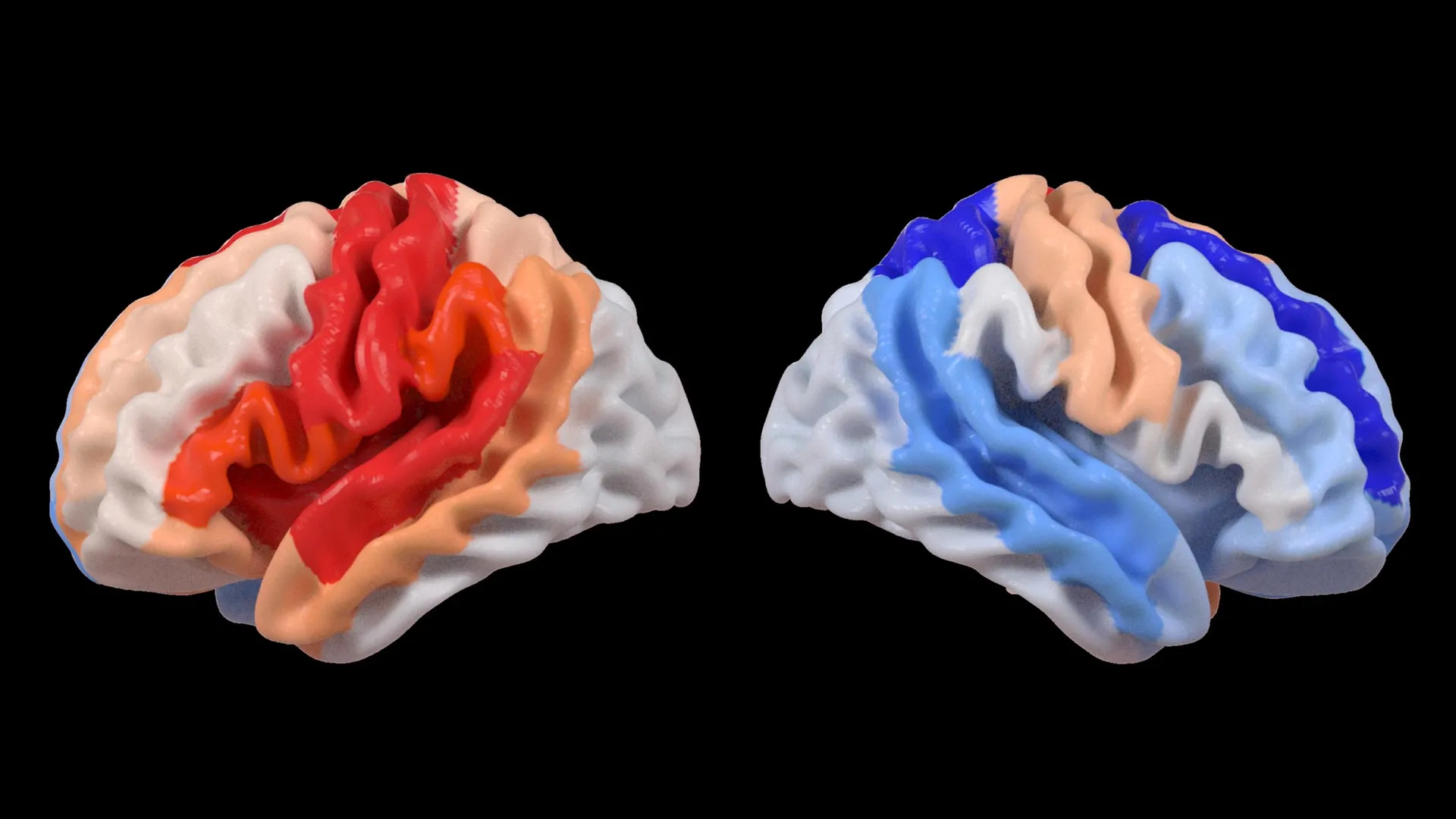
    new research in lancet digital health It suggests that the brain may respond to stroke in surprising ways. Researchers at the USC Mark and Mary Stevens Neuroimaging and Informatics Institute (Stevens INI) have found that people who become severely disabled after a stroke may show signs of “youthful” brain structure in undamaged areas. This likely reflects how the brain adapts and reorganizes after injury.

    This study was conducted as part of the Enhancing Neuroimaging Genetics through Meta-Analysis (ENIGMA) Stroke Recovery Working Group. Scientists analyzed brain scans from more than 500 stroke survivors collected at 34 research centers in eight countries. By applying a deep learning model trained on tens of thousands of MRI scans, the research team estimated the ‘brain age’ of different regions in each hemisphere and examined how stroke affects both structure and recovery.

    “We found that major strokes accelerate aging in the damaged hemisphere, but paradoxically the other side of the brain appears younger,” said Ho-Sung Kim, Ph.D., associate professor of research neurology at the Keck School of Medicine at the University of Southern California and co-senior author of the study. “This pattern suggests that the brain may be reorganizing itself and activating intact networks to compensate for lost function.”

    AI reveals brain rewiring after stroke

    To perform the analysis, the researchers used a type of artificial intelligence called a graph convolutional network. The system estimated the biological age of 18 brain regions based on MRI data. This predicted age was then compared to each person’s actual age. This is a measure known as brain-predicted age difference (brain-PAD) and serves as an indicator of brain health.

    When these brain age measurements were compared with motor function scores, a clear pattern emerged. Stroke survivors with severe motor impairment showed younger-than-expected brain ages in regions contralateral to the injury site, even after more than 6 months of rehabilitation. This effect was particularly strong in the fronto-parietal network, which plays a key role in motor planning, attention, and coordination.

    “These findings suggest that when stroke damage causes further loss of motor skills, undamaged areas on the opposite side of the brain may adapt to compensate,” Professor Kim explained. “We observed this in the contralesional fronto-parietal network, which exhibits a more ‘youthful’ pattern and is known to support motor planning, attention and coordination. Rather than indicating complete motor recovery, this pattern may reflect the brain’s attempt to adjust when the damaged motor system no longer functions normally. This provides a new way to look at neuroplasticity that has not been captured by traditional imaging.”

    Big data reveals hidden patterns

    The study relied on ENIGMA, a global collaboration that integrates data from more than 50 countries to better understand the brain in different settings. By standardizing MRI data and clinical information from many research groups, the team created the largest stroke neuroimaging dataset of its kind.

    “By pooling data from hundreds of stroke survivors around the world and applying cutting-edge AI, we are able to detect subtle patterns in brain reorganization that are invisible in small studies. These findings about regional differences in brain aging in chronic stroke may ultimately guide individualized rehabilitation strategies,” said Arthur W. Toga, Ph.D., Stevens INI Director and USC Professor.

    Towards personalized stroke recovery

    The researchers plan to continue this study by following patients over time, from the early stages after stroke through long-term recovery. Tracking how aging patterns and structural changes in the brain progress may help doctors tailor treatments to each person’s unique recovery process, with the aim of improving treatment outcomes and quality of life.

    Watch this video created by Stevens INI to learn more about the connection between contralesional neuroplasticity and movement disorders.

    The study, “MRI-based deep learning prediction of regional brain age reveals contralesional neuroplasticity associated with severe motor deficits in chronic stroke: the global ENIGMA study,” was funded by National Institutes of Health (NIH) grant R01 NS115845 and supported by international collaborators including the University of British Columbia, Monash University, Emory University, and the University of Oslo.


    Source link

    Visited 4 times, 1 visit(s) today
    Share. Facebook Twitter Pinterest LinkedIn Telegram Reddit Email
    Previous ArticleDoes crying really make you feel better? New psychological research shows it depends on key factors
    Next Article Limiting social media to one hour a day reduces feelings of isolation in those suffering.
    healthadmin

    Related Posts

    After 100 years, scientists finally uncover the hidden laws behind cosmic rays

    May 14, 2026

    Huge ‘stealth’ magma surge triggers thousands of earthquakes beneath Atlantic island

    May 14, 2026

    Scientists say taking a daily multivitamin may slow aging

    May 14, 2026

    Giant squid discovery reveals hidden deep-sea world off the coast of Australia

    May 14, 2026

    Organic molecules discovered in 66-million-year-old dinosaur bones shake up paleontology

    May 14, 2026

    Scientists discover strange way CO2 cools parts of Earth’s atmosphere

    May 14, 2026
    Add A Comment

    Comments are closed.

    Categories

    • Daily Health Tips
    • Discover
    • Environmental Health
    • Exercise & Fitness
    • Featured
    • Featured Videos
    • Financial Health & Stability
    • Fitness
    • Fitness Updates
    • Health
    • Health Technology
    • Healthy Aging
    • Healthy Living
    • Holistic Healing
    • Holistic Health & Wellness
    • Medical Research
    • Medical Research & Insights
    • Mental Health
    • Mental Wellness
    • Natural Remedies
    • New Workouts
    • Nutrition
    • Nutrition & Dietary Trends
    • Nutrition & Superfoods
    • Nutrition Science
    • Pharma
    • Preventive Healthcare
    • Professional & Personal Growth
    • Public Health
    • Public Health & Awareness
    • Selected
    • Sleep & Recovery
    • Top Programs
    • Weight Management
    • Workouts
    Popular Posts
    • 1773313737_bacteria_-_Sebastian_Kaulitzki_46826fb7971649bfaca04a9b4cef3309-620x480.jpgHow Sino Biological ProPure™ redefines ultra-low… March 12, 2026
    • the-pros-and-cons-of-paleo-dietsThe Pros and Cons of Paleo Diets: What Science Really Says April 16, 2025
    • pexels-david-bartus-442116The food industry needs to act now to cut greenhouse… January 2, 2022
    • 1773729862_TagImage-3347-458389964760995353448-620x480.jpgDespite safety concerns, parents underestimate the… March 17, 2026
    • Improve Mental Health10 Science-Backed Practices to Improve Mental Health… March 11, 2025
    • 1773209206_futuristic_techno_design_on_background_of_supercomputer_data_center_-_Image_-_Timofeev_Vladimir_M1_4.jpegMulti-agent AI systems outperform single models… March 11, 2026

    Demo
    Stay In Touch
    • Facebook
    • Twitter
    • Pinterest
    • Instagram
    • YouTube
    • Vimeo
    Don't Miss

    Musicians show a small but steady advantage in sustained attention from childhood to adulthood

    By healthadminMay 14, 2026

    Learning a musical instrument may strengthen your attention and alertness from childhood to adulthood, according…

    Supreme Court upholds access to mifepristone while litigation continues

    May 14, 2026

    Making instant judgments about dating apps can hurt your sense of worth as a partner.

    May 14, 2026

    Eli Lilly contributes $50 million to UNICEF’s childhood health initiatives

    May 14, 2026

    Subscribe to Updates

    Get the latest creative news from SmartMag about art & design.

    HealthxMagazine
    HealthxMagazine

    At HealthX Magazine, we are dedicated to empowering entrepreneurs, doctors, chiropractors, healthcare professionals, personal trainers, executives, thought leaders, and anyone striving for optimal health.

    Our Picks

    Eli Lilly contributes $50 million to UNICEF’s childhood health initiatives

    May 14, 2026

    Epic, Cleveland Clinic joins CMS preclearance effort

    May 14, 2026

    After 100 years, scientists finally uncover the hidden laws behind cosmic rays

    May 14, 2026
    New Comments
      Facebook X (Twitter) Instagram Pinterest
      • Home
      • Privacy Policy
      • Our Mission
      © 2026 ThemeSphere. Designed by ThemeSphere.

      Type above and press Enter to search. Press Esc to cancel.