

Close Menu

    Subscribe to Updates

    Get the latest creative news from FooBar about art, design and business.

    What's Hot

    Musicians show a small but steady advantage in sustained attention from childhood to adulthood

    May 14, 2026

    Supreme Court upholds access to mifepristone while litigation continues

    May 14, 2026

    Making instant judgments about dating apps can hurt your sense of worth as a partner.

    May 14, 2026
    Facebook X (Twitter) Instagram
    Facebook X (Twitter) Instagram
    Health Magazine
    • Home
    • Environmental Health
    • Health Technology
    • Medical Research
    • Mental Health
    • Nutrition Science
    • Pharma
    • Public Health
    • Discover
      • Daily Health Tips
      • Financial Health & Stability
      • Holistic Health & Wellness
      • Mental Health
      • Nutrition & Dietary Trends
      • Professional & Personal Growth
    • Our Mission
    Health Magazine
    Home » News » Scientists have solved the mystery of missing ocean plastic – and the answer is alarming
    Nutrition Science

    Scientists have solved the mystery of missing ocean plastic – and the answer is alarming

    healthadminBy healthadminMarch 29, 2026No Comments4 Mins Read
    Scientists have solved the mystery of missing ocean plastic – and the answer is alarming
    Share
    Facebook Twitter Reddit Telegram Pinterest Email


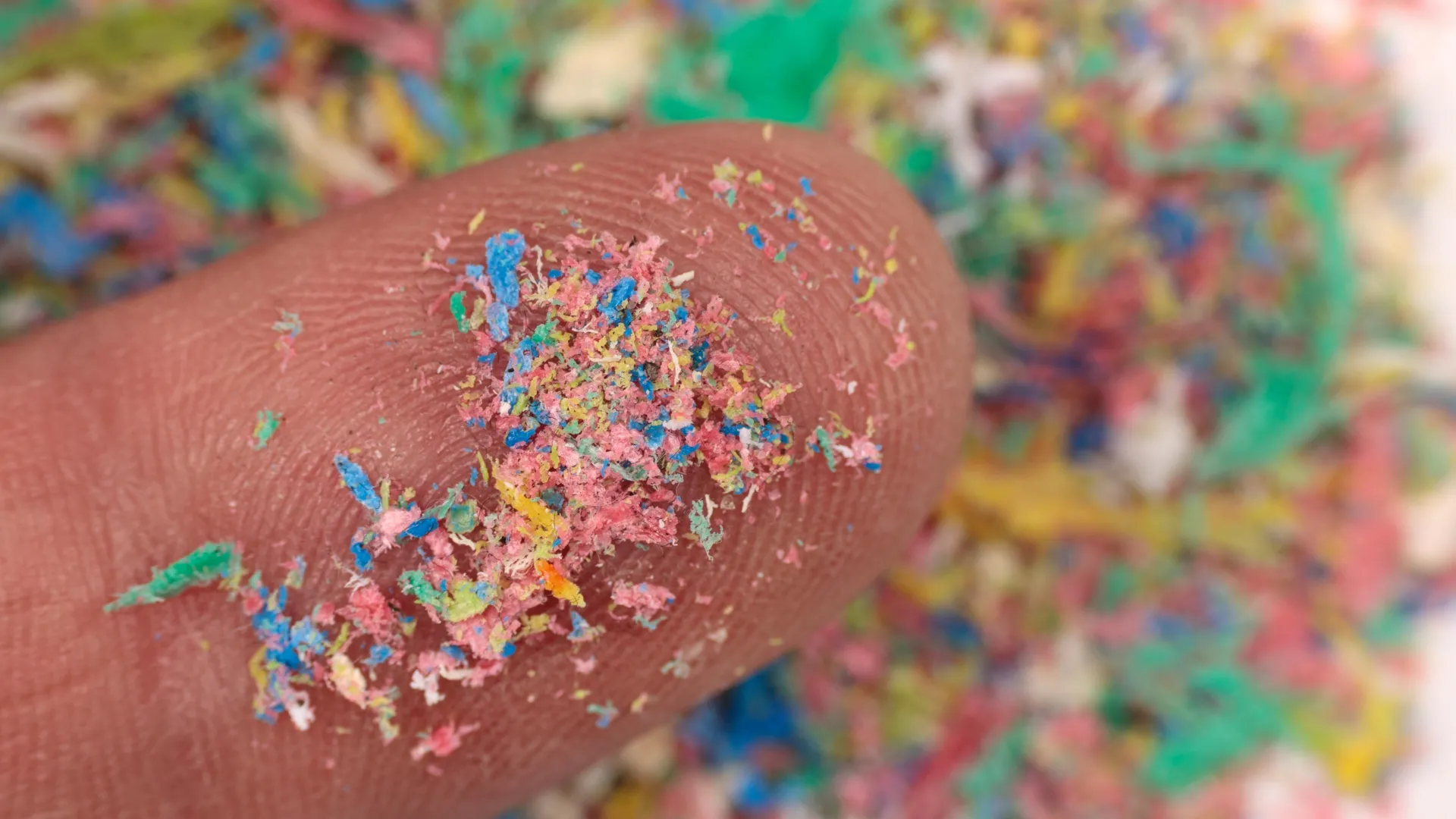
    Scientists have discovered something surprising in the Atlantic Ocean. Much of the plastic pollution may no longer be visible at all. Instead, it exists as nanoplastics, extremely small particles measured in billionths of a meter.

    “This estimate indicates that there is more plastic in the form of nanoparticles floating in this region of the ocean than larger microplastics and macroplastics floating in the Atlantic Ocean and even oceans around the world,” said Helge Niemann, a NIOZ researcher and professor of geochemistry at Utrecht University. In mid-June, he received a €3.5 million grant to further investigate nanoplastics and what might ultimately happen.

    Tiny plastic particles discovered during ocean expedition

    To collect the data, Sophie ten Hietobrink, a master’s student from Utrecht, spent four weeks aboard the research vessel RV Pelagia. The ship traveled from the Azores to the European continental shelf, collecting water samples at 12 different locations.

    Each sample was carefully filtered to remove anything larger than 1 micrometer. What remained contained the smallest particles. “By drying and heating the remaining material, we were able to measure the characteristic molecules of different types of plastic using mass spectrometry in our laboratory in Utrecht,” explains Ten Hietbrink.

    First actual measurement of marine nanoplastics

    Previous studies have confirmed the presence of nanoplastics in seawater, but no one has been able to calculate how much is actually present. This study is the first time scientists have come up with meaningful estimates.

    Niemann points out that this progress was made possible by combining expertise in ocean research and atmospheric science, including the contribution of Utrecht University scientist Dusan Materic.

    27 million tons of invisible plastic

    When the team took measurements across the North Atlantic, the results were surprising. They estimate that around 27 million tons of nanoplastics are floating in this region alone.

    “It’s a shocking amount,” says Ten Hietbrink. This discovery may finally solve a long-standing mystery. Scientists have struggled to account for all the plastic ever produced. Much of that seemed to be missing. The study suggests that most of it has broken down into small particles and is currently floating in the ocean.

    How do nanoplastics enter the ocean?

    These microscopic plastics come from multiple sources. Large plastic pieces can become fragmented over time due to sunlight. Rivers also transport plastic particles from land to the ocean.

    Another route comes from the atmosphere. Nanoplastics can travel through the air, fall into the ocean with rain, or settle directly on water surfaces through a process known as dry deposition.

    Potential risks to ecosystems and human health

    The widespread presence of nanoplastics raises serious concerns. Nieman points out that these particles are small enough to enter living organisms.

    “We already know that nanoplastics can penetrate deep into our bodies. Nanoplastics are also present in brain tissue,” he says. Since it is now known to exist in the ocean, it is thought to travel throughout the food web, from microbes to fish and ultimately humans. The full effects on ecosystems and health are still unknown and require further research.

    What scientists still don’t know

    There are still important gaps in knowledge. The researchers did not detect certain common plastics such as polyethylene and polypropylene in the smallest particle range.

    “It’s entirely possible that they were masked by other molecules in the study,” Nieman says. The research team also wants to see if similar levels of nanoplastics exist in other oceans. Early signs suggest this may be the case, but further research is needed.

    Prevention may be the only solution

    While this discovery fills a critical gap in our understanding of ocean pollution, it also presents a difficult reality. These particles are too small and spread too widely to be removed.

    “The nanoplastics that are out there can never be cleaned up,” Niemann emphasizes. The findings highlight the urgency of preventing further plastic pollution before it develops into a more persistent and invisible problem.


    Source link

    Visited 7 times, 1 visit(s) today
    Share. Facebook Twitter Pinterest LinkedIn Telegram Reddit Email
    Previous ArticleThis hidden water condition could explain why life exists
    Next Article Depression in early adolescence is associated with attention problems that worsen over time
    healthadmin

    Related Posts

    After 100 years, scientists finally uncover the hidden laws behind cosmic rays

    May 14, 2026

    Huge ‘stealth’ magma surge triggers thousands of earthquakes beneath Atlantic island

    May 14, 2026

    Scientists say taking a daily multivitamin may slow aging

    May 14, 2026

    Giant squid discovery reveals hidden deep-sea world off the coast of Australia

    May 14, 2026

    Organic molecules discovered in 66-million-year-old dinosaur bones shake up paleontology

    May 14, 2026

    Scientists discover strange way CO2 cools parts of Earth’s atmosphere

    May 14, 2026
    Add A Comment

    Comments are closed.

    Categories

    • Daily Health Tips
    • Discover
    • Environmental Health
    • Exercise & Fitness
    • Featured
    • Featured Videos
    • Financial Health & Stability
    • Fitness
    • Fitness Updates
    • Health
    • Health Technology
    • Healthy Aging
    • Healthy Living
    • Holistic Healing
    • Holistic Health & Wellness
    • Medical Research
    • Medical Research & Insights
    • Mental Health
    • Mental Wellness
    • Natural Remedies
    • New Workouts
    • Nutrition
    • Nutrition & Dietary Trends
    • Nutrition & Superfoods
    • Nutrition Science
    • Pharma
    • Preventive Healthcare
    • Professional & Personal Growth
    • Public Health
    • Public Health & Awareness
    • Selected
    • Sleep & Recovery
    • Top Programs
    • Weight Management
    • Workouts
    Popular Posts
    • 1773313737_bacteria_-_Sebastian_Kaulitzki_46826fb7971649bfaca04a9b4cef3309-620x480.jpgHow Sino Biological ProPure™ redefines ultra-low… March 12, 2026
    • the-pros-and-cons-of-paleo-dietsThe Pros and Cons of Paleo Diets: What Science Really Says April 16, 2025
    • pexels-david-bartus-442116The food industry needs to act now to cut greenhouse… January 2, 2022
    • 1773729862_TagImage-3347-458389964760995353448-620x480.jpgDespite safety concerns, parents underestimate the… March 17, 2026
    • Improve Mental Health10 Science-Backed Practices to Improve Mental Health… March 11, 2025
    • 1773209206_futuristic_techno_design_on_background_of_supercomputer_data_center_-_Image_-_Timofeev_Vladimir_M1_4.jpegMulti-agent AI systems outperform single models… March 11, 2026

    Demo
    Stay In Touch
    • Facebook
    • Twitter
    • Pinterest
    • Instagram
    • YouTube
    • Vimeo
    Don't Miss

    Musicians show a small but steady advantage in sustained attention from childhood to adulthood

    By healthadminMay 14, 2026

    Learning a musical instrument may strengthen your attention and alertness from childhood to adulthood, according…

    Supreme Court upholds access to mifepristone while litigation continues

    May 14, 2026

    Making instant judgments about dating apps can hurt your sense of worth as a partner.

    May 14, 2026

    Eli Lilly contributes $50 million to UNICEF’s childhood health initiatives

    May 14, 2026

    Subscribe to Updates

    Get the latest creative news from SmartMag about art & design.

    HealthxMagazine
    HealthxMagazine

    At HealthX Magazine, we are dedicated to empowering entrepreneurs, doctors, chiropractors, healthcare professionals, personal trainers, executives, thought leaders, and anyone striving for optimal health.

    Our Picks

    Eli Lilly contributes $50 million to UNICEF’s childhood health initiatives

    May 14, 2026

    Epic, Cleveland Clinic joins CMS preclearance effort

    May 14, 2026

    After 100 years, scientists finally uncover the hidden laws behind cosmic rays

    May 14, 2026
    New Comments
      Facebook X (Twitter) Instagram Pinterest
      • Home
      • Privacy Policy
      • Our Mission
      © 2026 ThemeSphere. Designed by ThemeSphere.

      Type above and press Enter to search. Press Esc to cancel.