


For early humans living nearly 800,000 years ago, access to fire may have influenced where they chose to settle. New research suggests that these ancient communities relied on an abundant and reliable fuel source: driftwood that accumulated naturally along lake shores. Rather than spending time searching for a specific type of wood, they seem to have utilized readily available materials.
A steady supply of firewood may have helped maintain fires for cooking and other daily activities. Researchers think this may also explain why people keep returning to the same places over generations. This place offered more than food and water. It also provided an easy way to keep the fire burning.
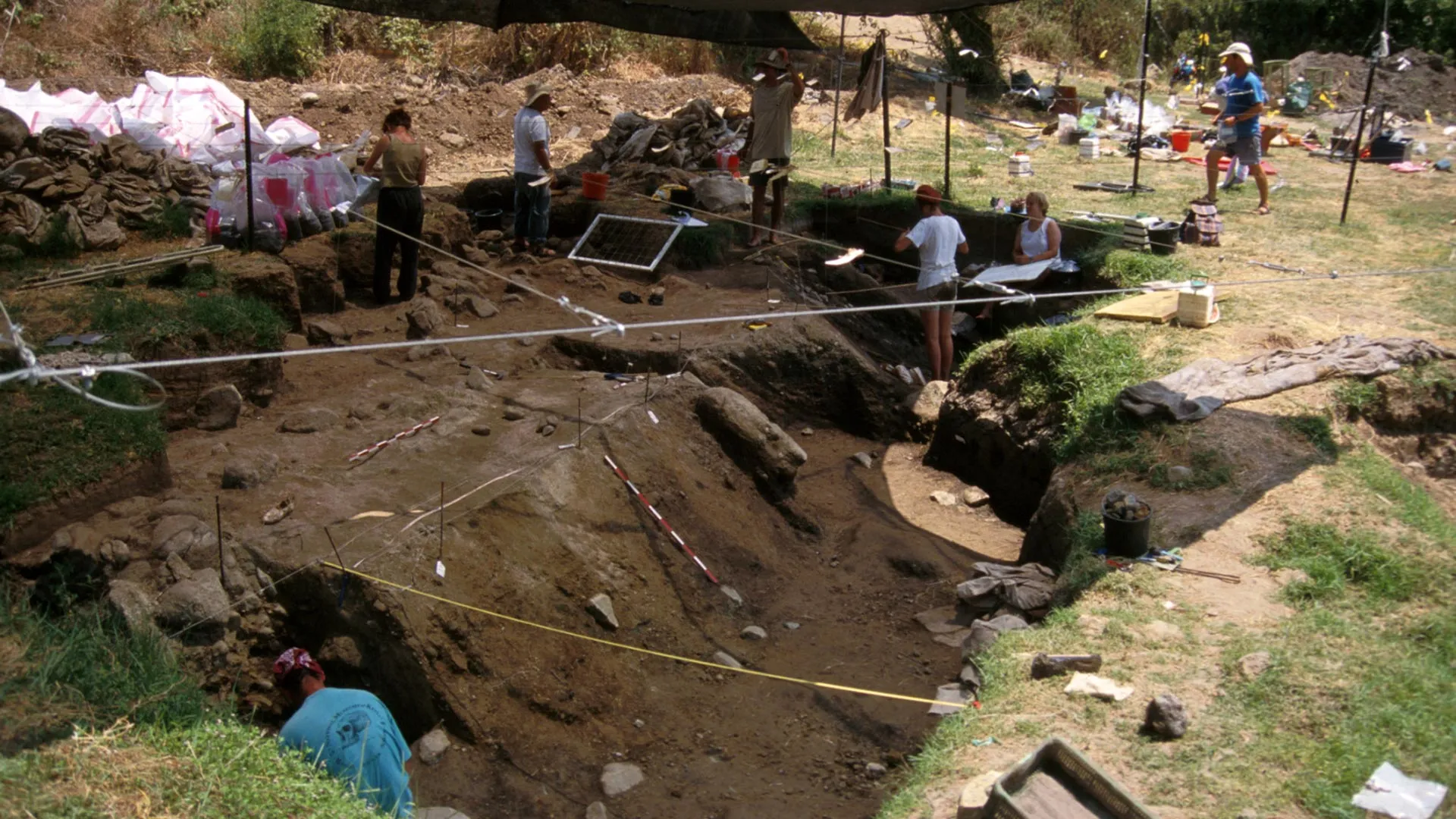
Nearly 800,000 years ago, groups of early humans assembled along the shores of a large lake in what is now northern Israel. They hunted large animals, cooked fish using controlled fires, and organized various aspects of daily life around a communal hearth. Even small pieces of charcoal left over from fires could reveal important details about how these people interacted with their environment, according to a new study.
Published in Quaternary Science Reviewthis study recreates life at the Acheuli ruins of Gesher Benot Yaakov (GBY). An international research team from Israel, Spain and Germany investigated an unusually rich collection of ancient charcoal preserved at the site. The team included Professor Nama Goren Inbar (Hebrew University), Professor Nira Alperson Affil, Dr. Yoel Melamed (University of Bar-Ilan), Professor Ethel Allué (University Rovira y Virgili and Catalan Institute of Paleoecology), and Professor Brigitte Urban (University of Leuphana). Their findings provide new insights into how early humans collected fuel and managed fire, suggesting a higher level of environmental awareness and planning than previously recognized.
Rare charcoal offers a window into the past
It is rare that charcoal remains in ruins this old. As a result, the large collection recovered from GBY provides an extremely rare opportunity to study the daily behavior of some of the earliest known fire users.
While many prehistoric sites contain limited or uncertain evidence of fire, GBY preserves a detailed record of repeated fire use over tens of thousands of years.
The site contains more than 20 archaeological layers that record repeated occupations along the shores of Paleo-Hula Lake. Excavations led by Professor Nama Goren Inbar of the Hebrew University of Jerusalem have revealed a vibrant landscape to which Asur hunter-gatherers returned for generations. Researchers found stone tools made of flint, limestone, and basalt, the remains of hunted animals, and numerous plant foods such as fruits, nuts, and seeds collected from the lake shore.
One layer of particular interest captures evidence of large-scale hunting events. Researchers found an elephant skull and bones with straight tusks, along with stone tools and plant remains. The placement of the remains indicates that the animal was slaughtered and processed on site.
Fire played a central role in this ancient community. This evidence, first identified in GBY by Professor Nira Alperson Affil of Bar-Ilan University, suggests that fire was used regularly rather than occasionally. The hearth served as a center for activities such as preparing meals, making utensils, and socializing.
Ancient firewood reveals the landscape
The new study focused on one occupational group dating back about 780,000 years. Scientists examined 266 pieces of charcoal under a microscope, identifying the internal structure of the wood and identifying which plant species had been burned.
Analysis revealed an astonishing range of species, including ash, willow, grape, oleander, olive, oak, pistachio, and pomegranate. Remarkably, pomegranate charcoal represents the earliest known evidence of this fruit tree in the Levant.
Researchers were surprised to discover that the charcoal contained a greater diversity of plant matter than other plant debris recovered from the site, including seeds, fruit, and unburned wood. This suggests that firewood collection provided a wider sample of the surrounding environment than other plant collection activities.
By combining identified species, ancient landscapes can be reconstructed. This region likely included both moist riparian habitats and open Mediterranean woodlands. More importantly, the charcoal reveals how early humans used those environments.
Driftwood may have energized daily life
This evidence suggests that local residents did not carefully select specific tree species for fuel. Instead, they appear to have relied heavily on driftwood that was naturally deposited along the coast.
Branches and logs carried by the water likely gathered near the edge of the lake and provided an easily available source of firewood. The composition of the charcoal closely matches the type of wood expected in its environment, supporting the idea that people simply collected what nature provided.
This finding points to greater potential. Access to fuel may have influenced where these communities chose to live. Lake shores provided fresh water, edible plants, game animals, materials for tools, and a reliable source of firewood needed to maintain fires.
Evidence of fish cooking and advanced fire use
The study also sheds light on how fire was used. The researchers found that areas containing large amounts of charcoal often overlapped with concentrations of fish carcasses, particularly the characteristic teeth of large carp.
This pattern provides further evidence that controlled fire was used to cook fish at the site about 800,000 years ago.
This finding strengthens the view that GBY hominins had advanced cognitive abilities. They were able to manage fire, organize activities around the hearth, and incorporate fire into broader survival strategies.
Interestingly, this study suggests that fuel gathering may have required less planning than activities such as hunting large animals or producing stone tools. Instead of searching for specific woods, people likely used whatever fuel was readily available.
Taken together, this evidence depicts a highly capable community that understood its surroundings and repeatedly returned to sites that provided the resources needed for long-term survival.
GBY charcoal assemblages provide an excellent dataset for investigating the relationships between fire use, environmental conditions, and human behavior. The discovery further advances scientific understanding of early fire use and highlights how local resources may have shaped patterns of settlement and survival during the Middle Pleistocene.
