


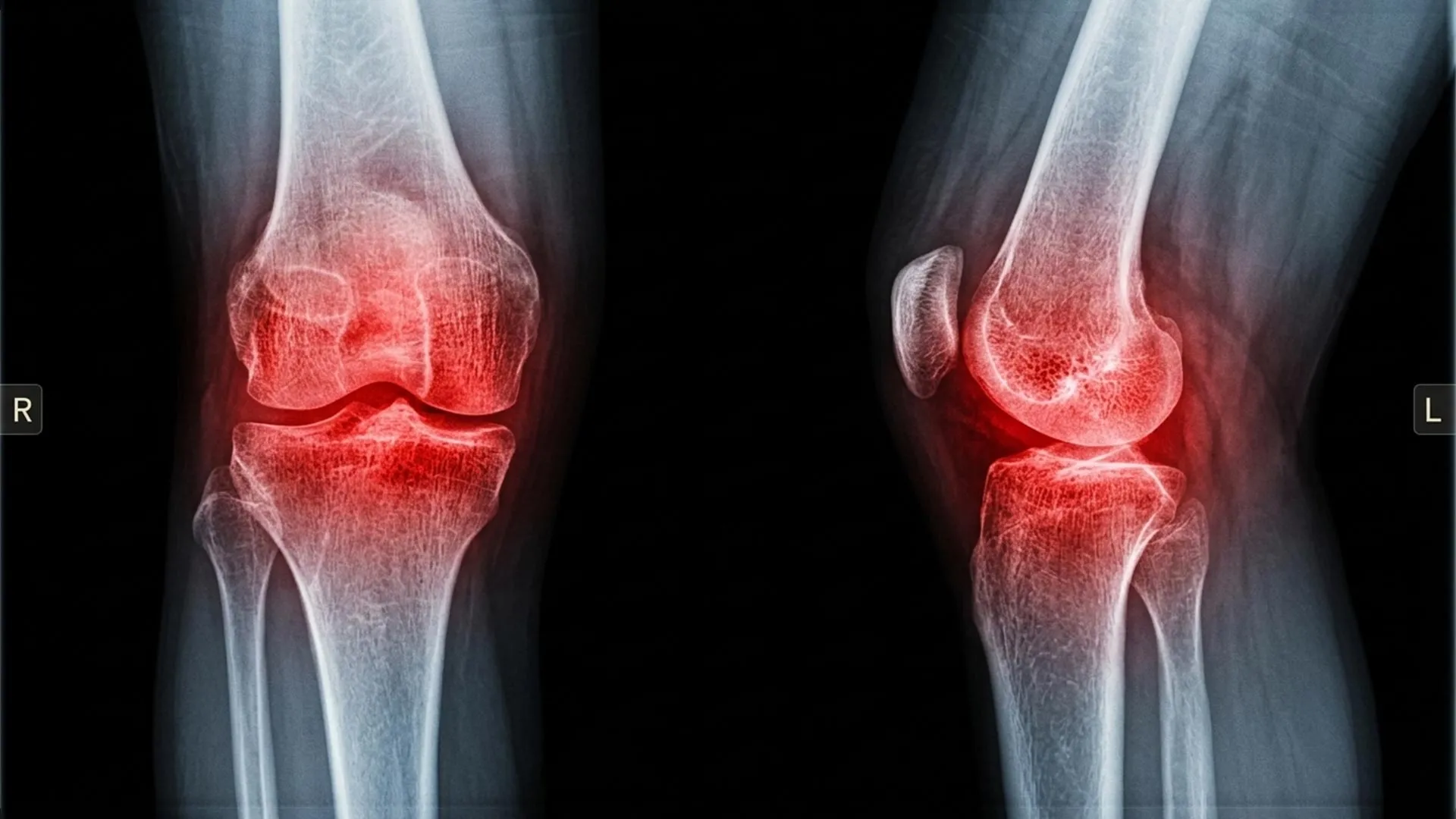
Almost one in four adults over the age of 40 has painful osteoarthritis. This osteoarthritis can make daily activities difficult and is one of the leading causes of disability in adults. This disease causes the cartilage that cushions joints to gradually wear away. Once that damage occurs, doctors currently cannot reverse it. Treatment usually focuses on pain relief, with joint replacement surgery being an option when symptoms become severe.
A clinical trial by researchers at the University of Utah, New York University, and Stanford University points to another possibility: changing the way people walk.
Personalized foot angle changes
In a one-year randomized controlled trial, patients with knee osteoarthritis were trained to make small individualized changes in the angle of their feet while walking. The results were amazing. Participants who received active gait retraining reported pain relief comparable to medication, and MRI scans suggested less deterioration of knee cartilage than participants in the placebo group.
This research lancet rheumatologyco-led by Scott Ulrich of the John and Marcia Price Institute of Technology at the University of Utah. According to the researchers, this was the first placebo-controlled study to show that a biomechanical intervention can treat osteoarthritis symptoms and slow joint damage.
“We know that in patients with osteoarthritis, higher loads on the knee accelerate progression, and that changing the angle of the foot can reduce the load on the knee,” said Ulrich, assistant professor of mechanical engineering. “Thus, while the idea of biomechanical interventions is not new, there are still no randomized, placebo-controlled studies showing that they are effective.”
Why you need to customize your treatment
The study focused on people with mild to moderate osteoarthritis of the medial compartment of the knee, the inside of the joint. Because this area typically bears more weight than the outside, it is a common area for knee osteoarthritis.
However, there are important challenges. The optimal gait adjustment is not the same for everyone. Some people reduce the stress on their knees by turning their toes slightly inward. Some people benefit more by turning outward. For some people, making the wrong changes may not relieve or even increase the strain on the painful area of the knee.
“Previous trials have prescribed the same intervention to everyone, resulting in some people not seeing reductions in joint loading or even increasing it,” Ulrich said. “We used a personalized approach to select a new gait pattern for each individual. This improved how much the individual was able to reduce strain on the knee, which may have contributed to the positive effects on pain and cartilage that we saw.”
This point becomes even more important as relevant research continues to show that changes in foot angle can affect forces on the knee differently depending on the person, joint, and gait pattern. 2024 survey bioengineeringFor example, we found that medial and lateral rotation of the foot affected different peaks of knee loading, while moments at the ankle joint in the study group did not increase significantly. Other studies have also shown that wearable sensors can be used to measure foot progression angles outside of the lab, supporting the idea that future versions of this approach may be easier to deliver in real life.
Court system
During the first two visits, participants underwent a baseline MRI and walked on a pressure-sensitive treadmill while a motion-capture camera measured their walking mechanics. The researchers used these data to determine whether it was more effective for each person to point their toes inward or outward, and whether a 5° or 10° adjustment was best.
This screening also identified people who were unlikely to benefit because the tested leg angle changes did not reduce the load on their knees. Those participants were excluded from the study. The researchers noted that including such people in the early studies may help explain why previous results on pain were less clear.
Of the 68 participants who enrolled, half were assigned to the actual gait retraining group. The other half received a sham treatment designed to control for the placebo effect. In the sham group, participants were assigned a foot angle that matched their natural gait pattern. In the intervention group, each participant underwent a change in leg angle that maximized knee load reduction.
train new walking patterns
Both groups returned to the lab and participated in six training sessions per week. During these sessions, participants walked on a treadmill while wearing devices on their shins that provided vibration feedback. The vibrations helped maintain a specified foot angle during walking.
After a 6-week training period, participants were encouraged to practice their walking patterns for at least 20 minutes each day. The goal was for movement to be automatic. Follow-up results showed that participants, on average, stayed within 1 degree of the prescribed foot angle.
One year later, participants reported their knee pain levels and underwent a second MRI so researchers could measure changes in cartilage health.
“The pain relief reported compared to the placebo group was somewhere between what you would expect from an over-the-counter drug like ibuprofen and a narcotic like OxyContin,” Ulrich said. “Using MRI, we also found that markers of cartilage health degraded more slowly in the intervention group, which was very interesting.”
Drug-free options for long treatment intervals
For some participants, one of the most appealing parts of this approach was that it didn’t require pills, surgery, braces, or devices to wear all day. One participant said, “I don’t have to take any medication or wear any devices. I’m so happy because now that part of my body will be there for the rest of my days.”
This long-term adherence may be one of the intervention’s greatest strengths. Many people develop osteoarthritis decades before they are candidates for joint replacement surgery. During that time, you may rely heavily on pain medications and other symptom management strategies.
“Especially for people in their 30s, 40s and 50s, osteoarthritis can require decades of pain management before joint replacement surgery is recommended,” Ulrich said. “This intervention could help fill that large treatment gap.”
The 2026 Conference Abstracts on Osteoarthritis and Cartilage also highlighted continued interest in placebo-controlled trials of retraining foot progression angles and emphasized that researchers are still trying to determine which gait strategies are most effective for whom. However, this area remains an area of active research, and the 2025 Lancet Rheumatology clinical trial remains one of the most powerful clinical demonstrations of a personalized approach.
Why patients should not try this alone
Although the study results are promising, the researchers emphasized that this is not a simple “toe in” or “toe out” recommendation. This benefit depends on careful measurement and customization. For some people, making the wrong adjustments can actually increase the stress on your knees instead of reducing them.
Therefore, the process needs to be simplified for widespread use in the clinic. The motion capture systems used to dictate changes in each person’s gait are expensive and time-consuming. The research team envisions a future version that could be delivered through physical therapy, where retraining occurs not only in the lab but also during regular walks.
“We and other companies have developed technology that can be used to personalize and deliver this intervention in clinical settings using mobile sensors such as smartphone video and ‘smart shoes,'” Ulrich said. Future studies of this approach are needed to make this intervention widely available to the public.
If you are interested in participating in future research, please contact Ulrich’s Exercise Bioengineering Laboratory by completing this web form.
The study was titled “Personalized Gait Retraining for Medial Compartment Knee Osteoarthritis: A Randomized Controlled Trial.” lancet rheumatology. Co-lead authors are Valentina Mazzoli of New York University’s Department of Radiology and Julie Kolesar of Stanford University’s Human Performance Lab. Co-authors include Amy Schilder, Andrea Finley, Felix Kogan, Gary Gold, Scott Delp, and Gary Beaupre of Stanford University and VA Palo Alto Medical Center. This research was supported by federal research grants from the Department of Veterans Affairs, the National Institutes of Health, and the National Science Foundation.
