


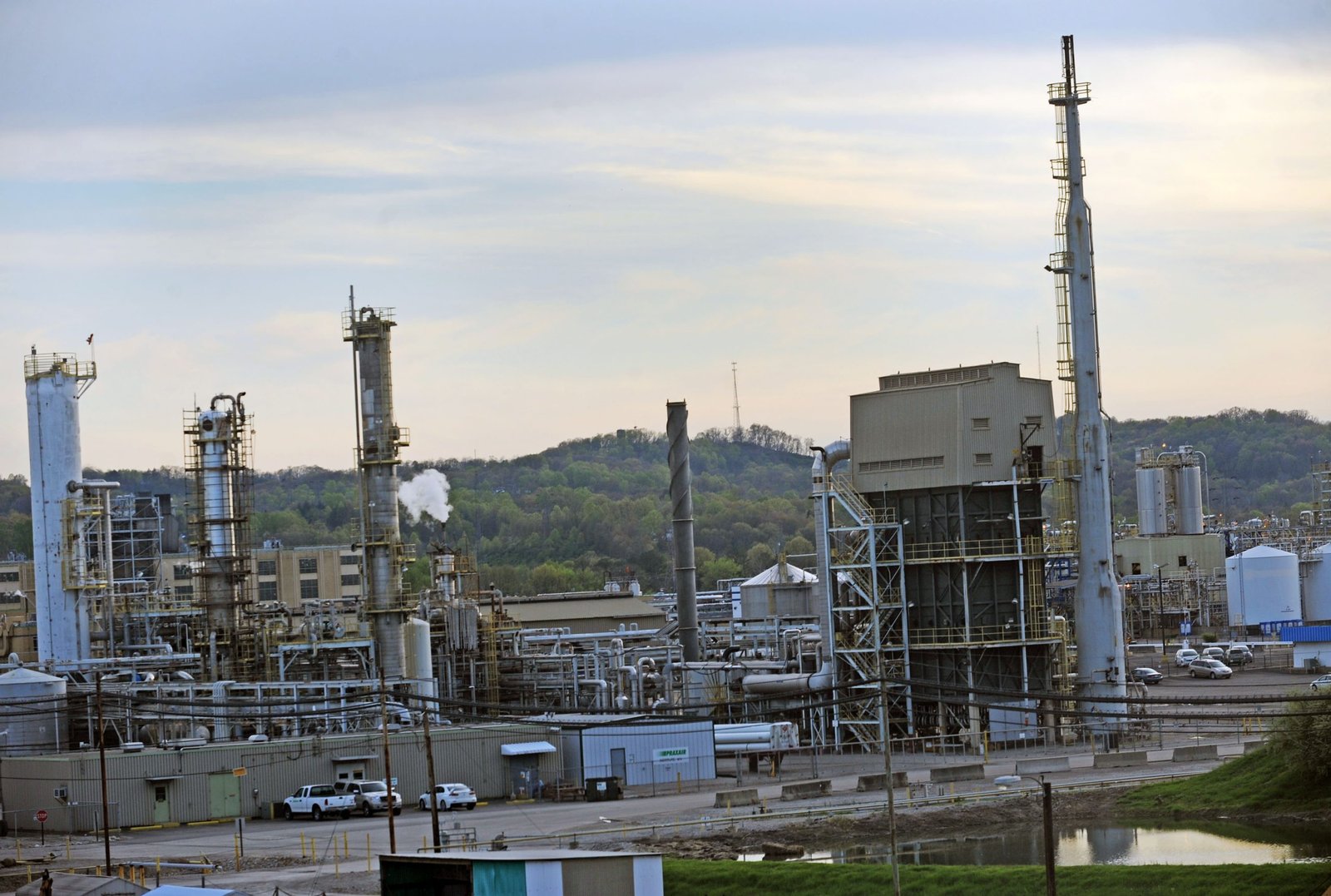
After a chemical leak last month at the Ames Goldsmith plant in Kanawha County killed two workers and injured dozens more, federal investigators quickly arrived in West Virginia and began looking into what went wrong.
This could eliminate the federal agency tasked with determining the root causes of accidents.
President Trump has proposed cutting funding for the Chemical Safety and Hazard Investigation Board, a small federal agency that investigates chemical disasters and promotes safety improvements.
Labor advocates and former CSB members have warned that dismantling the agency could make states like West Virginia, which has a long history of deadly industrial chemical incidents, even more vulnerable to future disasters.
The commission has opened investigations into eight chemical incidents in West Virginia since 2008.
Maya Nye, federal policy director for the environmental health group Coming Clean, said that before the recent chemical leak at the Ames Goldsmith plant, the 2008 explosion at the Bayer Crop Science plant in the lab was the deadliest in recent memory. Two workers also died in the incident.
“These are preventable,” she said. “Every incident that occurs is 100% preventable.”
Many of the state’s chemical facilities are concentrated along the Kanawha Valley industrial corridor.
These incidents include the 2010 incident at DuPont’s Bell plant in which a toxic release killed a worker. And in 2014, a spill at Freedom Industries contaminated drinking water for hundreds of thousands of people.
Supporters argue that the effects of chemical accidents often reach far beyond factory workers.
Nye said low-income neighborhoods and neighborhoods of color often face the greatest risk. But it is the employees who suffer the most losses.
“Workers are usually the first and hardest hit,” she said.
Why is the Chemical Safety Committee important?
The White House argued that the CSB would overlap with work already done by the Environmental Protection Agency and the Occupational Safety and Health Administration, and that eliminating the CSB would reduce the size of the federal government.
But Congress established the commission after growing frustration that existing federal agencies were not adequately investigating large-scale industrial chemical disasters.
The Safety Commission was created by the Clean Air Act Amendments of 1990 and has a budget of approximately $14 million and fewer than 50 employees. It is modeled after the National Transportation Safety Board, which investigates plane and train accidents.
Former OSHA Assistant Secretary Jordan Barab said the CSB investigates industrial chemical cases differently than enforcement agencies.
While OSHA and EPA primarily determine whether companies are violating existing regulations, Barab said the commission is conducting an extensive “root cause” investigation into why the disaster occurred in the first place.
“They can look at other issues and other causes that aren’t necessarily covered by regulations or standards,” he said.
CSBs can uncover issues such as worker fatigue, lack of regular maintenance, changes in management and broader safety culture issues within the facility, he said.
After toxic chemicals were released at DuPont’s Bell plant in 2010, the commission’s investigators determined that a lack of planning and communication between plant operators and deferred maintenance were the causes of the leak.
CSB has issued more than 1,000 recommendations to date, many of which have since been adopted by businesses, industry groups, and state regulators.
“Many of the ways the industry has modernized to improve safety are based on recommendations issued by the CSB,” Barab said.
The board has also publicly criticized the Trump administration’s recent efforts to roll back chemical safety regulations known as risk management program rules.
Earlier this year, the board warned that reversing the measure would represent a “significant setback” in preventing catastrophic chemical accidents.
President Trump proposes cuts to multiple worker protection agencies
The Trump administration has proposed abolishing boards many times in the past.
Rick Engler, a former CSB commissioner appointed by President Barack Obama, said Congress has repeatedly rejected past attempts to eliminate the CSB.
Despite its size, Engler said eliminating the commission would leave a gaping hole in federal chemical safety oversight.
“It’s a very small agency,” he said. “But without CSB, preventive solutions will not be identified.”
Kelly Moore, a spokeswoman for Sen. Shelley Moore Capito, R-Virginia, said the senator is a longtime supporter of the CSB and has voted to support additional funding for the agency in the past.
Moore declined to say whether Capito supports President Trump’s cuts this year.
Potential losses for the agency come as the federal Workplace Safety Administration already faces staffing shortages and proposed budget cuts.
The Trump administration has proposed cuts to other agencies that protect workers. He proposed cutting OSHA’s budget by 7.5% and the Federal Mine Safety Administration’s budget by 10%.
Barab said the administration’s push to abolish the agency is particularly puzzling because the board primarily provides security guidance and recommendations, the kind of security that Trump officials have said they prefer over heavy-handed enforcement.
“It’s ironic that we’re trying to destroy an institution that is actually doing exactly that,” he said.
thisarticleteeth,Mountain State Spotlight First published inCreative Commons Attribution-NoDerivatives 4.0 International License.
