


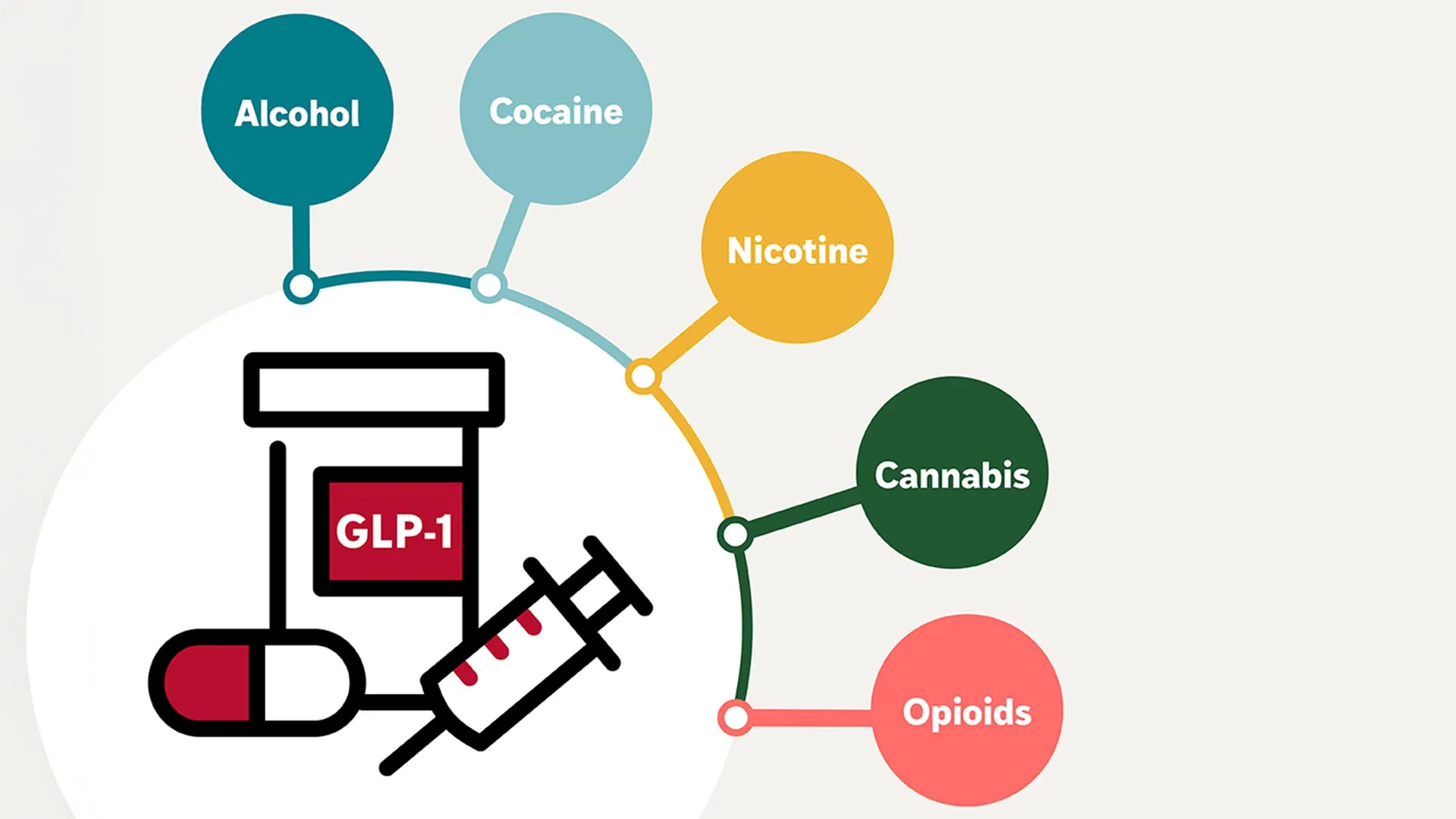
Popular GLP-1 drugs such as Ozempic, Wegovy, Mounjaro, and Zepbound are already transforming the treatment of type 2 diabetes and obesity. Now, new research suggests that these drugs may also help prevent and treat addiction to a wide range of substances.
Researchers at Washington University School of Medicine in St. Louis have found that GLP-1 drugs are associated with a reduced risk of developing substance use disorders related to alcohol, nicotine, cannabis, cocaine, opioids, and other substances. The drug was also associated with fewer overdoses, hospitalizations, and drug-related deaths among people already living with addiction.
The survey results are BMJ.
GLP-1 Drugs and Addiction
GLP-1 receptor agonists were originally developed to help manage type 2 diabetes, but their popularity has skyrocketed in recent years due to their effectiveness in weight loss. Along the way, researchers began to notice something unexpected.
Some patients reported losing interest in alcohol or cigarettes after starting the medication. Previous observational studies have also found an association between GLP-1 treatment and reduced risk of alcohol and cannabis use disorders, opioid overdose, and alcohol-related hospitalizations.
However, most of the research to date has focused on individual substances. The researchers wanted to determine whether the effects extend to multiple forms of addiction and whether the drugs can help alleviate the most severe consequences associated with substance use disorders.
For their study, researchers analyzed the electronic health records of 606,434 U.S. veterans with type 2 diabetes.
Study surveyed over 600,000 veterans
Participants were divided into two groups. One group included people who did not have a substance use disorder at the beginning of the study. The second group consisted of people who had already been diagnosed with a substance use disorder.
Researchers looked at health records for up to three years after participants started taking either a GLP-1 receptor agonist (most commonly semaglutide, liraglutide, and dulaglutide) or another type of diabetes treatment, an SGLT2 inhibitor.
Of the 524,817 participants who did not have a substance use disorder at the start of the study, participants taking GLP-1 drugs were less likely to develop a substance use disorder over time.
Compared to patients taking non-GLP-1 diabetes medications, GLP-1 users had a 14% lower risk of developing a substance use disorder. Risk was low for all major substances tested, including alcohol (18%), cannabis (14%), cocaine (20%), nicotine (20%), and opioids (25%).
The researchers estimated that this would result in seven fewer new substance use disorder diagnoses per 1,000 GLP-1 users.
Reducing overdose and drug-related deaths
The study also looked at outcomes for 81,617 participants who already had a substance use disorder.
In that group, GLP-1 use reduced addiction-related emergencies and serious health consequences. After three years, participants who took GLP-1 drugs had 30% fewer emergency department visits, 25% fewer hospitalizations, 40% fewer overdoses, and 50% fewer drug-related deaths.
Overall, the researchers estimated that GLP-1 use reduced the incidence of serious addiction-related events by 12 per 1,000 users.
“In addiction medicine, many treatments target only one thing. For example, nicotine patches work for smoking, but not for alcohol. But no drug works for all addictive substances, much less any drug that works for all addictive substances,” said lead author Ziyad Al Ali, MD, clinical epidemiologist at WashU Medicine and chief of research and development services at the VA St. Louis Health System.
“What’s new about the GLP-1 drug is that it actually works against all the major substances, and it works uniformly. Not because it works specifically against alcohol or opioids or nicotine, but because it works against craving itself. It blunts that craving that draws people to what they’re addicted to.”
Targeting the biology of craving
Al-Aly said the study was inspired in part by patient reports describing unexpected changes in behavior after starting GLP-1 treatment.
The researchers also looked at evidence showing the presence of GLP-1 receptors in brain regions involved in reward processing. This raised the possibility that drugs could influence cravings that lead to addiction.
The findings suggest that GLP-1 drugs may act on common biological pathways underlying multiple forms of addiction. Rather than targeting a specific substance, the drug may be affecting the craving itself.
This idea is especially important because some addictive substances, including methamphetamine, currently have no approved drug treatments.
“GLP-1 could have a dual benefit for patients with chronic diseases such as diabetes and obesity who also suffer from substance use disorders, as one drug can treat both conditions at once,” Al-Aly said.
Possibility of new approaches to addiction treatment
Millions of Americans already use GLP-1 drugs, and that number continues to grow. If future studies confirm these findings, the public health implications could be significant.
Researchers say the results support conducting clinical trials specifically designed to test GLP-1 drugs as addiction treatments, including studies that can measure their effects on overdose and drug-related deaths.
“People who take these drugs for obesity often say that the ‘food noise,’ the persistent obsession with food that causes them to overeat, subsides,” Al-Aly said.
“Our research has broader implications: GLP-1 drugs may also quiet what I call ‘drug noise,’ the relentless craving that drives dependence on a variety of substances. Signals beyond the substance point to a common biology underlying addiction, and the underlying Rather than treating one addiction at a time, GLP-1 is moving beyond the noise of food to the noise of drugs and silencing the roar of addiction. ”
This study was funded by the U.S. Department of Veterans Affairs. The authors stated that the funder had no role in study design, data collection, analysis, or interpretation, manuscript preparation, review, approval, or decision to publish. The researchers also noted that the findings do not represent the views of the Department of Veterans Affairs or the U.S. government.
