


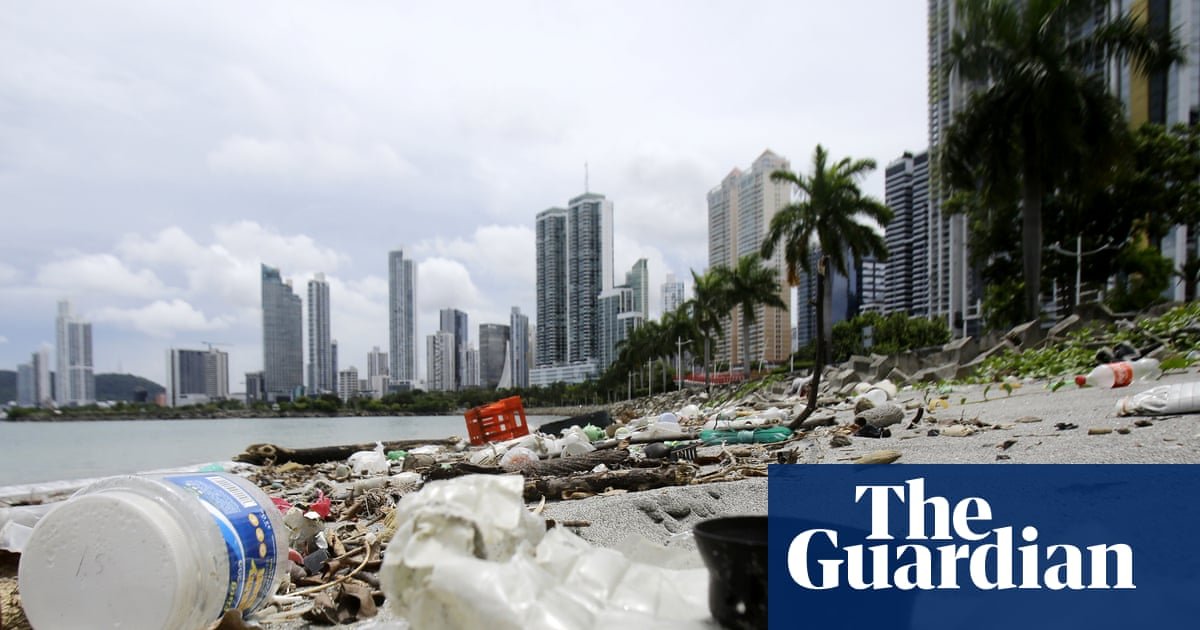
Plastic food wrappers, bottles, lids and caps are the most common litter on the world’s coastlines, a study has found.
Researchers reviewed data from more than 5,300 surveys of coastal litter to conduct the first global analysis of its kind. They found data from 355 existing studies on the subject.
“It’s something we use every day,” says Richard Thompson, founder of the International Marine Debris Research Unit at the University of Plymouth. “Even in countries where waste management is very advanced, these are the norm on the coast.”
He said he wasn’t surprised that the data included large amounts of single-use plastics, but was surprised by the fact that these items were found so consistently along the coastlines of all seven continents.
To create the analysis published in the journal One Earth, the researchers combed through data from hundreds of studies and sources, looking for surveys of coastal litter with similar methodology and providing data on the types of litter recorded. Their confidence in each country’s numbers was based on the number of studies found for that country and other factors.
A young herring gull picks up plastic waste on the coast of Cornwall, UK. Photo: Nick Taylor Wildlife/Alamy
The information collected spanned 94 countries, and the team was able to extrapolate from that data to include estimates for 18 additional countries. In 93% of these locations, food-related plastics were found in beach litter. No other form of trash was as prevalent. Plastic bags are included in 39% of countries’ data, and cigarettes are included in 38% of countries’ data.
However, there were some regional differences. For example, plastic bags were consistently popular in Asia.
The study also notes that banning plastic bags does not necessarily mean a reduction in such waste in a country, suggesting that this may be due to poor policy enforcement or other countries exporting the waste.
Although the study did not include microplastics or unidentifiable plastics, the authors noted that these tend to originate from larger, identifiable plastic litter.
Efforts to develop an international treaty to combat plastic pollution are in turmoil. The chairman of the treaty negotiations resigned in October following allegations of behind-the-scenes pressure from the United Nations Environment Programme, which is overseeing the negotiations. It was also revealed this month that Norway, the program’s biggest funder, is reviewing its funding for the organization.
The next round of talks may not take place until the end of 2026 or 2027.
Mr Thompson said policymakers could tackle plastic pollution by ensuring plastics were only used for essential purposes, and people were increasingly choosing refillable food and drink containers.
A mini excavator cleans up plastic and other waste at Mahim Beach in Mumbai, India. Photo: Rafiq Maqbool/AP
He added that the study’s global overview of the plastic pollution problem could help policy makers guide efforts to alleviate the problem.
Tamara Galloway, professor of ecotoxicology at the University of Exeter who was not involved in the study, said current economic models tend to treat many plastics as disposable.
“If we rephrase this as ‘the lost value of plastic,’ we might be able to work better with policy makers. We have this incredibly valuable resource and we’re just throwing it away,” she said.
