


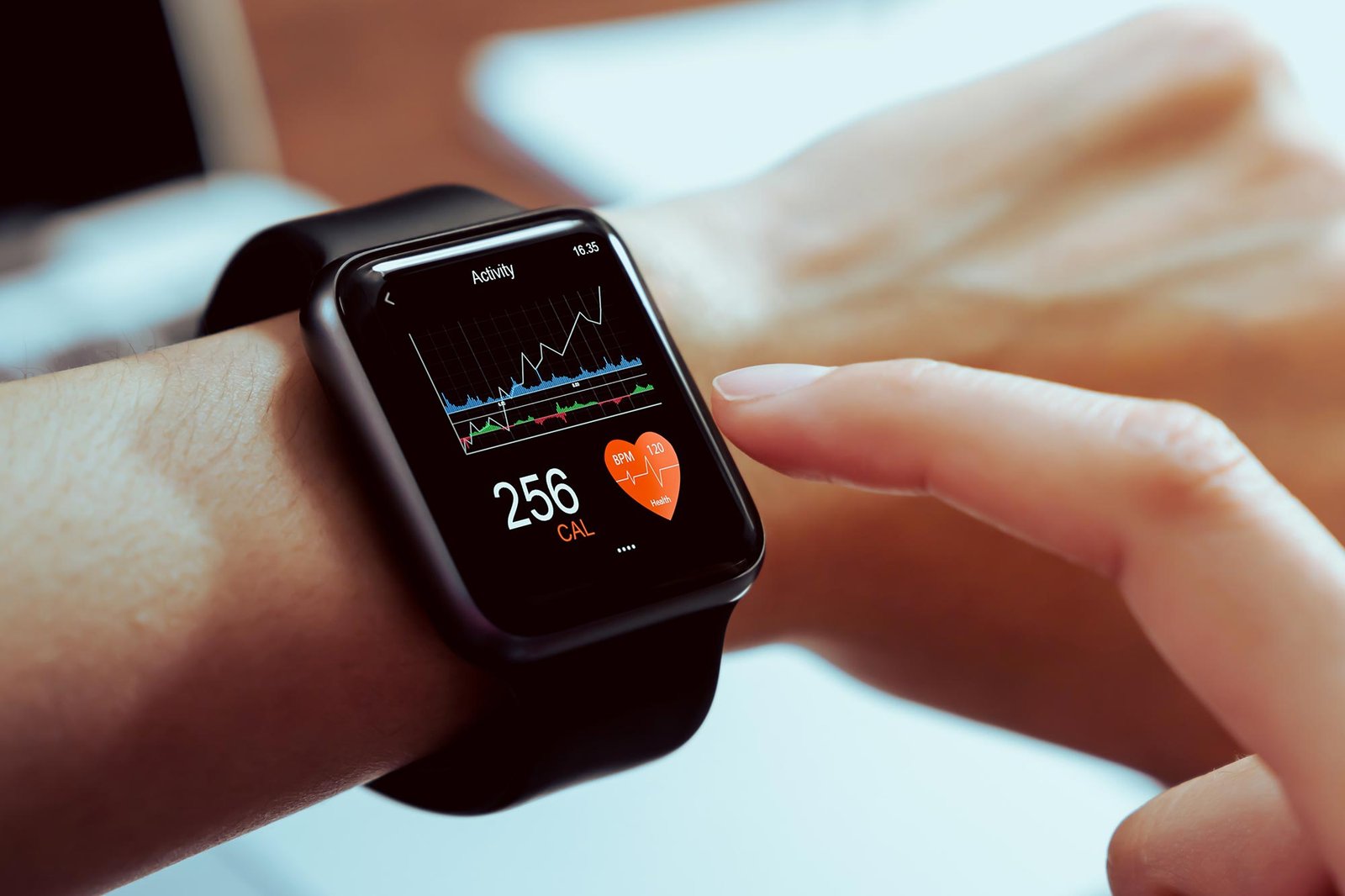
 As extreme heat and air pollution become more common, researchers are developing new ways to track how these environmental exposures affect humans in real time. Credit: Stock
In the pilot study, wearable devices and GPS Tracking can reveal the health impacts of heat and air pollution in real time, opening new possibilities for personalized environmental health monitoring.
As climate change increases the frequency of heat waves and worsens air pollution, scientists are looking for better ways to measure how these conditions affect people in real time. A new pilot study by researchers at the City University of New York finds that a combination of wearable devices, smartphone location tracking, and real-time surveys can successfully monitor environmental exposures and their direct physical and emotional effects.
This study JMIR formation research. The authors included Samira Ramjian and Melissa Blum as co-lead authors, as well as Lun Yu Tseng, Catherine Davey, Duke Shereen, and senior author Yoko Nomura.
“People move through different environments every day, and this approach allows us to capture that in real time,” said Ramjan, a doctoral student in the State University of New York Graduate Center Psychology Program. “We were surprised at how quickly the data revealed patterns, such as changes in heart rate variability and changes in mood, depending on where the participants were and what they were exposed to.”
Wearable devices reveal health and mood patterns
Participants in the study wore Fitbit smartwatches for about a month and completed a short mood survey called the Ecological Momentary Assessment several times each day. The researchers combined these responses with smartphone GPS data to estimate exposure to heat and pollutants such as nitrogen dioxide, particulate matter, and sulfur dioxide based on participants’ daily movements.
The results showed that this method is practical and useful. Increased exposure to heat and nitrogen dioxide was associated with changes in heart rate variability, which reflects the body’s ability to recover from stress. Increased exposure to sulfur dioxide increases feelings of tension and hopelessness.
The researchers also found that greater heat exposure corresponded to decreased self-reported sadness. This is a surprising result that may be related to increased outdoor activity and social interaction in warmer climates. The research team noted that larger studies are needed to better understand these findings.
“Even on a small scale, our experiments show that the relationship between environmental conditions and people’s physiological and emotional responses is more complex than traditional methods can capture,” said Blum, a medical student at the Icahn School of Medicine at Mount Sinai. “By combining wearable sensors, GPS data, and real-time surveys, we can build individualized exposure profiles that move with people throughout the day. This is a real shift away from relying on fixed monitors and home addresses.”
First study combining GPS, wearables, and surveying
“To our knowledge, this is the first study to combine wearable devices, ecological momentary assessments, and continuous GPS tracking to measure environmental exposures and their direct health effects,” said lead author Nomura, who is based at the Icahn School of Medicine at Mount Sinai and is a distinguished professor of psychology at the State University of New York Graduate Center and Queen’s College. “Although this is a small pilot, it demonstrates the integration of consumer technology and environmental epidemiology and could open the door to personalized approaches to preventive medicine.”
The researchers also identified ways to improve the system, including improving ease of use and participant compliance. These adjustments have already been incorporated into the next phase of the project. Nomura’s team is now using the updated system on a larger scale. National Institutes of Health (NIH)-supported research focuses on how prenatal and current environmental exposures influence brain development and mental health in adolescence.
The study comes as extreme heat and air pollution continue to increase, particularly affecting vulnerable populations such as children, pregnant people, people experiencing homelessness and people of low socio-economic status. Because environmental exposures can affect brain development and behavior, children may face greater risks in the long term.
Potential public health and clinical applications
This technology has the potential to go beyond research and ultimately support clinical care. Real-time monitoring of environmental exposures could help doctors make better decisions for patients whose symptoms are affected by heat or poor air quality.
“This is still early work, and we are careful not to read too much into a small sample,” Nomura said. “However, improving how we measure exposure is an important step in protecting public health, and these results give us confidence that this approach can be scaled.”
Reference: “Feasibility of integrating wearable devices and ecological instantaneous assessments for real-time environmental exposure estimation: A proof-of-concept study” Sameera Ramjan, Melissa Blum, Rung-Yu Tseng, Katherine Davey, Ahmed Duke Shereen, Yoko Nomura, May 8, 2026. JMIR formation research.
DOI: 10.2196/86615
This research was supported by a Professional Staff Congress – City University of New York (PSC-CUNY) research grant.
Never miss a breakthrough: join the SciTechDaily newsletter.
Follow us on Google and Google News.
