


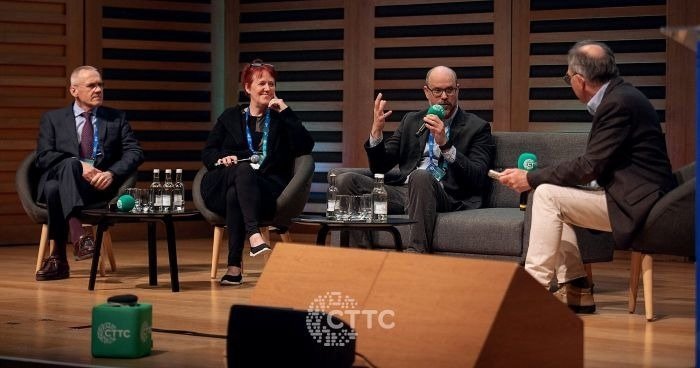
The Pistoia Alliance, a global nonprofit organization advocating for greater collaboration in life sciences research and development, released new polling data showing that trust and regulatory uncertainty are the biggest barriers to implementing AI in clinical trials, cited by half (50%) of respondents. The poll was conducted at the Clinical Trials Technology Council (CTTC) in London, where the Alliance hosted a panel discussion with regulators from the MHRA, the Danish Medicines Agency and the Swedish Medicines Agency.
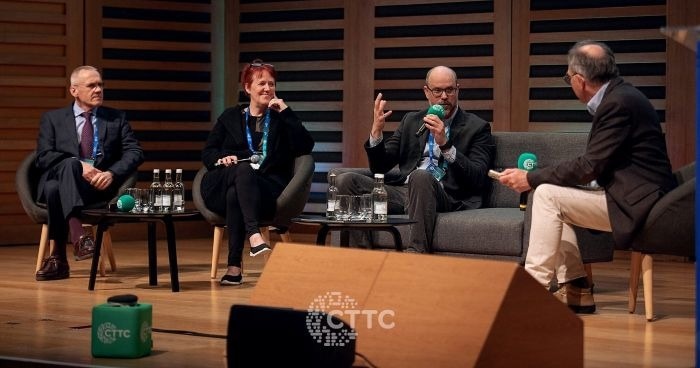
Left to right: Andrea Manfrin, MHRA Deputy Director of Clinical Investigation; Lisbeth Bregnhoj, Danish Medicines Agency GCP Inspector. Gabriel Westman, Head of AI at the Swedish Medical Products Agency. Thierry Escudier, Portfolio Lead, Pistoia Alliance. Image credit: Pistoia Alliance
A recurring message in Congress was that regulators are ready to deploy AI and are eager for early involvement from pharmaceutical companies to ensure deployment is safe and compliant. The Panel rightly emphasized that uncontrolled speed is not sufficient when patient safety is at risk. For AI to support large-scale clinical development, the industry needs a validated, auditable, and explainable approach rather than a black-box model that creates uncertainty for both sponsors and regulators. Regulators are not the enemy. They can partner with pharmaceutical companies and work together to formalize AI guidance that supports both parties. The Pistoia Alliance is helping to do just this by convening a pre-competitive working group that brings together pharmaceutical companies, technology providers and regulators around a common framework. ”
Dr. Becky Upton, Pistoia Alliance President
Polling data shows that AI is beginning to deliver value in clinical development, with 42% of respondents seeing early signs of return on investment (ROI) and a further 23% expecting ROI but not yet realizing it. Respondents say that over the next three to five years, AI will have the biggest impact on data cleaning, data analysis, and insight generation (48 percent), and patient retention and engagement (22 percent).
“It’s interesting that so many potential new treatments are emerging as more candidates discovered by AI successfully move downstream. However, this influx means more programs are competing for the same trial sites and patient populations. This poll also shows that clinical development professionals believe AI can address some of these pressures, particularly in patient procurement and engagement, which remains one of the industry’s most persistent challenges. Zahid Talia, director of CTTC organizer Open Pharma Research, said: “Our conference was a great start to exploring how technologies such as AI can support the industry as it moves towards a more patient-centric development. We look forward to seeing how these trends continue to develop at our 2027 conference.”
The poll also explored the value of real-world data, including social media views, in shaping clinical development operations. We found that 60% of respondents are already using, piloting, or investigating patient-generated data to inform clinical development decisions beyond marketing. More than half (58%) say the main benefit of listening on social media is being able to understand patient needs and monitor their emotions and experiences.
“The data shows that pharmaceutical companies are recognizing the value of social media as an opportunity to hear the unfiltered voice of patients. As drug development seeks to become more patient-centric, it is becoming increasingly important to collect data from outside the traditional clinical trial setting. The next step is to ensure that these data are collected in an ethical and standardized manner.” Comments Thierry Escudier, Clinical Portfolio Lead, Pistoia Alliance: “The Alliance has already begun this work by developing a best practice framework for the ethical use of social media data, and we hope to build on this work as we expand our role in the clinical arena. We are calling on pharmaceutical companies to come forward to fund and propose new projects in the clinical arena.”
