


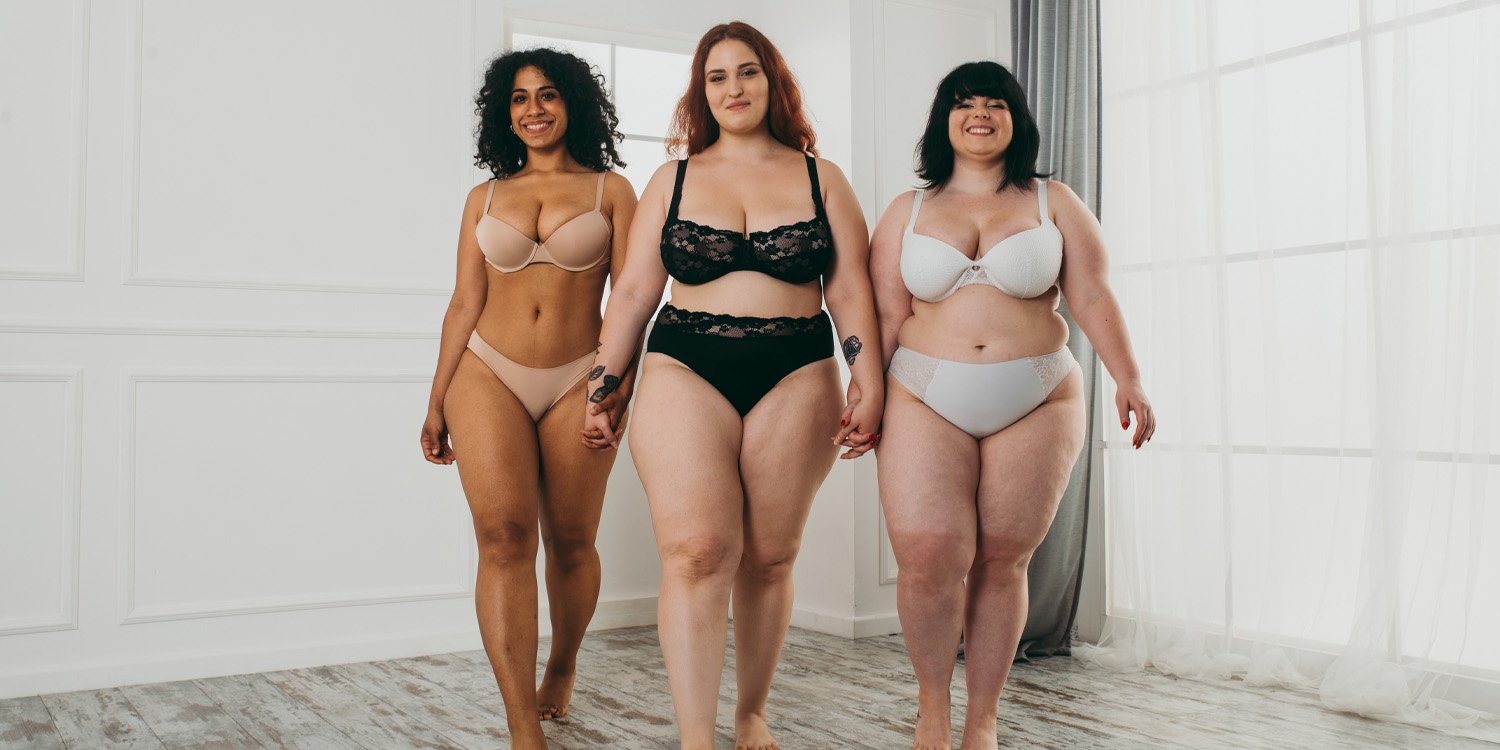
Recently, there has been a growing awareness of inclusivity in the media and fashion industry, with a wider range of body types and ethnicities being featured. However, the new analysis Proceedings of the National Academy of Sciences It turns out that the typical female fashion model’s body is very thin and has changed little over the past 25 years. While the range of expression expands into peripheral areas, the central ideal of beauty remains completely stable.
The media and fashion industry serve as central arbiters of body ideals, consistently emphasizing slender female physiques and toned male physiques. Despite growing calls for diversity, quantitative evidence tracking changes in representation over time remains limited. Past attempts to measure these trends have often relied on small samples or focused on specific geographic regions. This made it difficult to assess systemic changes across industries.
To address this gap, researchers set out to track exactly how representations have evolved over time. The study was led by Louis Boucherie, a researcher at the Technical University of Denmark and the University of Copenhagen. Boucherie collaborated with scientists at Northeastern University, Harvard Medical School, the Complexity Science Hub in Vienna, and other institutions in Europe and the United States.
Boucherie and colleagues compiled a dataset of 793,199 professional modeling records from 2000 to 2024. They gathered this information from major industry portfolio platforms where modeling agencies submit verified data. The records document a variety of work, including runway shows, magazine covers, editorials, and advertising campaigns.
Data included detailed physical measurements and visible characteristics such as hair color, eye color, and nationality. When self-reported demographic information was missing, the researchers used computer vision software to infer gender and ethnicity from profile photos. To accurately assess body fat levels, scientists have calculated an indicator called relative fat mass in the model.
Relative fat mass is a body composition index that uses height and waist circumference to estimate a person’s body fat percentage. Health experts believe this is a more accurate predictor of body fat percentage than traditional Body Mass Index. This allows researchers to accurately measure physical thinness without relying solely on weight data.
This analysis reveals striking contradictions in how beauty standards have evolved. On the surface, the diversity of body sizes represented in fashion media has increased over the past two decades. However, the average measurements for female models are incredibly stable.
For the last 24 years, the average female model has been around 177-178 centimeters, or about 5 feet 10 inches. Her waist always hovered around 60-61 centimeters, and her hips remained stable at about 88-89 centimeters. Only the average bust circumference consistently decreased, dropping from about 85 cm to 82 cm.
“On average, nothing happens. Everything is very stable,” Boucherie said. “Then when we look at the change in variation, we see what we expected: body size diversity has increased. But when we look at how that variation is distributed, we see that the middle is stable, so the outliers are the ones that are causing the change.”
Visualizing this data highlights the evolution of diversity in representation of female models from 2000 to 2024. Anthropometric measurements of height, bust, waist, hips, and relative fat mass remain stable throughout fashion shows, advertisements, magazine covers, and editorials. Only the bust shows some decline. At the same time, the standard deviations of these same measures have increased across all work types, indicating that the variation in representative body sizes has increased, even though central tendency has remained stable.
Along with these extreme changes, other visual features have also diversified. The distribution of hair colors will shift away from light phenotypes, with blondes decreasing and darker shades gaining share. The distribution of eye colors has similarly diversified, with blue eyes decreasing and brown eyes increasing. Country of origin by world region has also changed, with Eastern European representation peaking in the early 2000s and declining since then, while contributions from sub-Saharan Africa, East Asia, and South Asia have increased.
Despite this diversification of appearance phenotypes, core standards of beauty have not become more inclusive in terms of body composition. The industry has selectively adopted a small number of plus-size models to appear alongside traditional very thin models. To understand how these models compared to the general population, researchers matched their data to a large health survey of American women ages 17 to 30. There was little overlap in body fat distribution between the two groups.
“If you compare U.S. models to the general U.S. population, there’s very little overlap between the two. And if you look closely, you’ll see that even plus-size models are still below the average U.S. body type. So what we call plus-size in the fashion industry is much closer to the average American woman,” Boucherie said.
Scientists also focused on how different marginalized identities overlap, a concept known as intersectionality. They found that racial representation in fashion images has expanded significantly. The percentage of models identifying as non-white has increased from about 13 percent in 2011 to more than 40 percent in recent years. But the burden of size diversity falls heavily on those same non-white models.
The data shows that plus-size models are 4.5 times more likely to be non-white. This highlights the symbolic diversification of the industry to meet demands for expression without abandoning its core aesthetic.
“What these representation patterns ultimately mean is that the burden of representing diversity often falls on a relatively small group of non-white models,” Boucherie said. By employing non-white plus-size individuals, the fashion industry can project a diverse image without structurally expanding what is considered aspirational.
The authors also planned a data-driven prestige tier based on how often top brands share the same elite model. Elite fashion houses featured the thinnest models in the entire dataset. Interestingly, these top brands also had significantly higher adoption rates for plus-size models compared to mid-range brands. This has created a polarized environment at the top of the fashion world, where extreme thinness is the norm and occasional extreme outliers.
Finally, the researchers investigated whether government and industry regulations have been successful in changing beauty standards. They compared Milan Fashion Week’s 2006 regulations, which set strict minimum body mass index numbers for models, with a 2017 French law that requires a doctor’s certificate without a specific numerical cutoff. In Milan, strict numerical standards immediately reduced the number of extremely thin models appearing on the runway. The more flexible French law did not result in any detectable changes in body expression.
“What we are seeing is that in Milan, where there was a strict numerical threshold, the number of extremely thin models clearly decreased after the introduction of the regulation. However, in France, where the regulation was much looser and was based on doctor certification, we do not see a similar effect. We are very careful not to claim causation here, but descriptively speaking, the difference between a strict threshold and a flexible system is very noticeable,” Boucherie said.
The authors found some limitations to their approach. To process hundreds of thousands of images, computer algorithms relied on simplified categories. Gender was reduced to a binary classification, and ethnicity was categorized into broad white and non-white groups.
“The data doesn’t have very fine-grained racial categories. You basically have to work with whites and non-whites separately, which is obviously a coarse-grained method. But this is the only way to do the analysis consistently over time and across the dataset,” Boucherie said.
This broad classification risks obscuring the unique experiences of certain racialized groups and non-binary individuals. This study also mainly focused on female fashion images. Male models face similarly narrow ideals of muscular, toned physiques, but data for men vary less over time, making it difficult to draw similar detailed statistical conclusions.
Scientists caution that comparing the Milan and Paris regulations does not guarantee causation, but emphasizes a correlation. Still, the differences in results suggest that policy design is critical when attempting to change industry behavior. Future research could explore these dynamics in user-generated social media content and monitor how artificial intelligence reproduces these same narrow standards when generating synthetic media.
“I think people already knew there was a problem, but it’s been talked about over and over again. What we’ve done is quantify it, and I think that’s the new part. We’re just here to say there’s a problem, and it’s up to the advertisers and the people who put on the fashion shows and edit the magazines to decide what to do with that information,” Boucherie said.
The study, “Cultural Evolution of Beauty Standards,” was authored by Louis Boucherie, Sagar Kumar, Katharina Ledebur, August Lohse, and Karolina Sliwa.
