

Close Menu

    Subscribe to Updates

    Get the latest creative news from FooBar about art, design and business.

    What's Hot

    Lonely people have worse memory, but their memory declines less quickly, study finds

    April 14, 2026

    New study shows that watching TikTok’s ‘thirst traps’ is linked to lower relationship trust and satisfaction

    April 14, 2026

    J&J aims to generate $100 billion annually in sports immunology with Tremfya and new Icotyde

    April 14, 2026
    Facebook X (Twitter) Instagram
    Facebook X (Twitter) Instagram
    Health Magazine
    • Home
    • Environmental Health
    • Health Technology
    • Medical Research
    • Mental Health
    • Nutrition Science
    • Pharma
    • Public Health
    • Discover
      • Daily Health Tips
      • Financial Health & Stability
      • Holistic Health & Wellness
      • Mental Health
      • Nutrition & Dietary Trends
      • Professional & Personal Growth
    • Our Mission
    Health Magazine
    Home » News » New method uses large amounts of data to power AI-driven protein engineering
    Discover

    New method uses large amounts of data to power AI-driven protein engineering

    healthadminBy healthadminApril 14, 2026No Comments4 Mins Read
    New method uses large amounts of data to power AI-driven protein engineering
    Share
    Facebook Twitter Reddit Telegram Pinterest Email


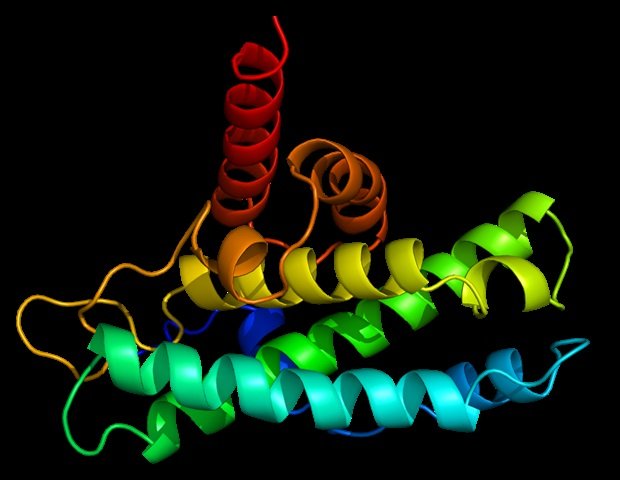
    Protein engineering is a perfect field for artificial intelligence research. Each protein is made up of amino acids. To optimize protein function, researchers modify proteins by replacing one of 20 different amino acids with another. For a protein that is only 50 amino acids long, there are approximately 1.13×1065 possible combinations to test. That’s 113 followed by 65 zeros, or 5 times 1 trillion zeros.

    With so many potential combinations and impossible to test in the lab, protein engineering is an ideal challenge for AI. Modeling which of these combinations yields the best results is a perfect problem for the vast computational power of this technology. However, the performance of AI is determined by the data used to train it. In some areas of protein engineering, adequate data did not exist.

    One of the biggest bottlenecks in AI-guided protein engineering is coming up with machine learning models. We are generating adequate and sufficient experimental data to train them. Optimizing Protein Function When manipulating protein activity, we had a very clear problem. The problem was that there wasn’t enough dataset to train an accurate model. ”


    Han Xiao, Professor of Chemistry, Biological Sciences, and Bioengineering at Rice University and Director of the SynthX Center

    To be able to generate an AI model that can accurately predict how to optimize a protein’s function and activity, Xiao’s team first needed to generate enough activity data about a specific protein to train the AI ​​model. Recently nature biotechnology In this publication, Xiao’s team and collaborators from Johns Hopkins University and Microsoft have done just that, sharing an approach that provides the necessary data and creates accurate models in just three days.

    This approach, called sequence display, can generate more than 10 million data points in a single experiment. These data points are input into a protein language AI model and used to predict which changes to a protein’s amino acids will result in desired changes in protein activity or function.

    “We were able to develop an activity-based barcoding system that records the activity of individual protein variants and generates the type of dataset needed to train machine learning models,” said Linqi Cheng, a graduate student at Rice University and lead author of the study. “The model was then able to predict mutations that significantly improved the activity of the proteins we were studying.”

    The research team chose a small CRISPR-Cas protein for their proof of concept. Although this protein was valued for its size, it had limited activity against stretches of DNA targeted for cleavage. The researchers wanted to identify a version that could cut a wider range of DNA targets.

    First, they mutated the DNA encoding the Cas9 protein, creating many variations. Each variant had an empty DNA barcode attached to it, as well as a special editor that changed the barcode depending on the protein’s activity level. As the protein activity level increased, the editor activity level also increased. This means that the most active protein variations have the greatest changes in their barcodes. The DNA barcode is then read by next-generation sequencing, which essentially scans the barcode and categorizes each sequence by activity level.

    “AI does not replace experimentation here; rather, it depends on experimentation,” Chen said. “Sequence Display provides us with a data foundation and the model helps us search a much larger data space for strong candidates.”

    The researchers were able to repeat the process using other proteins, including aminoacyl-tRNA synthetase, cytosine deaminase, and uracil glycosylase inhibitors. In both cases, the barcoding experiments generated enough data points to train an AI model.

    “What this approach provides is a practical framework for integrating AI and protein engineering,” said Xiao, who is also a scholar at the Cancer Prevention Research Institute. “Rather than relying on machine learning as a standalone solution, we combine it with experimental platforms that generate high-quality training data. This synergy enables advanced research tools and more efficient discovery of next-generation therapeutic proteins.”

    This research was supported by the SynthX Seed Award (SYN-IN-2024-002), the National Institutes of Health (R35-GM133706, R01-CA277838, R01-AI165079 to HX), the Robert A. Welch Foundation (C-1970 to HX), and the U.S. Department of Defense (W81XWH-21-1-0789; HT9425-23-1-0494, HT9425-25-1-0021 to HX), a 2024 Rice Synthetic Biology Institute Seed Grant (HX), and a Medical Research Award from the Robert J. Kleberg Jr. and Helen C. Kleberg Foundation.

    sauce:

    Reference magazines:

    Chen, L. Others. (2026). Sequence Display enables large sequence activity datasets for rapid protein evolution. nature biotechnology. DOI: 10.1038/s41587-026-03087-3. https://www.nature.com/articles/s41587-026-03087-3


    Source link

    Visited 1 times, 1 visit(s) today
    Share. Facebook Twitter Pinterest LinkedIn Telegram Reddit Email
    Previous ArticleDespite its accuracy, generative AI falls short in diagnostic reasoning
    Next Article The dirtiest thing in a public restroom isn’t the toilet seat.
    healthadmin

    Related Posts

    Drug discovery revolution through assay screening services

    April 14, 2026

    A new model to break the cycle of chronic nightmares in children

    April 14, 2026

    Very high prenatal PFAS exposure increases risk of childhood asthma

    April 14, 2026

    Laboratory studies of microplastics may not reflect real-world exposure

    April 14, 2026

    Study warns of rising teen dependence on AI companions

    April 14, 2026

    Despite its accuracy, generative AI falls short in diagnostic reasoning

    April 14, 2026
    Add A Comment
    Leave A Reply Cancel Reply

    Categories

    • Daily Health Tips
    • Discover
    • Environmental Health
    • Exercise & Fitness
    • Featured
    • Featured Videos
    • Financial Health & Stability
    • Fitness
    • Fitness Updates
    • Health
    • Health Technology
    • Healthy Aging
    • Healthy Living
    • Holistic Healing
    • Holistic Health & Wellness
    • Medical Research
    • Medical Research & Insights
    • Mental Health
    • Mental Wellness
    • Natural Remedies
    • New Workouts
    • Nutrition
    • Nutrition & Dietary Trends
    • Nutrition & Superfoods
    • Nutrition Science
    • Pharma
    • Preventive Healthcare
    • Professional & Personal Growth
    • Public Health
    • Public Health & Awareness
    • Selected
    • Sleep & Recovery
    • Top Programs
    • Weight Management
    • Workouts
    Popular Posts
    • the-pros-and-cons-of-paleo-dietsThe Pros and Cons of Paleo Diets: What Science Really Says April 16, 2025
    • Improve Mental Health10 Science-Backed Practices to Improve Mental Health… March 11, 2025
    • How Healthy Living Is Transforming Modern Wellness TrendsHow Healthy Living Is Transforming Modern Wellness… December 3, 2025
    • Kankakee_expansion.jpgCSL releases details of $1.5 billion U.S.… March 10, 2026
    • urlhttps3A2F2Fcalifornia-times-brightspot.s3.amazonaws.com2Fc32Fcd2F988500d440f2a55515940909.jpegA ‘reckless’ scrapyard with a history of… October 24, 2025
    • Healthy Living: Expert Tips to Improve Your Health in 2026Healthy Living: Expert Tips to Improve Your Health in 2026 November 16, 2025

    Demo
    Stay In Touch
    • Facebook
    • Twitter
    • Pinterest
    • Instagram
    • YouTube
    • Vimeo
    Don't Miss

    Lonely people have worse memory, but their memory declines less quickly, study finds

    By healthadminApril 14, 2026

    Feeling lonely can affect older people’s ability to remember things, but it doesn’t seem to…

    New study shows that watching TikTok’s ‘thirst traps’ is linked to lower relationship trust and satisfaction

    April 14, 2026

    J&J aims to generate $100 billion annually in sports immunology with Tremfya and new Icotyde

    April 14, 2026

    Scientists discover why bread causes weight gain without extra calories

    April 14, 2026

    Subscribe to Updates

    Get the latest creative news from SmartMag about art & design.

    HealthxMagazine
    HealthxMagazine

    At HealthX Magazine, we are dedicated to empowering entrepreneurs, doctors, chiropractors, healthcare professionals, personal trainers, executives, thought leaders, and anyone striving for optimal health.

    Our Picks

    Scientists discover why bread causes weight gain without extra calories

    April 14, 2026

    Wavelet, Aegis develops first AI non-invasive fetal EEG device

    April 14, 2026

    Blocking a single protein strengthens the immune system against cancer

    April 14, 2026
    New Comments
      Facebook X (Twitter) Instagram Pinterest
      • Home
      • Privacy Policy
      • Our Mission
      © 2026 ThemeSphere. Designed by ThemeSphere.

      Type above and press Enter to search. Press Esc to cancel.