


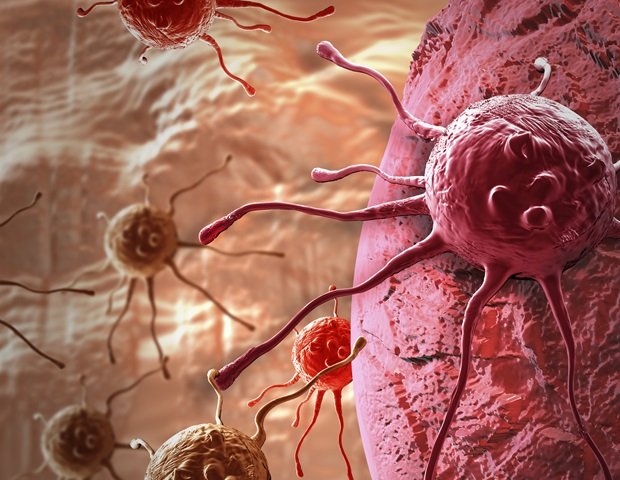
Cancer cells require large amounts of energy to survive and multiply. To generate that energy, they rely on structures within the cell called mitochondria. Mitochondria are often referred to as the “powerhouses” of the cell. Unlike healthy cells, cancer cells rely heavily on specialized helper proteins to maintain mitochondrial function even under the high stress of rapid proliferation.
This dependency creates opportunity. If we can disrupt that process in a targeted way, we might be able to damage cancer cells while sparing healthy tissue. ”
Anthony Olszanski, MD, RPh, Vice Chair for Clinical Research in Hematology-Oncology and Director of the Early Clinical Drug Development Phase 1 Program at Fox Chase Cancer Center
In a new study presented at the 2026 American Society of Clinical Oncology (ASCO) Annual Meeting, Olszanski and colleagues evaluated gamitrinib, an experimental treatment designed to exploit this vulnerability. Gamitrinib is a first-in-class treatment designed to work within the mitochondria of cancer cells, disrupting key survival functions that tumors use to grow and resist treatment.
Differences between Gamitrinib
Many of the earlier drugs targeting similar targets had severe side effects because they acted broadly throughout the cell. Gamitrinib is designed to concentrate within mitochondria, where cancer cells may be particularly vulnerable.
How to use:
- Targets mitochondria that help activate cancer cells.
- Tumors grow and destroy important survival functions that they use to resist stress.
- Target cellular compartments that may be particularly important for cancer cell survival.
Preclinical studies conducted in collaboration with Philadelphia’s Wistar Institute previously showed that gamitrinib can slow or stop tumor growth in multiple cancer types, prompting researchers to move forward with human trials.
About clinical trials
This ongoing Phase 1 clinical trial is the first time Gamitrinib has been tested in humans.
The study included adults with advanced solid tumors or lymphoma whose cancer no longer responds to standard treatments. Patients will receive weekly intravenous infusions of gamitrinib, with doses gradually increasing to assess safety.
so far:
- 18 patients are being treated at multiple dose levels.
- No dose-limiting side effects were observed.
- Blood samples show that the drug works as expected in the body.
This trial remains open and patients are continuing to be enrolled.
Why is this important for patients?
Early-stage trials are primarily designed to answer one question: “Can the drug be safely administered?”
“These early findings suggest that this drug can be safely administered at the dose levels tested so far.” Orzhansky. “This is an important first step in developing an entirely new approach to cancer treatment.”
If confirmed in future studies, this strategy could provide a new option for patients with difficult-to-treat cancers.
Looking to the future
Researchers are continuing to enroll patients to determine the optimal dose for future studies and to look for early signs that the drug may slow or shrink tumor progression. The findings will guide late-stage clinical trials designed to test how effective gamitrinib is against certain types of cancer.
The study, “A Phase 1, First-in-Human, Open-Label, Dose-Escalation and Expansion Study of Gamitrinib, a First-in-Class Mitochondrial-Specific Inhibitor of the Molecular Chaperone Heat Shock Protein 90 (Hsp90) in Patients with Advanced Cancer,” was presented at the 2026 American Society of Clinical Oncology (ASCO) Annual Meeting, May 29-June 2, in Chicago. Illinois.
sauce:
Temple University Health System
