


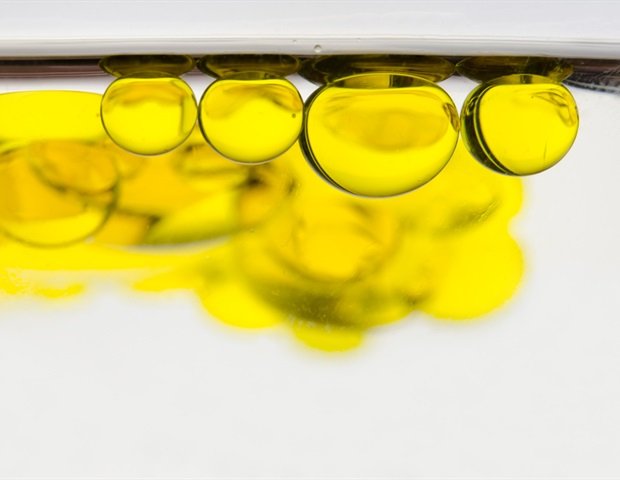
The formation of supramolecular polymers within living cells is a new strategy to modulate cellular function, and lipid droplets (LDs) are a promising environment for such processes. LDs are cellular organelles whose main components are neutral lipids such as triacylglycerols and cholesterol esters, and are deeply involved in cellular functions. However, the self-assembly of supramolecular polymers in neutral lipid-rich environments such as LDs is not well understood. To this end, researchers at Nagoya University WPI-ITbM in Japan achieved the programmable construction of supramolecular polymers in triolein (TO), one of the most abundant lipid components of LDs. This study nature communications July 6, 2026.
Traditional polymers are held together by covalent bonds, whereas supramolecular polymers are held together by non-covalent interactions (such as hydrogen bonding and stacking). It is more realistic and can be assembled, disassembled and reorganized. The study analyzed green and blue fluorescent monomers and their supramolecular polymerization in TO, a biologically relevant triacylglycerol, to mimic conditions found in LDs. For comparison, polymerization in dibutyl ether (DBE), which has similar polarity, was also analyzed. In particular, the neutral lipid medium of TO provided excellent conditions for precisely controlled supramolecular polymer growth.
By using fluorescent monomers, polymerization processes such as initial nucleation steps and aggregation can now be effectively followed using fluorescence imaging techniques. Sonication of monomer 1 in TO promoted aggregation, resulting in green-emitting aggregates.
Significant differences were observed in the process leading to aggregation between TO and DBE. Monomer 1 started aggregating immediately in DBE, whereas a clear lag was observed before the aggregation started (approximately 35 min) in TO. Although both TO and DBE have similar polarity, the structure of TO temporarily stabilizes the monomer and suppresses spontaneous nucleation through transient hydrogen-bonding interactions. Furthermore, the TO medium environment also suppressed undesirable aggregation between the formed supramolecular polymer fibers. These fibers remained dispersed in TO, but quickly aggregated in DBE.
These properties of TO provide ideal conditions for growing supramolecular polymers in a controlled manner, and we demonstrated this by growing polymers composed of alternating combinations of green-emitting monomer 1 and blue-emitting monomer 2. By using a supramolecular polymer of green-emitting monomer 1 as a seed followed by addition of blue-emitting monomer 2, we successfully formed a triblock supramolecular polymer with a green-emitting center and a blue-emitting tail. Furthermore, a pentablock supramolecular polymer was formed by adding green-emitting monomer 1 to the triblock supramolecular polymer. These structures were directly visualized using confocal laser microscopy.
These results suggest that the neutral lipids found in LDs may serve as functional media to control supramolecular polymerization. This study provides guidelines for the design of self-assembled molecules that operate in neutral lipid environments and fundamental insights for the development of molecular technologies targeting the intracellular lipid environment. In the future, this research is expected to contribute to the development of treatments for diseases involving LD and to the elucidation of the functions of cellular organelles.
sauce:
Nagoya University Institute of Transformative Biomolecules (ITbM)
Reference magazines:
Shinya Naruse Others. (2026) Programmable construction of supramolecular polymers achieved in a neutral lipid environment. nature communications. DOI: 10.1038/s41467-026-74683-9. https://www.nature.com/articles/s41467-026-74683-9
