


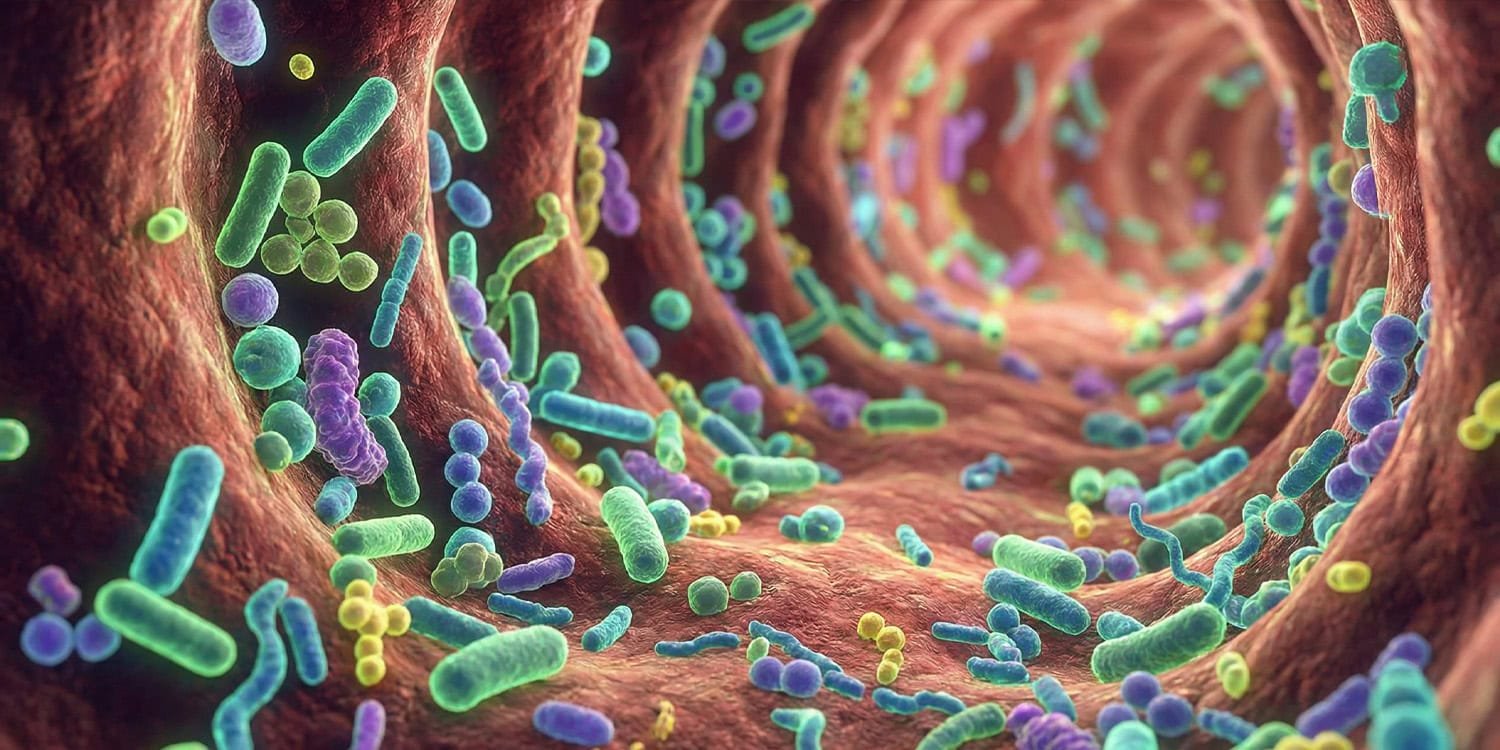
As the body ages, changes in the bacteria living within the digestive system weaken the sensory connections between the gut and the brain, which can contribute to memory loss. By restoring normal communication along this physiological pathway in mice, researchers were able to reverse age-related cognitive decline and restore memory function. The experimental results were published in the journal Nature.
Cognitive decline is one of the most common and challenging aspects of aging. As the average human lifespan increases, memory impairment has become a pressing issue for global health. Traditional research has historically focused on problems that occur directly within the brain, but recently attention has shifted to signals originating from outside the central nervous system.
The gastrointestinal tract is home to an incredibly diverse ecosystem of bacteria and other microorganisms. This microbial community produces a variety of biological chemicals that naturally enter the bloodstream and interact with surrounding tissues. The brain constantly monitors the internal physical conditions of the body through an ability known as interoception.
This internal sensory information travels from the gastrointestinal tract along the vagus nerve to the central nervous system. The vagus nerve serves as a major communication pathway between the abdominal organs and the base of the brain. For example, when we eat, the vagus nerve tells the brain about nutrients arriving in the intestines.
Timothy O. Cox, a microbiome researcher at the University of Pennsylvania, led the study with colleagues at Stanford University and the Ark Institute. Researchers wanted to understand exactly how changes in gut bacteria over the lifespan affect memory decline. They suspected that changes in the microbial environment might interfere with sensory signals traveling through the vagus nerve in older animals.
To distinguish between the age of the animal and the age of its microbiome, the researchers transferred gut bacteria from older mice to younger ones. They accomplished this by housing young and old animals together. Mice naturally ingest faeces from their environment, so their gut microbes are rapidly exchanged when they live together.
After living with older mice for a month, young mice experienced a significant decline in short-term memory. The researchers tested memory using a standard object recognition task. This test allows a mouse to explore a series of objects, then replaces one familiar object with a new item. Rats naturally like to explore new things.
Young mice exposed to aged gut bacteria behaved much more like older animals. They forget objects they have already investigated and spend less time exploring newly introduced items. The research team confirmed these results through several orthogonal experiments.
In addition to the object recognition test, the researchers used a spatial learning test called the Barnes maze. In this setting, mice must use visual cues in the room to find hidden escape holes on bright platforms. Young mice exposed to the old microbiome struggled to remember the location of the escape hole over several days of testing.
The researchers also collected fecal matter from older mice and transplanted it into young mice kept in a completely germ-free environment. These mice didn’t have their own pre-existing bacteria to interfere with the chemical signals in their intestines. These young recipients developed immediate memory impairment, consistent with the results of the communal housing experiment.
Conversely, treating older animals with broad-spectrum antibiotics to eliminate aging bacteria reversed memory loss. This suggests that something the aging bacteria produce is actively harming the animals’ cognitive abilities. The researchers then set out to identify the specific microorganisms responsible for these changes.
The research team isolated a particular species, called Parabacteroides goldstein, by sequencing genetic material in the feces of mice over their lifetime. This bacteria became more abundant as the mice grew. When researchers introduced this particular bacterium into young animals, the mice immediately showed memory problems.
The team then analyzed the chemical byproducts produced by the bacteria in the laboratory. They discovered that they produce high levels of certain fat molecules known as medium-chain fatty acids. Feeding these fatty acids directly to young mice caused exactly the same memory deficits seen in older mice.
The researchers mapped how these fat molecules change sensory connections to the brain. Fatty acids are absorbed into the tissues surrounding the intestine and therefore come into contact with the local immune system. The fatty acids triggered specific receptors on the surface of white blood cells in intestinal tissue.
The white blood cells involved in this process are primarily macrophages, which normally act as scavengers for the immune system. When these peripheral macrophages detected fatty acids, they released inflammatory molecules. This local inflammation essentially paralyzed the sensory endings of the vagus nerve.
The researchers proved this theory by measuring calcium signaling within nerve cells, showing that the vagus nerve simply stopped actively firing. When the function of the vagus nerve decreased, the internal sensory signals received by the brain became weaker. This lack of sensory input directly affected the hippocampus, a brain region specialized in learning and memory formation.
Without regular stimulation from the vagus nerve, cells in the hippocampus could not activate properly when the mice encountered new objects. To ensure the role of the vagus nerve, the researchers used special genetic engineering techniques to temporarily turn it off. When they inactivated the sensory neurons that connect the gut and brain in young, healthy mice, the mice developed the same memory problems as older mice.
The team tested several independent methods to repair this broken communication pathway. The researchers used a special diet that temporarily depleted macrophages from the mice’s bodies. In the absence of immune cells to initiate the inflammatory process, young mice maintained normal memory function even after being fed fatty acids.
They also bred mice lacking fatty acid receptors on immune cells. These genetically modified mice were completely protected from memory loss. Separately, researchers found that neutralizing inflammatory immune molecules with targeted antibodies restored normal brain function.
The researchers then tried using a special virus to directly target and attack the bacteria in question. Administration of a virus that kills the bacteria reduced fatty acid production and saved the memory of older mice. Finally, the researchers avoided intestinal inflammation entirely by artificially stimulating the vagus nerve.
They injected the mice with low doses of capsaicin, a compound found in chili peppers that directly activates peripheral sensory nerves. They also used synthetic gut hormones to stimulate nerve endings. Activating the vagus nerve in this way restored normal firing patterns in the hippocampus, allowing the old mice to form new memories.
Although this study provides a detailed map of how gut signals influence memory, all experiments were conducted in a mouse model. The researchers note that it is still unclear whether the very same bacterial species and fatty acids cause cognitive decline in older adults. The human immune system and microbiome often behave differently than laboratory rodents.
The precise biological pathways that connect inputs in the brainstem to cellular activity in the hippocampus also require more detailed mapping. There are multiple relay steps in the brain before signals from the gut reach memory centers. Researchers need to understand exactly how a steady decline in sensory signaling leads to a global inability to encode new memories.
Looking to the future, researchers hope to investigate whether certain drugs can mimic these internal sensory signals in humans. They call these hypothetical drugs, which artificially replace lost signals from the stomach, intrauterine receptor stimulants. Therapies that stimulate the vagus nerve or reduce localized enteritis may provide new tools to protect brain health.
The study, “Intestinal receptor dysfunction causes age-related cognitive decline,” was authored by Timothy O. Cox, Ashwarya S. Devason, Alan de Araujo, Sydney Mason, Madhav Subramanian, Andrea FM Salvador, Hélène C. Descamps, Junwon Kim, Yixu Zhu, Zhu, Zhuy, Juy, and Sun Won-Suk. Song, Adrian Cortez-Martin, Nathan T. Henderson, Kuei Ping Phan, Thao Nguyen, Wisat Sey Lee, Iboro C. Umana, Maria Sakuta, Ryan J. Lerman, Steven Wisser, J. Andrew D. Nelson, Ilona Golinker, Alana M. McSween, Eric F. Homan, Anna L. Patel, Anna L. Homan, and Wisas Seley. Babu, Clara Sklar, Niklas Blank, Kefter Hoxha, Lavinia Boccia, Andrea C. Wong, Klaas Bahnsen, Jihee Kim, Natalie Biderman, Dina Abbasian, Clarissa Schaeffler, Christopher Petucci, Fiona E. McAllister, Amber L. Alhadeff, Mark V. Fussillo, Nicholas Hill, and J. Nicholasjan. Betry, Guillaume de Lartigue, Virginia Y.-M. Lee, Marian Levy, and Christophe A. Theis.
