

Close Menu

    Subscribe to Updates

    Get the latest creative news from FooBar about art, design and business.

    What's Hot

    Musicians show a small but steady advantage in sustained attention from childhood to adulthood

    May 14, 2026

    Supreme Court upholds access to mifepristone while litigation continues

    May 14, 2026

    Making instant judgments about dating apps can hurt your sense of worth as a partner.

    May 14, 2026
    Facebook X (Twitter) Instagram
    Facebook X (Twitter) Instagram
    Health Magazine
    • Home
    • Environmental Health
    • Health Technology
    • Medical Research
    • Mental Health
    • Nutrition Science
    • Pharma
    • Public Health
    • Discover
      • Daily Health Tips
      • Financial Health & Stability
      • Holistic Health & Wellness
      • Mental Health
      • Nutrition & Dietary Trends
      • Professional & Personal Growth
    • Our Mission
    Health Magazine
    Home » News » MIT scientists discover gut protein that traps and kills dangerous bacteria
    Nutrition Science

    MIT scientists discover gut protein that traps and kills dangerous bacteria

    healthadminBy healthadminMarch 16, 2026No Comments5 Mins Read
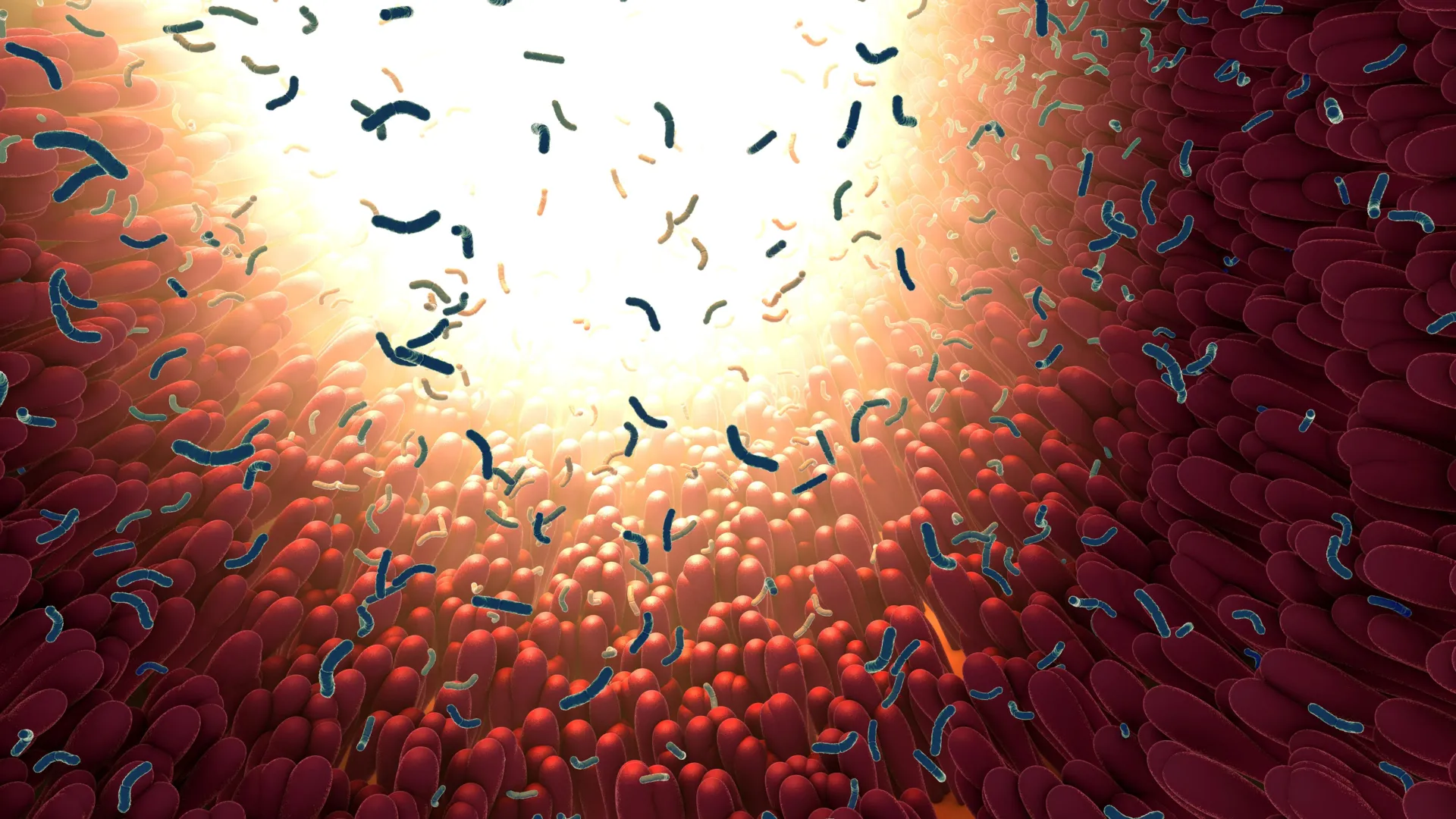
    MIT scientists discover gut protein that traps and kills dangerous bacteria
    Share
    Facebook Twitter Reddit Telegram Pinterest Email


    The moist surfaces that line the inside of your body contain special molecules that protect you from microorganisms and prevent infections and inflammation. Among these protective molecules are lectins. Lectins are a group of proteins that identify microorganisms and other cells by binding to sugars on their surfaces.

    MIT researchers have identified one lectin that has particularly strong antimicrobial effects against bacteria living in the gastrointestinal (GI) tract. This protein, called intelectin-2, binds to sugar molecules on the bacterial membrane. This interaction traps bacteria and slows their growth. This protein can also bind components of mucus and strengthen the mucus layer that protects the intestinal lining.

    “What’s remarkable is that intelectin-2 works in two complementary ways. It helps stabilize the mucus layer, and if that barrier is compromised, it can directly neutralize or inhibit bacteria that begin to leak out,” said Laura Keisling, Novartis Professor of Chemistry at the Massachusetts Institute of Technology and senior author of the study.

    Intellectin-2 may have potential as a therapeutic tool due to its broad antibacterial activity, researchers say. It may also help strengthen the mucus barrier in people with diseases such as inflammatory bowel disease.

    Former MIT researchers Amanda Dugan and Dr. Deepsing Shantan ’24 are the study’s lead authors. nature communications.

    Multifunctional immune protein

    Evidence suggests that the human genome encodes more than 200 lectins, carbohydrate-binding proteins involved in immune defense and communication between cells. Dr. Kiesling’s lab studies how lectins interact with carbohydrates, with a recent focus on a group known as intelectins. In humans, this family includes two proteins, intelectin-1 and intelectin-2.

    Although these two lectins share similar structures, intelectin-1 has unique features. It binds only to carbohydrates found in bacteria and other microorganisms. About a decade ago, Kiesling and colleagues determined the structure of interlectin-1, but its precise biological function is still not fully understood.

    At the time, researchers suspected that intelectin-2 also contributed to immune defense, although experimental evidence was limited. Dugan, then a postdoctoral fellow in Kiesling’s lab, began investigating the role of intelectin-2 in more detail.

    In humans, intectin-2 is consistently produced by Paneth cells in the small intestine. However, in mice, this protein appears to be produced by goblet cells, which secrete mucus in response to inflammation or certain parasitic infections.

    How intelectin-2 strengthens the intestinal barrier

    Researchers discovered that both human and mouse intelectin-2 can bind to a sugar molecule called galactose. This sugar is commonly found in mucin, the molecule that forms mucus. When intelectin-2 binds to these mucins, they bind together and strengthen the mucus barrier that protects the intestinal lining.

    Galactose is also found in carbohydrates that appear on the surface of some bacterial cells. The research team showed that intelectin-2 can attach to microorganisms that carry these sugars, including several pathogens known to cause gastrointestinal infections.

    Over time, the trapped microorganisms begin to break apart, suggesting that intellectin-2 disrupts their cell membranes and ultimately kills the microorganisms. This antibacterial effect works against a variety of bacteria, including those that are resistant to traditional antibiotics.

    Researchers believe that these two functions help protect the gastrointestinal tract from infection.

    “Intelectin-2 can first strengthen the mucus barrier itself and then control bacteria and limit their proliferation if that barrier is breached,” says Kiesling.

    Possible treatment of enteric diseases and resistant bacteria

    In people with inflammatory bowel disease, intelectin-2 levels may be abnormally low or abnormally high. Low levels can weaken the mucus barrier, and excessive amounts can eliminate beneficial bacteria that normally live in your gut. Researchers suggest that treatments designed to restore balanced levels of intelectin-2 may help these patients.

    “Our findings show how important it is to stabilize the mucus barrier. Looking forward, we can imagine harnessing the properties of lectins to engineer proteins that actively strengthen that protective layer,” says Kiesling.

    Intelectin-2 can also neutralize or eliminate pathogens such as Staphylococcus aureus and Klebsiella pneumoniae that are difficult to treat with antibiotics. With this ability, the protein may one day be developed as a new antibacterial treatment.

    “Using human lectins as a tool to combat antimicrobial resistance opens up a fundamentally new strategy to harness our own innate immune defenses,” says Kiesling. “Taking advantage of proteins that the body already uses to protect itself from pathogens is attractive and a direction we are pursuing.”

    This research was funded by the National Institutes of Health Common Fund for Glycoscience, the National Institute of Allergy and Infectious Diseases, the National Institute of General Medical Sciences, and the National Science Foundation.

    Other contributors to the study include Charles Bevins, professor of medical microbiology and immunology at the University of California, Davis School of Medicine; Ramnik Xavier, Professor of Medicine at Harvard Medical School and the Broad Institute of MIT and Harvard University. and Katarina Ribeck, the Andrew and Erna Viterbi Professor of Bioengineering at the Massachusetts Institute of Technology.


    Source link

    Visited 14 times, 1 visit(s) today
    Share. Facebook Twitter Pinterest LinkedIn Telegram Reddit Email
    Previous ArticleIn disaster-prone Bangladesh, the spread of climate-resilient housing models has been slow.
    Next Article Organ transplant technology is rapidly advancing. The cost is also the same
    healthadmin

    Related Posts

    After 100 years, scientists finally uncover the hidden laws behind cosmic rays

    May 14, 2026

    Huge ‘stealth’ magma surge triggers thousands of earthquakes beneath Atlantic island

    May 14, 2026

    Scientists say taking a daily multivitamin may slow aging

    May 14, 2026

    Giant squid discovery reveals hidden deep-sea world off the coast of Australia

    May 14, 2026

    Organic molecules discovered in 66-million-year-old dinosaur bones shake up paleontology

    May 14, 2026

    Scientists discover strange way CO2 cools parts of Earth’s atmosphere

    May 14, 2026
    Add A Comment

    Comments are closed.

    Categories

    • Daily Health Tips
    • Discover
    • Environmental Health
    • Exercise & Fitness
    • Featured
    • Featured Videos
    • Financial Health & Stability
    • Fitness
    • Fitness Updates
    • Health
    • Health Technology
    • Healthy Aging
    • Healthy Living
    • Holistic Healing
    • Holistic Health & Wellness
    • Medical Research
    • Medical Research & Insights
    • Mental Health
    • Mental Wellness
    • Natural Remedies
    • New Workouts
    • Nutrition
    • Nutrition & Dietary Trends
    • Nutrition & Superfoods
    • Nutrition Science
    • Pharma
    • Preventive Healthcare
    • Professional & Personal Growth
    • Public Health
    • Public Health & Awareness
    • Selected
    • Sleep & Recovery
    • Top Programs
    • Weight Management
    • Workouts
    Popular Posts
    • 1773313737_bacteria_-_Sebastian_Kaulitzki_46826fb7971649bfaca04a9b4cef3309-620x480.jpgHow Sino Biological ProPure™ redefines ultra-low… March 12, 2026
    • the-pros-and-cons-of-paleo-dietsThe Pros and Cons of Paleo Diets: What Science Really Says April 16, 2025
    • pexels-david-bartus-442116The food industry needs to act now to cut greenhouse… January 2, 2022
    • 1773729862_TagImage-3347-458389964760995353448-620x480.jpgDespite safety concerns, parents underestimate the… March 17, 2026
    • Improve Mental Health10 Science-Backed Practices to Improve Mental Health… March 11, 2025
    • 1773209206_futuristic_techno_design_on_background_of_supercomputer_data_center_-_Image_-_Timofeev_Vladimir_M1_4.jpegMulti-agent AI systems outperform single models… March 11, 2026

    Demo
    Stay In Touch
    • Facebook
    • Twitter
    • Pinterest
    • Instagram
    • YouTube
    • Vimeo
    Don't Miss

    Musicians show a small but steady advantage in sustained attention from childhood to adulthood

    By healthadminMay 14, 2026

    Learning a musical instrument may strengthen your attention and alertness from childhood to adulthood, according…

    Supreme Court upholds access to mifepristone while litigation continues

    May 14, 2026

    Making instant judgments about dating apps can hurt your sense of worth as a partner.

    May 14, 2026

    Eli Lilly contributes $50 million to UNICEF’s childhood health initiatives

    May 14, 2026

    Subscribe to Updates

    Get the latest creative news from SmartMag about art & design.

    HealthxMagazine
    HealthxMagazine

    At HealthX Magazine, we are dedicated to empowering entrepreneurs, doctors, chiropractors, healthcare professionals, personal trainers, executives, thought leaders, and anyone striving for optimal health.

    Our Picks

    Eli Lilly contributes $50 million to UNICEF’s childhood health initiatives

    May 14, 2026

    Epic, Cleveland Clinic joins CMS preclearance effort

    May 14, 2026

    After 100 years, scientists finally uncover the hidden laws behind cosmic rays

    May 14, 2026
    New Comments
      Facebook X (Twitter) Instagram Pinterest
      • Home
      • Privacy Policy
      • Our Mission
      © 2026 ThemeSphere. Designed by ThemeSphere.

      Type above and press Enter to search. Press Esc to cancel.