


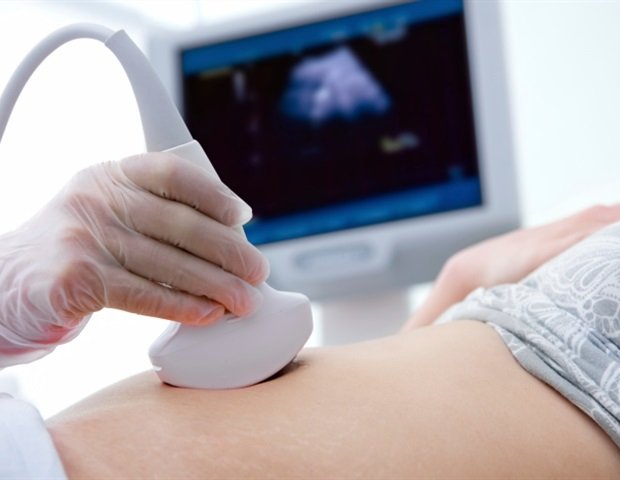
For decades, ultrasound has been associated with diagnosis. That is, the monitor that shows your first images of your regular scans, organs, tissues, or baby in your hospital room. But researchers are now looking at ultrasound from a completely different perspective. A new discovery by scientists at Kaunas University of Technology (KTU) suggests that ultrasound can not only help doctors see inside the body, but also that low-frequency ultrasound can directly influence blood flow, potentially reducing the need for invasive procedures and medications in the future and opening new possibilities to support the treatment of cardiovascular disease, Alzheimer’s disease and diabetes.
What surprised the researchers most was that the effect of ultrasound on blood was not unidirectional. Their study showed that different sound frequencies can have opposite effects on red blood cells. It may promote the aggregation of red blood cells or their separation into single cells.
A non-invasive way to improve oxygen exchange
Red blood cells, also called red blood cells, have a natural tendency to form reversible clusters known as aggregates. This process affects blood viscosity. This viscosity is closely related to circulation and oxygen transport throughout the body.
When red blood cells gather under the influence of high-frequency ultrasound, blood viscosity increases, blood pressure and pulse rate increase, and oxygen exchange efficiency may decrease. ”
Vytautas Ostasievicius, lead author of the study, professor at KTU
The researchers found that high-frequency ultrasound generates standing sound waves that drive red blood cells toward areas of low pressure, promoting aggregation.
However, low-frequency ultrasound produces progressive sound waves that create shear forces that can separate clumped red blood cells into single cells.
Experiments demonstrated that low-frequency ultrasound can dissociate red blood cell aggregates into single cells. “To our knowledge, this effect has not been demonstrated before,” says Ostasievicius, director of the KTU Mechatronics Institute.
When red blood cells separate, gaps are created between them, reducing the viscosity of the blood and allowing the entire surface of the cell to participate in oxygen exchange.
The idea for the study emerged during the COVID-19 pandemic, when scientists were looking for non-invasive ways to support patients suffering from severe respiratory complications.
“At that time, there was an urgent need for treatments that could quickly help patients without drugs. We were interested in whether ultrasound could enhance the interaction between hemoglobin and oxygen in the lungs,” says Ostasievicius.
To investigate this, the research team divided patients’ blood into hundreds of samples and exposed them to ultrasound waves of varying intensities, revealing the peculiarities of red blood cell dissociation. In studying ultrasound propagation in living tissue, the team used a digital twin to develop a low-frequency ultrasound transducer that can transmit acoustic signals approximately four times deeper into living tissue than traditional devices. This technology is currently protected by an international patent.
Possible applications in the treatment of Alzheimer’s disease and diabetes
Although the technology is still in the early stages of research, researchers believe that low-frequency ultrasound could eventually be applied to several medical fields where blood circulation and oxygenation play a key role.
One area being researched is cancer treatment. Because tumor tissue is often mechanically weaker than surrounding healthy tissue, progressive sound waves are being investigated as a method to selectively affect tumor structures. However, this concept is still in the early stages of research.
“Low oxygen levels within tumors remain one of the major challenges in cancer treatment. Being able to locally improve oxygen delivery to tissues could help increase the effectiveness of certain treatments,” Ostasievicius says.
Researchers also see potential in treating Alzheimer’s disease, with this approach being discussed as a future method that could temporarily open the blood-brain barrier and potentially improve targeted drug delivery to brain tissue in the future.
Professor Ostaszevicius said the technology could also be useful in treating diabetic foot ulcers, where impaired circulation makes wound healing extremely difficult. “Using ultrasound, we may be able to improve blood flow in the affected tissue,” he says.
Further future applications may include targeted drug delivery and supportive treatment of cardiovascular and pulmonary diseases.
Although the technology is still in the experimental stage, researchers believe their discovery expands our understanding of ultrasound as more than just a diagnostic tool. “Our study shows that ultrasound can mechanically influence the properties of blood. This opens the possibility of future non-invasive treatments that may complement existing drug and surgical treatments in the future,” said Ostasievicius.
sauce:
Kaunas University of Technology (KTU)
Reference magazines:
Ostasevicius, V. others. (2026). Advances in ultrasound rehabilitation. sensor. DOI: 10.3390/s26082428. https://www.mdpi.com/1424-8220/26/8/2428
