


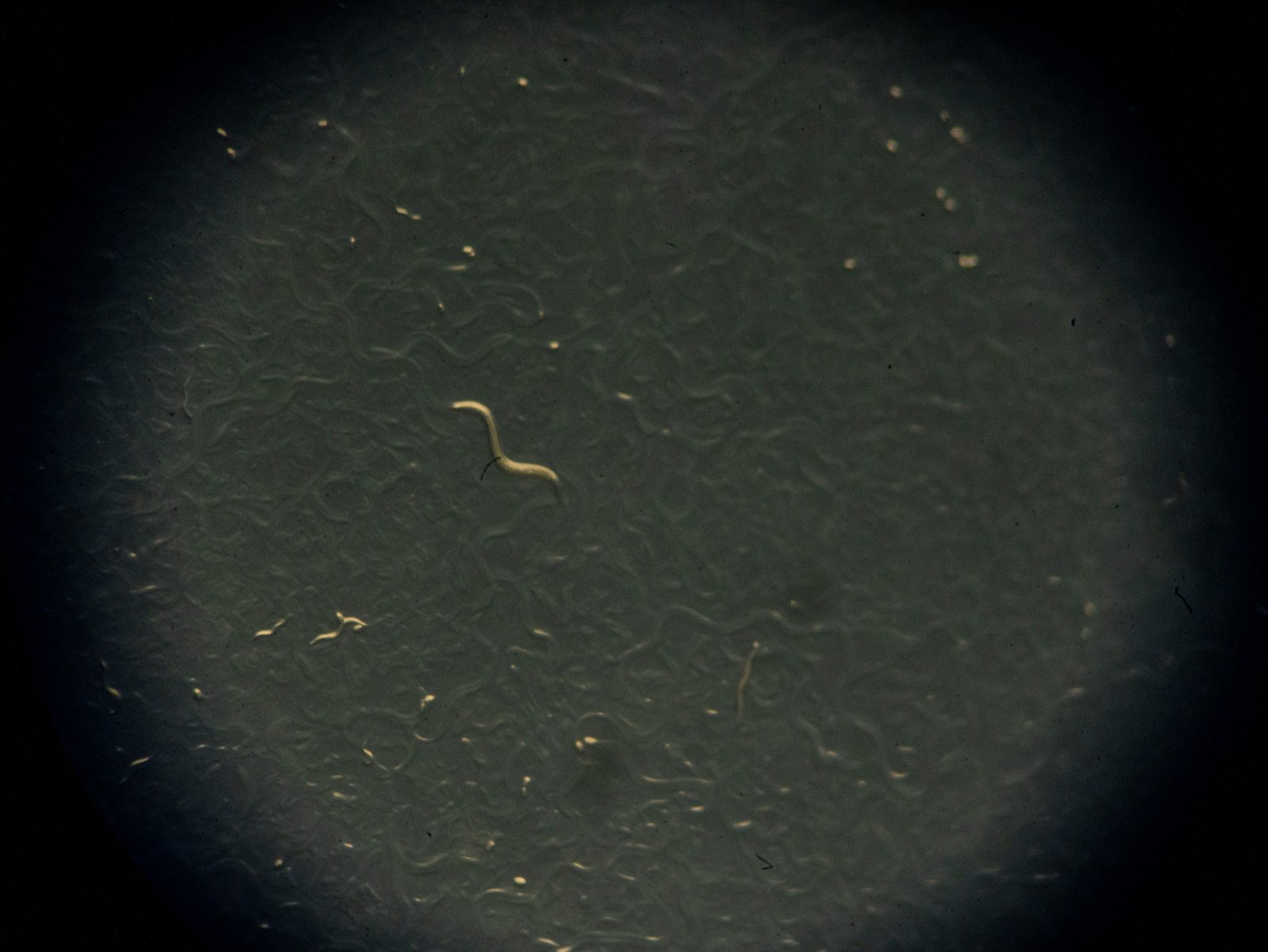
A study by researchers at St. Mary’s University found that microplastics can shorten the lifespans of microscopic insects, inhibit their reproduction, and act as toxic carriers that carry chemicals and plastic additives into the body once ingested.
Jennifer Herr is a biology professor and researcher specializing in biochemistry, epigenetics, and forensics, and has been at Saint Mary’s University since 2019. Ha led the study and a team of undergraduate researchers.
Their findings were published in December. micro plasticis an open access, peer-reviewed journal focused on the science behind microplastics. Microplastics are small pieces of plastic that have become an increasingly important research point in recent years, given their potential impact on human health.
Scientists already know that these debris are present everywhere in our environment, in our water, soil, atmosphere, marine life, and even human tissue. What is less clear is how they affect our health and whether they can carry toxins from the environment into our bodies.
Microplastics are everywhere
Microplastics are tiny plastic pieces that break off from larger plastic products. Rather than biodegrading and being released into the environment, most plastics break down into smaller pieces that can last forever.
Although definitions vary, microplastics can be as small as a grain of salt or as small as a bacteria. Nanoplastics are even smaller, potentially even smaller than our cells.
Researchers began examining the effects of ocean plastic pollution in the 1960s, and more focused research on microplastics occurred in the mid-2000s. Since then, the field has expanded rapidly as researchers learn more about how ubiquitous microplastics are.
“People have been interested in microplastics in the aquatic environment for a long time,” Herr said. However, research into how microplastics affect the bodies of animals and humans is newer, and has particularly accelerated in recent years. “This field is progressing rapidly.”
Humans are primarily exposed to microplastics through drinking water, food, air, and cosmetics. Although estimates exist, researchers don’t know how many of these tiny pieces we ingest on a regular basis.
Nevertheless, researchers have detected microplastics in many organs and tissues, including the brain and blood. It has also been detected in urine, breast milk, semen, and meconium (a newborn’s first stool).
Researchers have linked exposure to microplastics in certain animals to inflammation, reproductive problems, and hormonal disorders in laboratory settings.
But we don’t know if that effect transfers to larger organisms like humans. “We don’t have anything for humans because we can’t do human testing,” Ha said.
The research is also somewhat muddy, as labs often use different microplastic sizes, shapes, and different measurements, making comparisons difficult.
Another problem, the researchers found, is contamination within the lab and the potential for inflating the results. A 2026 study found that nitrile and latex gloves can transfer particles that mimic microplastic particles, resulting in false positives and potentially overestimating the presence of microplastics.
Studies prior to 2024 found that microplastics were ubiquitous in laboratories, with contamination likely occurring in studies that lacked strict handling procedures. This means that the exposure levels used in laboratory experiments may not fully reflect the conditions that humans and other organisms encounter on a daily basis.
It is also unclear whether plastic debris can be harmful on its own, or whether plastic debris can transport harmful substances from the environment to organisms that would not otherwise be exposed.
In 2024, Herr and her lab set out to get a clearer picture of this potential mechanism using transparent microscopic bugs.
Microplastics act as vehicles for toxins
Herr’s lab at St. Mary’s University focuses on epigenetics, which studies how the environment affects gene expression without changing DNA. This field impacts toxicology and forensic medicine.
In 2024, Herr and her lab won a four-year, $670,000 grant from the National Institutes of Health to study how microplastics transport toxins, such as environmental toxins and plastic additives, to organisms.
 Researcher Jennifer Herr and forensic science student Chiara Maldonado from St. Mary’s University Moody Life Sciences Center. credit: Provided by / Saint Mary’s University
Harr’s lab is faculty-led. Haar said that during the grant application process, environmental students in her lab convinced her to focus on microplastics, an area of research she had not yet been involved with.
Harr and his research team chose C. elegans, a microscopic soil-dwelling roundworm, as their model organism. This nematode has been favored by researchers because its translucence makes it easy to track what’s going on inside the organism, and because it has a genetic pathway similar to humans.
The research team exposed nematodes to microplastics, with and without additives or chemicals, to see how it affected the microbial ecology.
They found that even small plastics can cause harm after ingestion, and that exposure in sufficient amounts can shorten lifespans and disrupt reproduction. They also found that the health effects were generally more severe when combined with dibutyl phthalate (DBP), a plastic additive that gives plastics flexibility.
DBP’s use in plastics is restricted in many consumer products, but this served as a proof of concept that plastic additives can be introduced into living organisms from the environment, Ha explained. “Even if you remove them from plastics, they can still be present in the environment as contaminants.”
Other researchers have found that organisms digest and remove microplastics without significant accumulation, such as this 2026 study on earthworms. Harr noted that size may be important. Larger fragments may remain in the gastrointestinal tract and be excreted, while much smaller particles are more likely to pass through tissues and potentially carry toxins.
“Overall, our results show that chronic exposure (to microplastics) has negative effects on reproduction and shortens lifespan (in nematodes),” the paper concludes. “We demonstrated that co-exposure of (microplastics) and DBP exacerbates the observed defects. (microplastics) mediate DBP delivery in C. elegans, further reducing fertility and lifespan and triggering stress responses.”
what happens next
To more closely mimic the conditions that organisms are exposed to in environmental and laboratory settings, Haar said she and her lab are working on follow-up studies that will examine differences in biological effects depending on how weathered or rough the microplastics are compared to microplastic beads in their more natural state.
She is also working to secure funding to further investigate the mechanisms behind reproductive harm caused by microplastics and DBP.
“We found it worked,” Ha said. “But the question is, why? What’s going on at the molecular level, at the cellular level, and as I said… what’s going on at the DNA level?”
The U.S. Department of Health and Human Services’ Advanced Research Projects Agency in Health (ARPA-H) aims to accelerate microplastics research through the STOMP program.
“I would argue that in animal models, it does work,” Ha says. “For humans, we don’t have the answer yet.”
