


In this interview, News Medical-Life Sciences speaks with Anil Kane, drug development expert in Thermo Fisher Scientific’s Pharma Services Group, about how quality is built into drug development from initial design to manufacturing. He will discuss step-by-step analytical strategies, predictive modeling, quality by design, and how artificial intelligence is transforming decision-making to deliver safer and more effective medicines to patients faster.
Could you please introduce yourself and your role at Thermo Fisher Scientific?
I started my career as a pharmacist, focusing on industrial pharmacy and research and development. Over the past 35 years, I have worked extensively in drug development, concentrating on the science and strategies required to take molecules from concept to clinical development and ultimately commercialization.
Thermo Fisher Scientific, part of the Pharma Services Group, partners with pharmaceutical and biotechnology companies to support end-to-end drug development. This includes early-stage development, clinical manufacturing, late-stage development, and commercialization support. Our role is to ensure quality at every step of the development process to ensure safe and effective medicines reach patients efficiently.
What does quality actually mean in drug development?
Quality in drug development is not optional. That’s basic. This technology is integrated into every step of the journey from concept to patient, which can take 5 to 12 years.
Quality starts with strategy. The quality of input data directly impacts the quality of decisions and, ultimately, the quality of the output. Drug development is driven by data. At each stage, scientists make decisions to continue or stop based on robust datasets. If data is incomplete or unreliable, the subsequent effects can be significant.
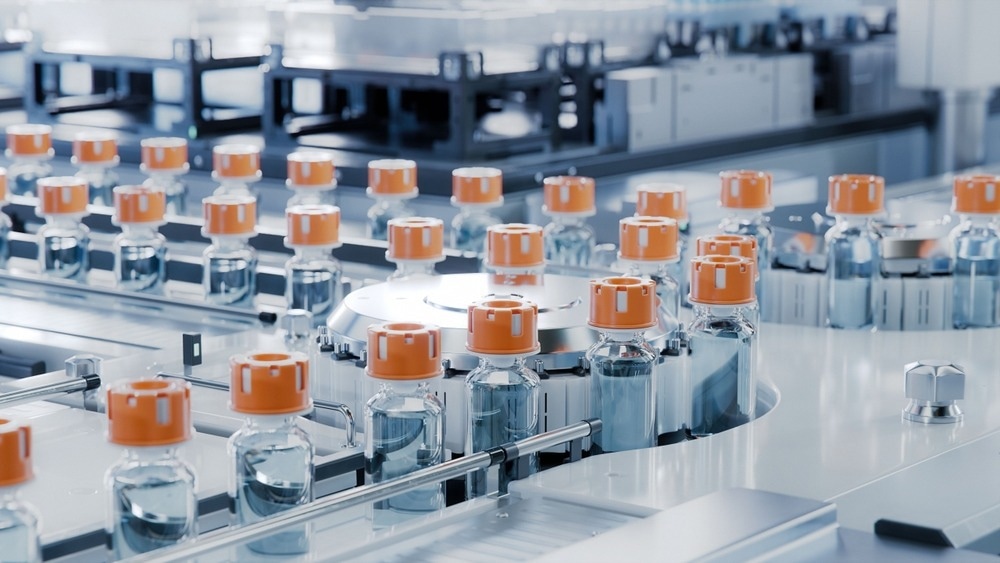
Image credit: IM Imagery/Shutterstock.com
Therefore, quality is about producing reliable, scientifically sound data at every stage and interpreting it correctly to make the right decisions.
How does quality differ in early and late stages of development?
There are clear differences, especially in terms of phase-friendly quality.
In the early stages of development, there is no need to fully validate analytical methods to the same regulatory standards required for commercialization. However, it must be robust and reliable enough to generate accurate data to support decision-making.
At later stages, especially as commercialization approaches, analytical methods must meet regulatory expectations and validation requirements. At that point, consistency, reproducibility, and compliance become even more important.
The principles remain the same. Phase-appropriate quality ensures that decisions are supported by the right level of scientific rigor at the right time.
How important is early molecular characterization in drug development?
Understanding the molecules at an early stage is crucial. Whether it’s a small molecule in medicinal chemistry or a biologic developed through cell line engineering, thorough characterization is the cornerstone of development.
This includes selecting the correct polymorph, salt form, and evaluating stability, absorption, distribution, and bioavailability. Analytical and bioanalytical techniques provide valid datasets that inform stage-gate decisions, such as whether to proceed to toxicology studies or first-in-human clinical trials.
It is essential to get this done early and properly, as there is little room for mistakes or rework later on. Drug development is under cost and time pressures, requiring precision from the start.
How will predictive modeling and AI transform drug development?
Predictive modeling tools have evolved significantly. What was once called a neural network is now widely recognized as an artificial intelligence and machine learning system.
These tools rely on high-quality datasets to build learning algorithms that can predict solubility, absorption, bioavailability, excipient compatibility, and stability profiles. These help narrow down candidates from a large pool of molecules to a smaller, more promising set.
AI and machine learning improve efficiency by reducing trial and error, shortening timelines and lowering development costs. Enable faster, more informed decision-making, especially in early-stage drug development.
How do I check the predictions made by my AI model?
Although predictive modeling narrows the field, experimental validation remains essential.
Advanced analytical techniques such as X-ray crystallography, powder X-ray diffraction, Raman spectroscopy, near-infrared spectroscopy, particle size analysis, and differential scanning calorimetry are used to confirm polymorph selection, distinguish between crystalline and amorphous forms, and characterize structural properties.
These tools provide direct evidence that molecules behave as predicted. This integration of modeling and experimentation accelerates development while maintaining scientific rigor.
How does Quality by Design improve long-term development outcomes?
Quality by Design (QbD) is an approach that integrates quality considerations throughout the development lifecycle.
This includes understanding critical quality attributes, defining acceptable parameter ranges, validating analytical methods, and designing robust and scalable manufacturing processes. Stability studies determine shelf life and ensure consistent performance throughout the product lifecycle.
Early incorporation of QbD minimizes late-stage surprises, improves scalability, and ensures that products consistently meet safety and efficacy standards.
Can making quality decisions early prevent costly late-stage failures?
absolutely. If early data is inaccurate or incomplete, problems may surface only late in development. For example, the product may be unstable, non-scalable, or poorly absorbed by the body. Late detection of such problems can result in significant delays and financial losses.
From molecules to drugs: How to incorporate quality into drug development | Analyze the episode. 7play
An early focus on high-quality data generation, thorough molecular understanding, and robust process design reduces attrition and prevents avoidable downstream failures. Catching problems early can save both time and money in this inherently expensive process.
How does incorporating quality into drug development ultimately benefit patients?
Patients are waiting for effective treatments, especially in areas where no approved treatments exist.
Building quality into drug development from the beginning shortens timelines, reduces unplanned delays, and brings safer, more effective drugs to market faster. This directly improves patient outcomes and quality of life.
At the end of the day, quality-driven development is about getting reliable, safe and effective medicines to patients as quickly as possible.
About Anil Kane

Anil Kane is a veteran drug development leader with over 35 years of experience in drug development and pharmacy. Trained as a pharmacist, he specialized in industrial pharmacy and research and development early in his career, focusing on advancing pharmaceutical products from discovery to commercialization.
Throughout his professional career, Anil has worked extensively on drug substance and drug product development, analytical strategies, process optimization, and regulatory compliance. His expertise spans small molecules and biologics, and he has deep experience in implementing quality principles through phase-appropriate quality systems and design throughout development programs.
In Thermo Fisher Scientific’s Pharma Services Group, Anil plays a key role in guiding sponsor companies through complex development paths and supporting the implementation of integrated development strategies and AI and predictive modeling tools to accelerate timelines while maintaining scientific rigor.
About Thermo Fisher Scientific – Pharmaceutical and Biopharmaceutical Solutions 
overview
With more than 50 years of innovation in spectroscopy, materials characterization, and process analysis, Thermo Fisher Scientific helps pharmaceutical and biopharmaceutical manufacturers deliver treatments to patients faster, more safely, compliantly, and efficiently.
Our portfolio of Thermo Scientific™ instruments and software supports every stage of the molecule lifecycle, from discovery to commercial production. From initial molecular profiling to process analytical technology (PAT) to final quality release, our integrated solutions help ensure data integrity, process efficiency, and regulatory reliability.
We work with the pharmaceutical industry to apply advanced technology to give manufacturers better information and control over their processes. From raw material identification to manufacturing operations to inspection of finished products and packaged pharmaceutical products, we offer a full range of technology and business solutions that help improve each step of the production process, increase efficiency and deliver higher quality products to end consumers.
Solutions across the entire pharmaceutical lifecycle
research and discovery
Accelerate discovery with sensitive, low-volume analytical tools that deliver reproducible data even from rare samples.. Our NanoDrop™ microvolume spectrophotometer and fluorometer, GENESYS™ Vis/UV-Vis spectrophotometer and Evolution™ UV-Vis spectrophotometer instruments, and DXR™ SmartRaman spectrophotometer provide rapid molecular insight and material identification to support target validation and early screening. These technologies enable researchers to confidently make go-no-go decisions quickly, strengthening the foundation for scale-up and compliance.
Formulation and process development
Scale up from grams to pilot batches with confidence. Bench-scale extruders, rheometers, and FT-NIR analyzers can help optimize formulations, assess stability, and ensure consistent API dispersion. Complementary XRD and FTIR systems identify polymorphism and crystallinity, improving solubility and bioavailability, which are important for modern dosage form design. Each platform is built to meet Quality by Design (QbD) principles and 21 CFR Part 11 requirements to streamline regulatory submissions and method transfer.
Clinical and commercial manufacturing
Ensure large-scale process reliability and product quality. In-line and at-line process analyzers such as the MarqMetrix™ all-in-one Raman, Prima BT/PRO process mass spectrometer, and Antaris™ II FT-NIR enable real-time PAT monitoring for consistent production. The handheld TruScan™ G3 analyzer provides non-destructive verification of raw materials through a sealed package, reducing sampling delays and ensuring regulatory compliance. Our in-line inspection systems (X-ray, checkweighers, metal detectors) protect the integrity of your final product throughout filling, finishing, and packaging.
Quality control and regulatory credibility
The Thermo Scientific analytical platform is underpinned by a validated GMP and 21 CFR Part 11 compliant software suite, including OMNIC™ Paradigm and Security Suite, ensuring data traceability, audit readiness, and compliance across global operations. Our technology helps pharmaceutical teams protect data integrity from research to release while maintaining alignment with USP, EP, and FDA standards.
Service and support
We offer comprehensive service and support to minimize cost of ownership, maximize uptime, and maintain compliance. Our step-by-step plan includes preventive maintenance, priority response, calibration, and remote monitoring to keep your operations running efficiently. Order OEM-compliant spare parts directly from Thermo Fisher with confidence in quality and compatibility. We also leverage our global technical support network to reduce downtime across spectroscopy, extrusion, compounding, process analysis, and inspection systems.
Thermo Fisher Scientific: Partnerships across the drug lifecycle
From ideation to delivery, we enable our partners to innovate faster, protect yield and quality, ensure compliance, and deliver care with confidence.
