


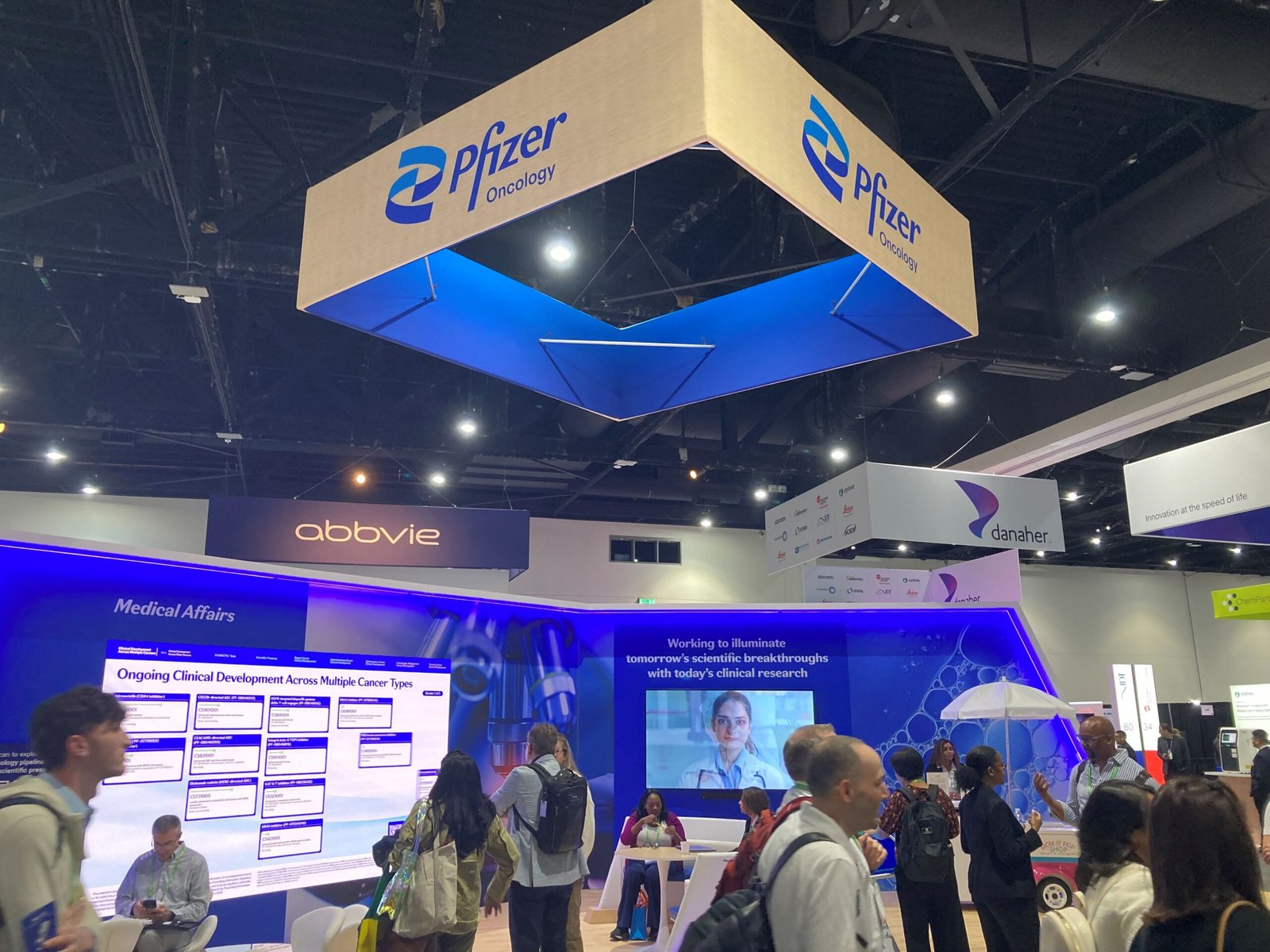
Nearly three years after the FDA approved Pfizer’s bispecific antibody Ellexfio as a late-stage treatment for patients with relapsed or refractory multiple myeloma (RRMM), the drug has yet to gain significant commercial traction and remains low on the pharmaceutical giant’s sales charts. Now, with new positive trial results, the company aims to reach a wider range of patients.
In the Phase 3 Magnetis MM-5 trial, Elrexfio as a monotherapy demonstrated a statistically significant and clinically meaningful improvement in progression-free survival (PFS) compared to standard of care daratumumab, pomalidomide, and dexamethasone (DPd), Pfizer said in a press release on Wednesday. The open-label study enrolled 497 patients with RRMM who had previously received at least one therapy containing lenalidomide and a proteasome inhibitor (PI).
A positive result in the trial’s primary endpoint represents a victory for relapsed or refractory “dual-class exposed” patients. This term refers to people who are already receiving two main types of treatment and are in need of a new treatment.
“The MagnetisMM-5 results strengthen our confidence in Elrexfio’s potential to benefit patients early in treatment and support our comprehensive strategy to evaluate Elrexfio as a monotherapy and as part of combination approaches across multiple therapies,” Jeff Legos, Pfizer’s chief oncology officer, said in a statement.
Currently, the drug is approved for adults with RRMM who have received at least four previous treatments, including PIs, immunomodulators, and anti-CD38 monoclonal antibodies.
Pfizer said the overall survival analysis was not yet complete at the time of the interim analysis. The trial is ongoing to obtain results on this secondary endpoint.
Pfizer said it will discuss the data with health regulators and submit its findings for presentation at a future medical conference.
In the MagnetisMM-5 study, Elrexfio’s safety and tolerability were consistent with its known profile, Pfizer said.
Pfizer’s Ellexfio, first approved in 2023, had global sales of $74 million last year, a 30% increase from 2024. The drug is competing with in-class rival J&J’s Tekvayli, which won $670 million in 2025. Also in the ring is Regeneron’s Renogific, which was approved for summer 2025.
