


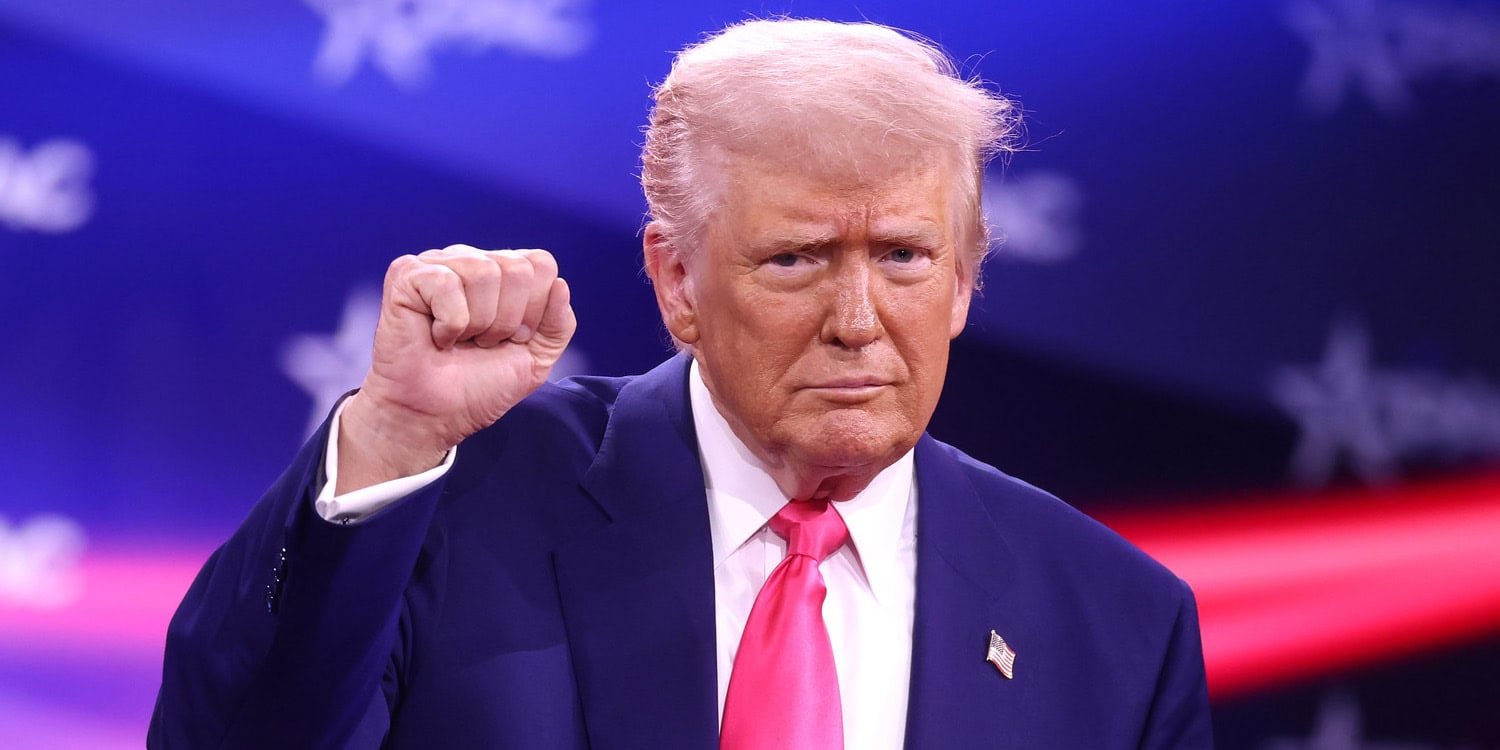
A 20-week longitudinal survey of American voters showed that after the election of President Donald Trump in 2024, Democratic voters reported lower levels of happiness, optimism, personal control, and trust in institutions, as well as higher levels of cynicism, disrespect, and conspiracy theory. In contrast, Republicans experienced changes in the opposite direction. The paper is Personality and Social Psychology Bulletin.
In recent years, the American public has experienced increasing political polarization. This political polarization is increasingly taking the form of emotional polarization, meaning that many Democrats and Republicans not only disagree on issues but also have strong negative feelings toward the other political side. Many Americans also report having very pessimistic views about their country’s political system, with institutions like the Pew Research Center offering highly negative views of national politics and Gallup reporting record-high perceptions that the country is divided on important issues.
This polarization manifests itself in increased distrust of institutions, which now depends largely on which political party controls the government rather than on the institutions themselves. It also manifests itself in everyday life through a moralized political identity and a tendency to view supporters of other parties as not only wrong but also threatening and un-American. Another manifestation is policy divergence between states, with Republican-led and Democratic-led states pursuing vastly different approaches on issues such as abortion, voting, immigration, and public health.
One of the main causes of this state of affairs is the long-standing ideological sorting of the parties, with the result that liberals are far more concentrated in the Democratic Party and conservatives in the Republican Party than they have been in previous decades. Media fragmentation and the online information environment also intensify polarization by repeatedly exposing people to conflict-driven, partisan, and emotionally charged content. Political leaders and activists have contributed by using sharper rhetoric, viewing opponents as existential threats, and rewarding confrontation rather than compromise. There are other factors as well.
Study author Olga Stavrova and her colleagues examined how psychological well-being and other broad psychological outcomes changed before and after the 2024 US presidential election. They specifically wanted to explore what the trajectory of these changes is for individuals who support different political candidates.
They conducted a seven-wave longitudinal survey of a politically balanced sample of Americans, starting three weeks before the election and ending 16 weeks after the election. Participants initially included 747 US voters, but only 515 completed the final wave. The authors of this study collected enough data from 623 participants to be able to include them in the primary analysis. Participants were politically balanced, with 50% Democrats and 50% Republicans. Their average age was 45 years and 36% were male.
The data collection procedure included seven measurement points. The first period was three weeks before the election and the last one month after the inauguration, for a total of about 20 weeks. The second round of data collection took place at the end of election day, and the third round began on the day the results were known.
At each wave, participants completed assessments of psychological well-being (life satisfaction, search for and existence of meaning in life, positive and negative emotions), self-view (self-esteem, optimism, personal control), and view and experience of the world (cynicism, experiences of contempt, conspiratorial thinking, institutional trust). Participants were divided into election “winners” and “losers” based on who they voted for (Trump, Harris, or a third-party candidate). Participants’ political ideology was also assessed by the question, “How do you describe yourself politically? (1 = very liberal, 10 = very conservative).”
The results showed that as election results were announced showing that Donald Trump had been elected president of the United States, Democratic voters reported lower levels of happiness, optimism, and personal control, as well as lower institutional trust. At the same time, they began to report more cynical attitudes, more experiences of disrespect, and a stronger conspiratorial mindset. Although some of these changes began to reverse slightly soon after the election, the study authors report that most of them persisted until four months later. Furthermore, Democratic voters’ institutional trust continued to decline throughout the study period.
In contrast, Republicans tended to experience changes in the opposite direction. This also led to a reversal of the difference in institutional trust between the two groups. At the beginning of the study, Republicans tended to report lower institutional trust than Democrats, but after the election, Republicans reported higher institutional trust than Democrats, and the gap continued to widen as the study progressed.
Similarly, the gap between the two groups in optimism widened, with Republicans becoming more optimistic and the gap peaking shortly after the election. Over the study period, Democrats tended to report fewer positive emotions and more negative emotions than Republicans, and the difference was highest immediately after the election.
“These results challenge the notion of inherent psychological differences between liberals and conservatives and highlight how such differences can change depending on which party is in power,” the study authors concluded.
This study contributes to the scientific understanding of the relationship between major political events and people’s psychological state. However, it is important to note that this study tracked changes around a single presidential election. Changes in psychological views and states may be less pronounced or different before and after other types of political events and other presidential elections.
The paper, “Trajectories of Psychological Outcomes in the 2024 US Presidential Election,” was authored by Olga Stavrova, Dongning Ren, Sangmin Kim, and Kathleen D. Vohs.
