


On a busy morning at Gulf Coast Medical Center in Fort Myers, interpreter Maria Marin bounces from cardiology to urology to oncology. “There’s not a room in this hospital that I haven’t been in,” she says. Her clinical needs change from encounter to encounter, but her purpose remains the same. “It is the patient’s right to know and understand everything that is going on.”
This belief is at the heart of how Lee Health, a community-based nonprofit founded in 1916, incorporates language access into the fabric of daily care. Serving a rapidly growing and increasingly diverse Southwest Florida region, the system treats qualified interpreters not as an additional service but as essential clinical infrastructure for safe encounters, along with other parts of the workflow.
As the scale increases, so do the stakes. With the support of more than 17,000 employees and 2,500 medical staff, Lee Health logs more than 2 million patient contacts annually across more than 100 clinics. Its locations span acute, specialty, pediatric, rehabilitation, skilled nursing, outpatient and emergency care settings, from trauma units and perioperative rooms to oncology wards and outpatient clinics. Each has unique communication requirements, and patients with limited English language proficiency (LEP) may be left behind.
Why is it important? Clinical communication is complex enough in itself. Language barriers complicate every step of the way. When access to qualified interpreters is inconsistent, the impact is felt across the system’s most closely monitored metrics.
- High readmission rates for LEP patients
- Long stays lead to delayed discharge
- Safety and quality vary from encounter to encounter.
- Reduced emergency department throughput
- Discharge summary, prescriptions, portal messages where patient is unable to take action
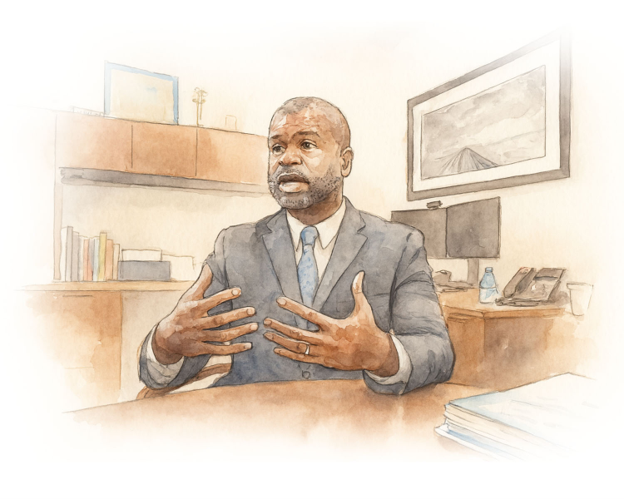
“The question is, are we providing information in a way that patients can actually consume and understand?” said Dr. Celint Anderson, chief of community health and impact at Lee Health. Reaching that bar, he points out, means meeting patients in “a variety of different spaces,” not just the bedside.
Staff first, scale up remotely
Lee Health’s model begins with a foundation of professional on-site interpreters, then builds on remote locations. Because no system can ensure that an interpreter is present at every touchpoint every hour.
- staff interpreter Leads urgent scheduled visits and brings clinical familiarity and physical presence to the room
- Video remote interpretation (VRI) Bring a qualified interpreter to any room or clinical situation on demand
- Telephone interpretation (OPI) Covers suitable use cases for audio
The goal is to increase reliability in the moment of need without adding complexity to care. “We don’t necessarily have interpreters at every touchpoint in the health care system. That’s not realistic,” Anderson said. “VRI allows us to communicate with these patients in real time,” he said, adding that the remote option is a “very important” complement, built to augment, and in no way replace, staff interpretation.
Safe bilingual pathway
To further expand its reach, Lee Health runs a dual-role bilingual program that prepares qualified multilingual staff to interpret in defined scenarios. Team members are activated only after assessment and training, adding flexibility without loosening the standards governing professional interpreters.
Measuring through the lens of language
What sets this model apart is how Lee Health looks at it. Oversight extends beyond the bedside to what Anderson calls the “last mile,” the point where care may or may not arrive after the patient leaves the room.
- Discharge instructions
- Directions to the pharmacy
- Patient portal messages
- Post-visit questionnaire
The system also reads operational scorecards through a linguistic lens, analyzing readmissions, length of stay, and other metrics specifically for the LEP population. Tracking these results turns language access from a compliance checkbox into a lever your organization has real control over, revealing where communication gaps appear and where your model is working.
core existence
Despite all the technology involved, the job still comes down to the people in the room. For interpreters like Marin, the job is equal parts preparation and presence. Although the department and diagnosis name may change from visit to visit, her standards remain the same. “Our job is to make sure that when we leave that room, they understood everything that was said,” she said.
Takeout. Lee Health’s framework is as durable as it is clear.
- Let’s start with the staff — On-site interpreters as a clinical foundation
- Expand with remote control — VRI and OPI by room and hour
- measure by results — Reading hospital readmissions, length of stay, and the “last mile” through the lens of language
The results are visible in the normal rhythms of the hospital. That means cleaner consent conversations, more stable discharges, and calmer patients who understand what’s happening to them.
learn more
Read the full Lee Health customer story to explore more patient stories, how the health system built its language access strategy, the measurable results it achieved, and lessons that other health organizations can apply within their own systems.
