


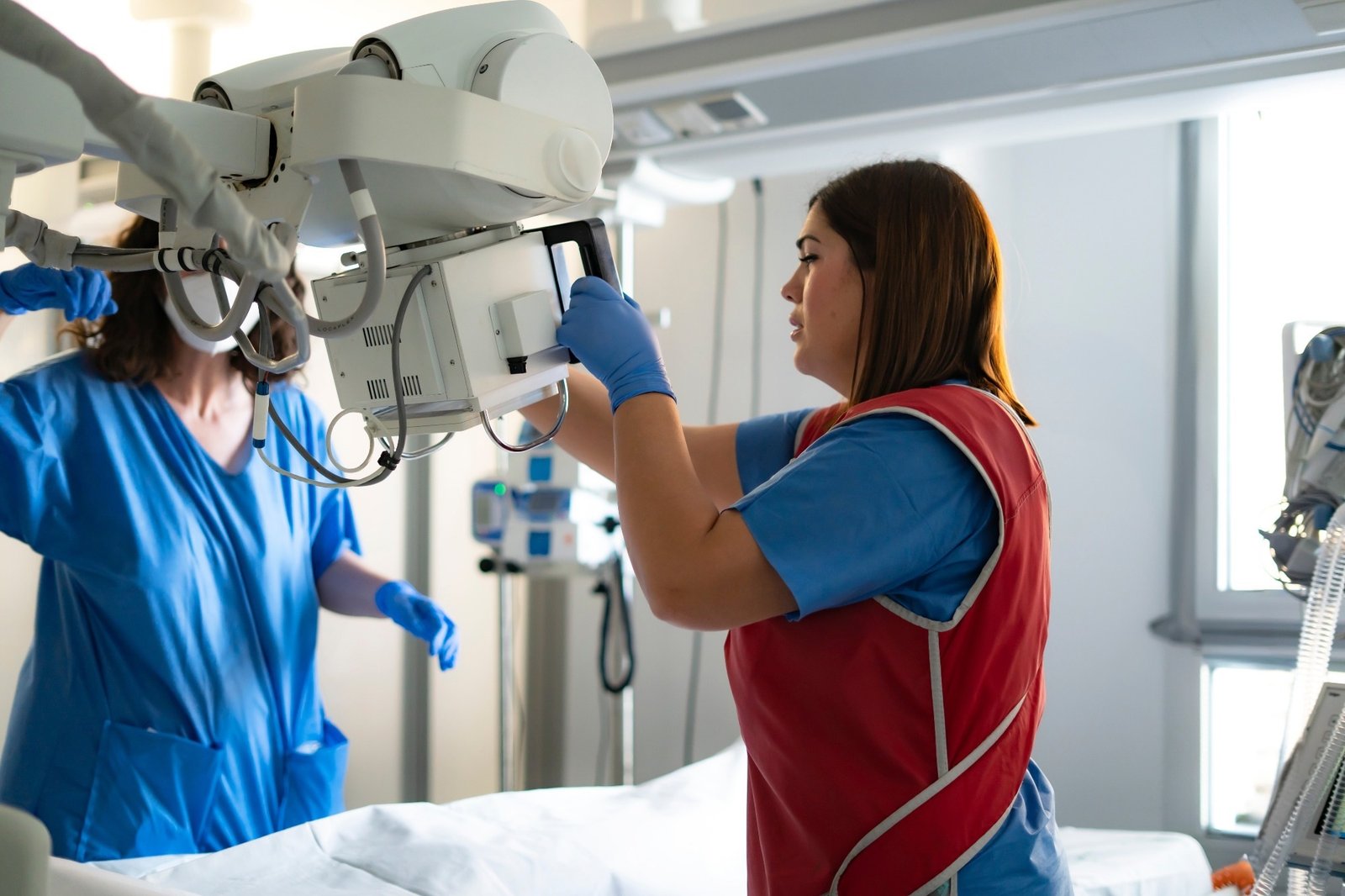
Europe’s first study reveals that thousands of health and social care workers are regularly exposed to cancer risk factors, with ionizing radiation, diesel exhaust fumes and solar ultraviolet radiation emerging as the most common workplace hazards.
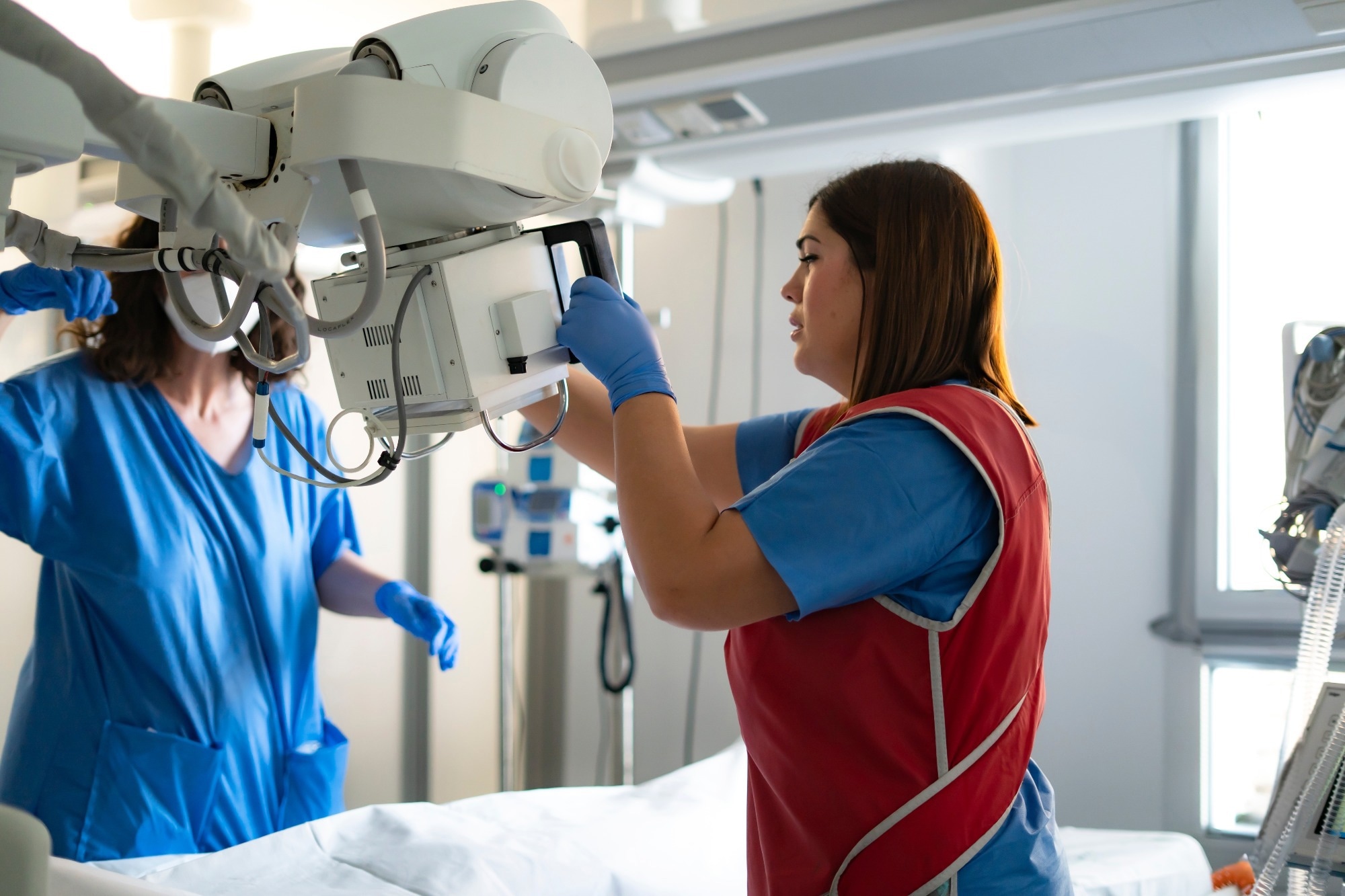 Study: Occupational exposure to cancer risk factors among health and social care workers in Europe: Results of a worker exposure survey. Image credit: killa1/Shutterstock.com
recent European Journal of Public Health This study investigated the prevalence and patterns of occupational exposure to known cancer risk factors among health and social care workers in Europe.
Occupational exposure to cancer risk factors in Europe
Occupational exposure to cancer risk factors remains a pressing public health challenge globally and within Europe. In 2016, 14 occupational carcinogens were associated with approximately 349,000 cancer-related deaths worldwide, nearly 300,000 of which were due to lung cancer.
The International Agency for Research on Cancer (IARC) has identified 47 Group 1 carcinogens associated with occupational environments that are associated with 23 different types of cancer, and the number is steadily increasing. Despite the recognition of this burden, significant data gaps still exist regarding the prevalence of occupational exposure to cancer risk factors, both at European and global level.
To address these data gaps, the European Occupational Safety and Health Agency (EU-OSHA) has launched the Worker Exposure Survey (WES). This study used the Occupational Integrated Database Exposure Assessment System (OccIDEAS) web-based platform tailored to the EU context to assess exposure to 24 occupational cancer risk factors, including industrial chemicals, physical agents, process products and mixtures, and associated prevention strategies.
WES collected data from 24,402 respondents representing 98.5 million workers in Finland, France, Germany, Hungary, Ireland and Spain, making it the first survey to cover Europe. The study collected detailed information on job duties, exposure scenarios, and protective measures, allowing an algorithm to estimate the prevalence and intensity of exposure.
Approximately 47.3% of surveyed workers Exposure to at least one of the included cancer risk factors The most common exposures during the previous business week were solar ultraviolet (UV) radiation (20.8%), diesel engine exhaust (DEE) emissions (19.9%), and benzene (12.8%). Exposure prevalence reflected the likelihood of exposure during the previous working week, regardless of the duration, frequency, or intensity of exposure. Among workers exposed to at least one cancer risk factor, the largest proportions worked in manufacturing (14%), wholesale and retail trade (14%), and human health and social care activities (13%).
Task-based assessment that captures real-world exposure scenarios
This study is the first to analyze WES data specific to the human health and social care (HeSCare) sector, which accounts for 11% of Europe’s workforce. This sector covers human health (Q-86), residential care (Q-87), and non-residential social work (Q-88) and includes both formal and home settings. Workers encounter a variety of occupational hazards, particularly occupational exposure to often overlooked cancer risk factors.
WES sampling involved random digit dialing on mobile phones and intentionally oversampled occupations with high risk of exposure to cancer risk factors. For each employee, OccIDEAS automatically assigned a probability of exposure to a cancer risk factor (“no,” “possible,” “probably”) and estimated an exposure level (“low,” “medium,” “high”).
Precautions such as ventilation and respiratory protection were considered in the exposure assessment. Exposure levels roughly corresponded to the EU occupational exposure limits. They were low (less than 10% of OEL), medium (10-80% of OEL), and high (close to OEL). If a worker had multiple exposures, the highest level was used.
Prevalence and exposure patterns of cancer risk factors among HeSCare workers
Of the 24,402 workers surveyed, 12.5% were employed in the HeSCare sector, primarily in health care (81.5%), followed by residential care and social work. Most respondents were German, others were Finnish, Hungarian, French, Spanish, and Irish. Medical workers accounted for 91.3% of the sector. Laboratories, food, office, and cleaning staff have smaller percentages. Primary duties include equipment sterilization, vehicle operation or maintenance, hand hygiene, outdoor work, medical radiology, and laboratory work. Driving and working outdoors were more frequent in the residential care and social care sectors than in the medical sector.
Women made up 65.3% of HeSCare staff, rising to 85.1% in social work. Most were locally born. Indefinite-term contracts were common, with 15.3% being self-employed and 8.6% being on temporary contracts. Women were more likely to have a regular job. More men were self-employed. Most worked in small and medium-sized enterprises, and social work staff often worked alone or in very small teams. A typical work week ranged from 31 to 40 hours, with an average of 37.7 hours.
Nearly 30% of HeSCare employees were likely exposed to at least one cancer risk factor during the previous work week, with male employees more affected than female employees. Most exposed workers faced one risk, but 7.8% faced two or more risks. A similar pattern was observed in the medical field.
The most common exposures were ionizing radiation (7.4%), diesel engine exhaust (6.2%), and solar ultraviolet radiation (6.1%). The most intense exposures were estimated to be formaldehyde (2.3% of workers) and ethylene oxide (2.0%), but exposure levels varied widely depending on the tasks performed. Some workers experienced multiple exposures, including to diesel exhaust and the sun’s ultraviolet radiation.
In the medical field, major exposures include ionizing radiation, formaldehyde, and DEE. Residential care workers most frequently reported exposure to solar UV radiation (14.7%) and DEE (9.1%). In social work, solar UV (19.5%), benzene (19.3%), and DEE (18.0%) were most common.
Sources of exposure include x-ray equipment, vehicle use or maintenance, outdoor work, anatomy laboratories, sterilization, and vehicle refueling. The use of protective measures depends on the exposure situation. Most workers had protective measures in place, including radiation shielding, solar UV clothing, fume hoods and ventilation against formaldehyde, and ventilation against ethylene oxide and respirable crystalline silica. However, the study also revealed gaps in the use of protection in some situations, particularly for exposure to the sun’s UV rays and certain chemicals. Sunglasses and sunscreen to protect against UV rays were not very common.
Despite widespread preventive measures, prevention gaps remain
HeSCare personnel are exposed to a variety of occupational cancer risk factors, and often face multiple risk factors depending on their specific job and gender. Although many workers are taking protective measures, gaps remain, especially when it comes to the use of personal protective equipment against the sun’s UV rays. These findings highlight the need for continuous monitoring, tailored prevention strategies, and improved education on occupational cancer risks to better protect HeSCare staff of all categories.
The authors note some limitations. Exposure estimates were based on workers’ reported work during the previous week, rather than their long-term work history, and the study covered only six European countries. Data collection occurred primarily in fall and winter, which may have influenced estimates of seasonal exposures such as solar ultraviolet radiation. Additionally, this study does not include all potential occupational cancer risks associated with health and social care settings, such as some dangerous pharmaceuticals and antineoplastic drugs.
Overall, this study provides a task-based estimate of the likelihood of occupational exposure, rather than a direct exposure measurement or cancer incidence assessment. By identifying specific exposure situations and prevention practices, the results of this study provide valuable evidence to support targeted occupational cancer prevention efforts across health and social care workers in Europe.
Click here to download your PDF copy.
Reference magazines:
-
Khan, M. W. et al. (2026). Occupational exposure to cancer risk factors among health and social care workers in Europe: Results from a worker exposure survey. European Journal of Public Health. 36(2). Doi: https://doi.org/10.1093/eurpub/ckag056. https://academic.oup.com/eurpub/article/36/2/ckag056/8586541
