


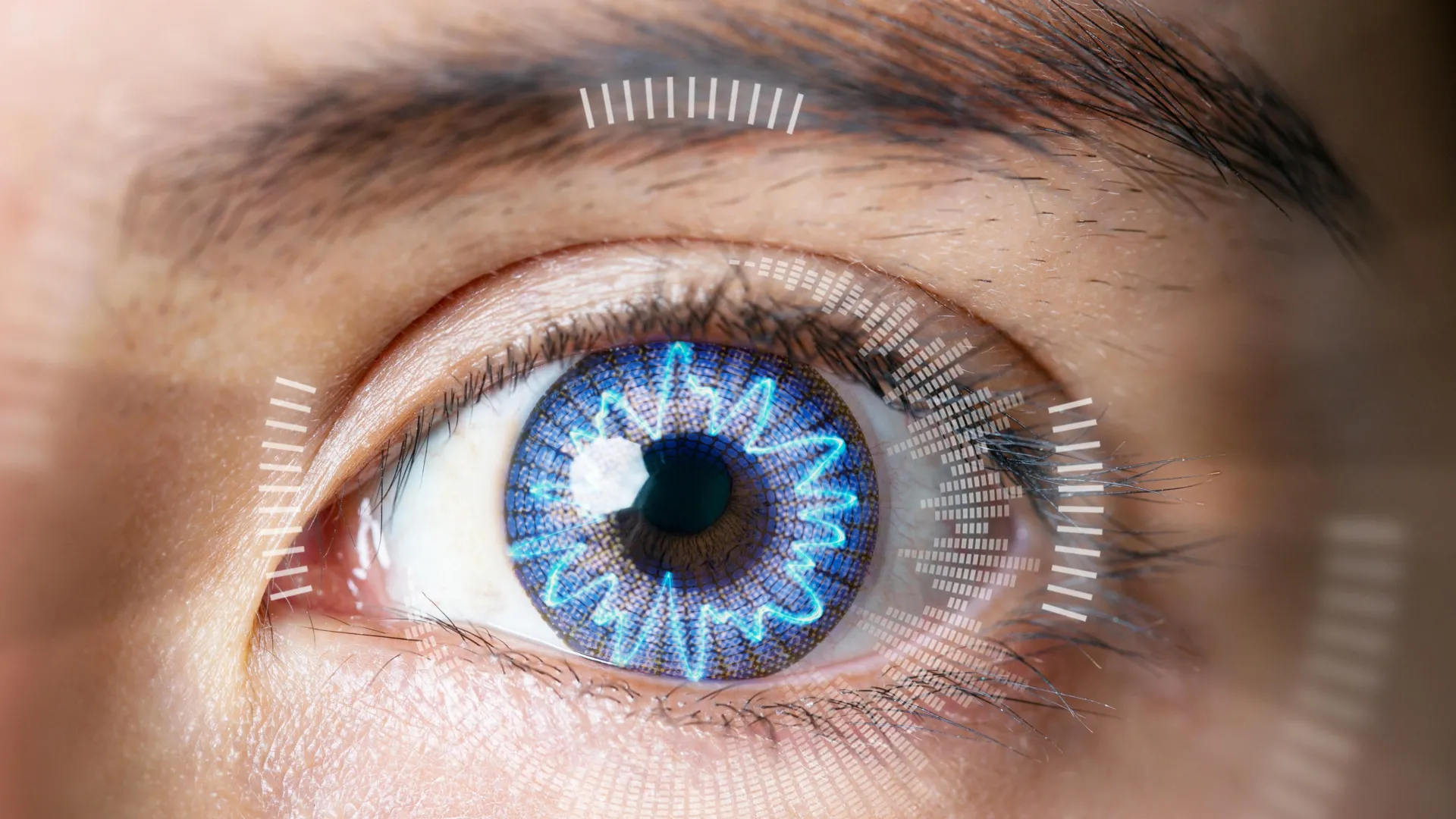
Millions of Americans live with blurred vision, nearsightedness, or more severe vision problems. While glasses and contact lenses help many people, millions of people are turning to corrective procedures like LASIK to sharpen their vision. But scientists are now exploring a completely different approach that could one day change the shape of the eye without lasers, cutting or invasive surgery.
Researchers at Occidental College and the University of California, Irvine are developing an experimental technique called electromechanical reshaping (EMR). Rather than removing tissue as in LASIK, this method temporarily softens the cornea and allows it to be gently molded into a new shape.
Initial testing in rabbit eyes suggests that the technology could one day provide a cheaper, less invasive alternative to traditional laser eye surgery.
How does LASIK change vision?
The cornea is a transparent, dome-shaped surface at the front of the eye. It helps focus the image on the retina by bending the incoming light. If the cornea is too steep, too flat, or unevenly shaped, vision will be blurred.
LASIK corrects these problems by using a laser to remove minute amounts of corneal tissue and permanently reshape the eye. Although this procedure is widely used and generally considered safe, it can cause complications such as dry eyes, glare, halos, and weakening of corneal structures.
Michael Hill, a chemistry professor at Occidental College, said the basic concept behind LASIK remains tissue removal.
“LASIK is just a fancy way of doing traditional surgery. It’s still just sculpting the tissue, and it’s just sculpting it with a laser.”
This limitation led researchers to look for ways to reshape the cornea without making any incisions.
an accidental discovery
The idea behind EMR emerged unexpectedly during early experiments with cartilage and other collagen-rich tissues.
“The whole effect was discovered by chance,” explains Brian Wong, a professor and surgeon at the University of California, Irvine. “I looked at biological tissues as moldable materials and discovered the entire process of chemical modification.”
Collagen-rich tissues throughout the body, including the cornea, maintain their shape through a network of charged molecules that maintain their structure. Because these tissues contain large amounts of water, scientists have found that applying a weak electric current can temporarily change the acidity, or pH, of the tissues.
When the pH changes, the molecular bonds that hold tissues together begin to loosen. This temporarily makes the tissue flexible enough to reshape. When the pH returns to normal, the tissue becomes stiff again and locks into its new shape.
Researchers had previously tested EMR on rabbit ear cartilage, pig skin, and scar tissue. The cornea has become one of the most promising targets because even small changes in curvature can dramatically improve vision.
Change the shape of your eyes with electricity
To test the technology, the team created a special platinum “contact lens” shaped to match the desired curvature of the cornea. The rabbit’s eyeballs were placed in a saline solution designed to mimic natural tears, and platinum lenses served as electrodes.
When the researchers applied a small electric potential, the cornea gradually softened and conformed to the shape of the lens. The entire process takes approximately one minute, which is similar to the time required for LASIK itself, but without cutting tissue or using an expensive laser system.
The research team tested the procedure on the eyes of 12 rabbits. Ten people were treated to simulate correction of myopia, also known as myopia. In these eyes, the cornea was successful in achieving the intended focusing ability that corresponded to improved visual acuity.
Importantly, the cells in the tissue remained alive because the researchers carefully controlled the pH changes during the treatment.
The researchers also reported another interesting possibility. Another experiment found that the same technique could reverse some of the chemical clouding within the cornea. Severe corneal opacities now often require a complete corneal transplant.
Why researchers are excited about EMR
Scientists say EMR could potentially avoid some of the significant drawbacks associated with related procedures such as LASIK and PRK. Because this method does not remove corneal tissue, it may preserve more of the eye’s natural structural strength.
Laboratory imaging studies using optical coherence tomography (OCT), confocal microscopy, and second harmonic generation microscopy also suggested that the collagen structure of the cornea remained largely intact after treatment. The researchers reported that there was no significant loss of transparency or obvious tissue damage in early experiments.
Recent reporting and engineering updates continue to improve the technology. Scientists are currently developing advanced electrode contact lenses that can monitor corneal shape, hydration, and clarity during treatment. Researchers have also considered whether EMR could eventually be applied to conditions beyond myopia, such as farsightedness, astigmatism, and certain reconstructive procedures involving cartilage-rich tissue.
Some scientists believe this approach could ultimately be much cheaper than laser-based surgery because it may not require large and complex laser systems.
There’s still a long way to go
Despite the excitement surrounding the technology, researchers caution that EMR remains experimental.
So far, the technique has been primarily tested on isolated rabbit eyes, rather than on live animals or humans. The next step will be more extensive animal studies to determine how stable the reshaped cornea is over time and whether the treatment is safe in living tissue.
“There’s a long way to go between what we’ve been doing and the clinic,” Hill concludes. “But once we get there, this technology is widely applicable, much cheaper, and potentially even reversible.”
Researchers are also continuing to study how accurately the procedure can correct different types of vision problems and whether there are any long-term side effects after treatment.
For now, LASIK remains the standard option for surgical vision correction. However, EMR has opened the door to a future where lasers, cutting, or permanent tissue removal are not required to correct blurred vision.
The study was funded by the National Eye Institute of the National Institutes of Health and the John Stauffer Charitable Trust.
