


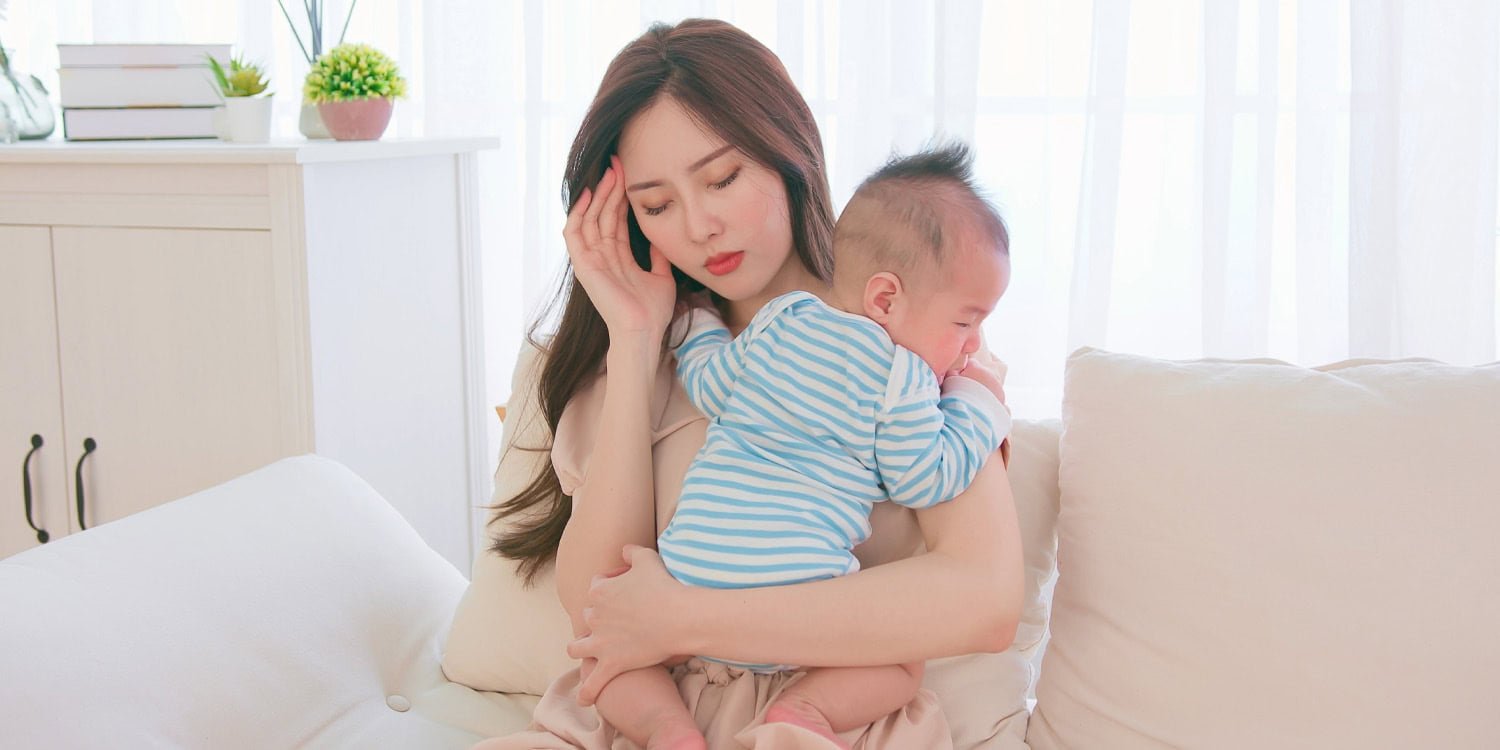
New research published in Sleep Health: National Sleep Foundation Journal suggests that depression and anxiety may play an increasingly large role in new parents’ sleep problems, especially as babies grow older.
Becoming a parent is often said to be one of the most enjoyable experiences in life, but it can also be exhausting. Frequent night wakings, feeding schedules, and the stress of caring for a newborn can disrupt your sleep for months. Previous research has long linked sleep deprivation to mental health issues such as depression and anxiety, but most studies have focused only on mothers and the first few weeks of life.
The researchers wanted to better understand how sleep and mental health interact over time, and whether the same pattern held true for fathers. The research team, led by Abel Horwitz and Liat Tikotsky at Ben-Gurion University in the Negev, Israel, followed 232 couples from late pregnancy until the first year of their baby’s life.
Participants reported on their sleep and mental health during pregnancy (second trimester) and when their baby was 4, 8, and 12 months old. Sleep was measured in two different ways. One is objective, using a wearable device that tracks nighttime movements (actigraphy), and the other is subjective, using a sleep diary and the Insomnia Severity Index (ISI) questionnaire.
The researchers also assessed symptoms of depression and anxiety using established questionnaires, the Edinburgh Postnatal Depression Scale and the State Trait Anxiety Inventory. The scores on these two mental health tests were so strongly related that the researchers combined them into one “depression-anxiety” score for analysis.
The results revealed a clear pattern. Parents who felt they didn’t get enough sleep and reported more severe insomnia symptoms were significantly more likely to report higher levels of depression and anxiety. Interestingly, objective sleep data from wearable devices did not show this association. This suggests that how parents perceive their sleep and the distress it causes may be more closely related to their mental health than the actual amount of time they sleep.
Over time, the direction of this relationship seemed to change. The study found that sleep problems were not simply linked to mental health problems; worse depression and anxiety at 8 months of age predicted poorer sleep quality at 12 months for both parents. For fathers, this relationship was even more complex. Poor sleep quality at 4 months predicted poorer mental health at 8 months, which fed back into poor sleep quality at 12 months, creating a persistent, cyclical trap.
These findings are extremely important because they challenge the common assumption that sleep deprivation is the sole cause of distress in new parents. In fact, the researchers suggest that psychological conflicts can actually worsen a parent’s sleep experience, especially in the second half of the first year when infants begin to sleep more consistently.
However, this study has limitations. Because it is observational, it is not possible to definitively prove cause and effect. Additionally, the study sample was highly homogeneous. Participants were primarily middle- to high-income Israeli families with healthy infants, and most had low-level (non-clinical) depression and anxiety. As a result, these findings may be less applicable to families facing significant financial hardship or parents with severe mental illness.
The study, “Sleep and Symptoms of Depression and Anxiety in Mothers and Fathers of Infants: A Longitudinal Perspective,” was authored by Avel Horwitz, Yael Bar-Shachar, Dar Ran-Peled, Gal Meiri, and Liat Tikotzky.
