


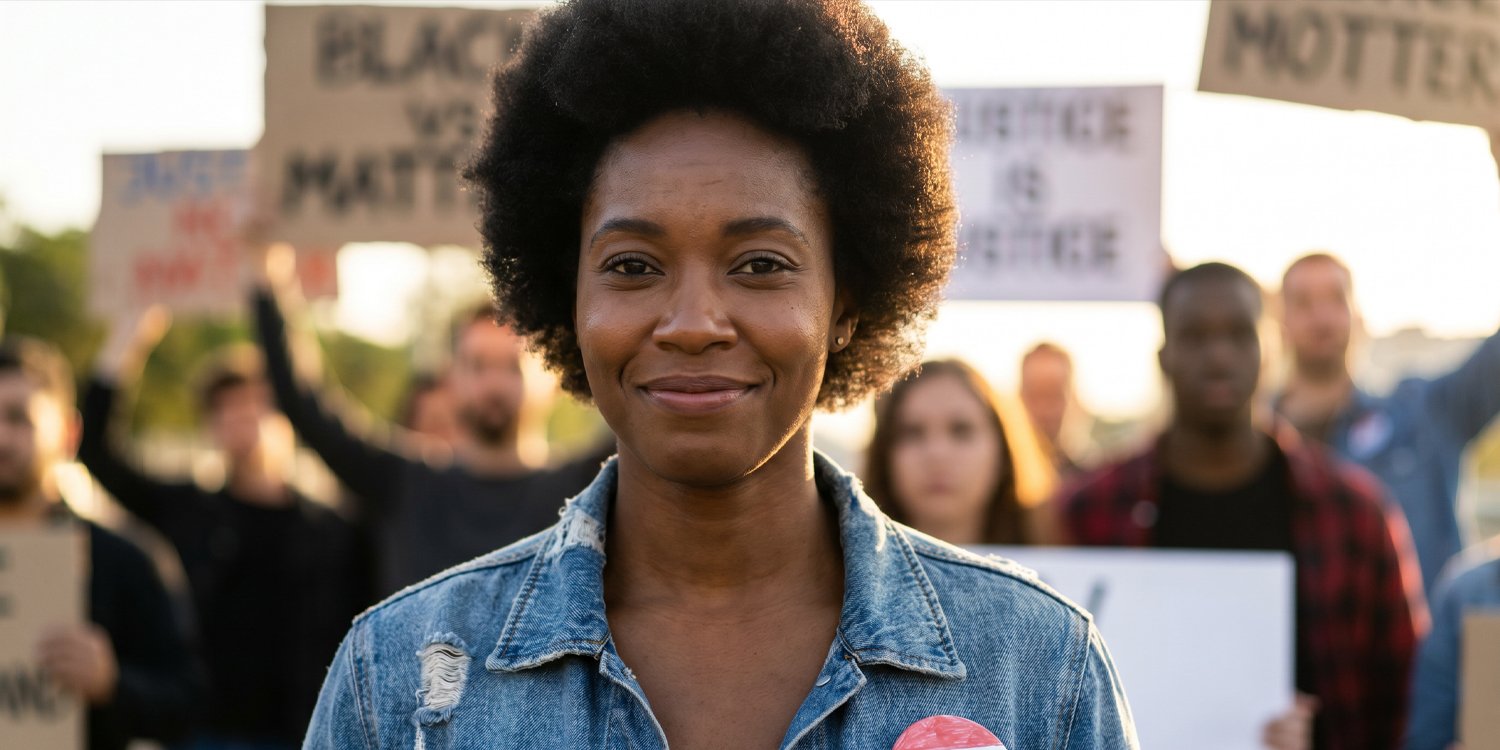
Recent research examines how emotions such as fear, anger, and hope shape Black women’s political behavior outside of the voting booth. Researchers found that the type of emotion and the topic that evoked it determined whether individuals engaged in low-effort tasks, such as signing petitions, or high-effort activities, such as protesting. The findings, published in The Journal of Race, Ethnicity, and Politics, show that black women are driven by a wide range of emotions that go far beyond superficial stereotypes.
Political scientists frequently study how emotions predict voter behavior. Most of this research has historically focused on white Americans, and the results were assumed to apply to other general populations as well. When studying minority groups, researchers typically consider race and gender separately.
Lead researcher Jamil S. Scott Cummings of Georgetown University and co-author Kenicia Wright of Arizona State University wanted to detail the unique experiences of Black women. To do this, they used an intersectional approach. Intersectionality is a framework that considers how a person’s various social identities, such as race and gender, combine to influence their life experiences and the inequalities they face.
Researchers noted that black women have long overcome severe social pressure to suppress their emotions. Stereotypes of them as perpetually angry or endlessly strong often ignore their actual emotional depth. Because Black women are deeply involved in American politics, researchers wanted to understand how different emotions affect their civic participation.
Throughout history, the social and political context of the United States has sometimes made it dangerous for Black women to express any emotion. The dominant image of their behavior remains racialized even today. The idea that black women are strong is deeply ingrained and can actually cause emotional pain and frustration.
Scott-Cummings and Wright categorized political actions according to their personal costs. Low-cost activities require little time and little risk. This includes signing online petitions, wearing campaign buttons, boycotting products, and sharing political posts.
High-cost activities require more resources or involve higher personal risk. These actions include donating money, contacting public officials, volunteering for election campaigns, and participating in protests. Researchers recognized that the multiple disadvantages that Black women experience may mean they are at much higher risk of engaging in these costly activities than other groups.
To test their idea, the researchers analyzed data from the 2016 and 2020 Post-Election Collaborative Multiracial Surveys. This study intentionally oversampled marginalized populations. Relying on this data, the authors were able to survey thousands of Black women without the sample size limitations common in standard research.
They investigated how participants felt about three specific topics: race relations, personal finances, and the recent election. For each topic, individuals reported their levels of anger, fear, and hope on a standardized scale. The researchers then used statistical models to examine how these emotions matched different types of political participation.
The team also considered a wide range of other factors that influence political engagement. These included demographic variables such as age, education, and income. We also controlled for aspects such as religious involvement, community involvement, and ideological leanings. The model also measured concepts such as chain of fate, the belief that an individual’s personal success is tied to the success of a broader racial group.
When asked about race relations, both negative and positive emotions were correlated with political behavior. Anger and fear about race relations predicted increased engagement in low-cost activities. Researchers suggest that for many black women, the consequences of withdrawal from politics are too severe to ignore.
Anger and fear may not drive women to engage in expensive work related to race relations, but these emotions do encourage them to engage in work that does not require excessive time but leverages political power. On the other hand, expectations regarding race relations were tied to high participation fees.
This is consistent with the idea that hope drives the determination necessary to invest significant time and energy in political change. Black women are often seen as the backbone of the Democratic Party because of their mobilizing power. Survey data suggests that feeling hopeful makes people more willing to take on the most demanding political challenges.
Researchers also noticed other trends. For example, black women who actively participated in low-cost political action regarding race relations often felt that the government was unresponsive to their racial group. This suggests that low-cost political action does not require the same level of trust or buy-in to the political system that high-cost action requires.
When researchers focused on personal finances, the results changed. Black women experience unique economic burdens in the United States. They often outperform other groups in educational attainment, even as they face persistent wage inequality and high student loan debt.
Relatedly, anger about personal finances predicted high-cost political participation. Feelings of hope or fear about money were not statistically significant predictors of low- or high-cost political action. We find that the relationship between economic sentiment and political engagement is clearly different from reactions regarding racial issues.
This detail would have been lost if the researchers had not separated low-cost and high-cost activities. This research shows that how Black women feel about their economic constraints motivates their particular means of political engagement. Anger is the primary economic emotional driver when tackling high-stakes political challenges.
Data from a 2016 survey asking about election results reveals yet another pattern. Anger about elections was associated with low costs of participation. Anxiety about the election led to high participation fees.
This last finding departs from the existing political science literature. Previous research generally suggests that fear causes people to seek information rather than take direct action. The discovery that fear drives Black women to demanding political activities points to a new understanding of how negative emotions mobilize certain populations.
The researchers noted some limitations to their study. Survey data captures associations at a specific point in time. Because this information is observational, researchers cannot definitively prove that a particular emotion causes a particular behavior. This result simply shows that certain emotions and behaviors often co-occur.
Furthermore, the survey did not ask about all forms of political participation. Black women have a long history of organizing through social clubs, historically Black sororities, and professional civic organizations. Activity within these specific spaces was not measured by the survey questions.
Future research may shed light on exactly how fear motivates Black women to take high-cost political actions. Scott-Cummings and Wright also suggest looking at emotional factors for other minority women. Understanding these different emotional responses can help us better understand what drives political engagement in diverse societies.
The study, “The (Not So) Angry Black Woman: How Emotions Influence Political Participation of Black Women,” was authored by Jamil S. Scott-Cummings and Kenicia Wright.
