


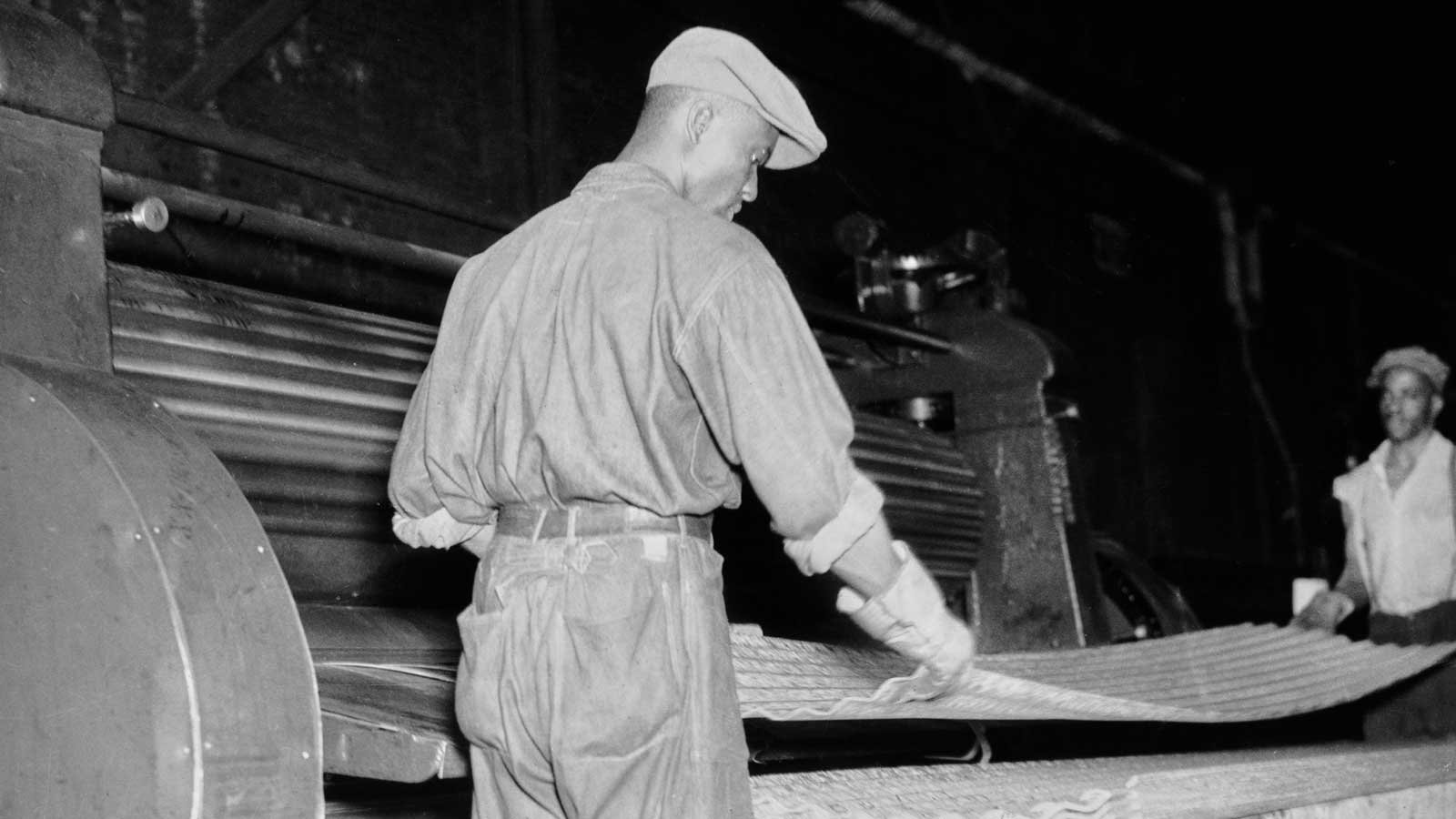
As a child, I remember mornings when there was a metallic smell in the air, before I had the language to understand what it meant. I grew up in Birmingham, Alabama, in a family of generations of steel workers and domestic workers. My ancestors worked as cities expanded through mines and factories that produced fuel for the rest of the country. They helped build the industrial backbone that made the city prosperous.
But like many black families with roots in the area, we were segregated into specific neighborhoods, often living in the areas closest to coke fuel plants, steel facilities, and pollution sites. From slavery to steel production, the growth of this country has too often required Black communities to take disproportionate risks. The geographical location of the contamination was not a matter of chance, but a result of policy.
Read: The link between past racist housing policies and today’s climate risks
These neighborhoods are predominantly black and working-class and have endured decades of toxic exposure. Here, increased risk of cancer and chronic respiratory disease is accepted as a reality. Air quality is among the worst in the country. The soil under people’s feet is contaminated with heavy metals. Children grow up near Superfund sites. This is not distant history. This is happening now.
When the Environmental Protection Agency recently announced that it would not weigh the number of lives saved when evaluating environmental regulations, such as limits on pollutants from coal-fired power plants and other industrial facilities, it sent a message to communities like mine that our health and lives are expendable.
For decades, the EPA has tried to explain that while clean air and water protections have prevented premature deaths, they are not enough to cover the long-term medical costs of disability. But when the current administration decided to remove even that consideration, we saw the scales tip toward short-term corporate savings and away from human lives. The sacrifices in our health and the wealth to pay for the costs that come with it have been written into the business plans of countless companies, not paid out as corporate profits, but sanctioned by governments.
For communities across the South that already face severe health care disparities, this change means more illnesses and fewer paths to care. The impact is even harsher for people living with disabilities and chronic illnesses, including those affected by the polluting industries that surround us. Increased exposure to the same pollution can worsen symptoms, limit mobility, and increase the daily effort of managing the body. All this, plus the added stress of environmental insecurity for people living in these regions, can put additional stress on our nervous systems and increase the risk of cardiovascular disease and depression.
It’s not just more hospital visits, it’s the grief of avoidable loss, the fear of children growing up in dangerous environments, and the constant reminder that access to clean air, care, and safety is still not guaranteed.
Our health and lives came under even more severe attack after the Trump administration last spring repealed what it called a “crisis finding” that determined that climate-warming gases threaten public health and well-being. Established in 2009, this finding was the legal backbone of federal climate regulation. Weakening it would take away critical powers to address extreme heat, flooding and poor air quality that disproportionately harm Black and low-income communities across the South.
The same communities that were once targets of racial planning and violence continue to suffer from pollution. The pattern is clear. Recent rollbacks in federal environmental policy are inseparable from this legacy of racism. Instead, they enhance it.
We have already seen how racist and harmful deregulation has played out in the region for decades. My organization, the Greater Birmingham Alliance to Stop Pollution, filed a challenge to the Trump administration after it approved an exception that allowed coke oven facilities to avoid stricter pollution regulations. Coke production releases benzene and other harmful pollutants that are linked to cancer and respiratory diseases. Granting exemptions to regions where access to insurance and health care is already overburdened and underfunded and under-resourced sends a message that the government has given up all pretexts to claim to protect us from harmful airborne toxins and potentially disease-causing chemicals.
Now the cycle is repeating itself. Large data centers, like the large projects that caused concern in my town, are touted as engines of modern economic growth. However, these facilities require vast amounts of electricity, straining local power grids and encouraging expansion of fossil fuel generation. Many rely on gas-powered “emergency” generators to cope with this power consumption, releasing nitrogen oxides and particulate matter into nearby communities.
Read: Household electricity bills are rising. Not so much for data centers.
No one should have to pay the price of further exposure to harmful substances for corporate profits. Our prosperity as a community should not be measured by how many facilities we build or how much electricity we consume, but by how long we live. A growth that expands the crown instead of a chimney. Growth that replaces contaminated soil with playgrounds and gardens. Growth that strengthens neighborhoods rather than surrounds them at the expense of others. And those most affected must shape the future of their neighborhoods. That’s why public health is the starting point for every development decision, not an afterthought.
Imagine every child in the South growing up breathing clean air. Imagine they inherited cumulative investments rather than cumulative exposures. Imagine a framework in which prosperity is defined by collective well-being rather than corporate profits.
That is the South that the children of steel workers and domestic workers should inherit. A place where we grow in safety, power, and possibility, not a place where we are asked to endure harm in the name of progress.
Jirisa Milton is Executive Director of the Greater Birmingham Alliance to Stop Pollution (GASP), where she leads community-led efforts to improve air quality, protect public health and advance environmental justice across Greater Birmingham.
thisarticleteeth,Yale Climate Connections First published inCreative Commons Attribution-NonCommercial-NoDerivatives 4.0 International License.
