


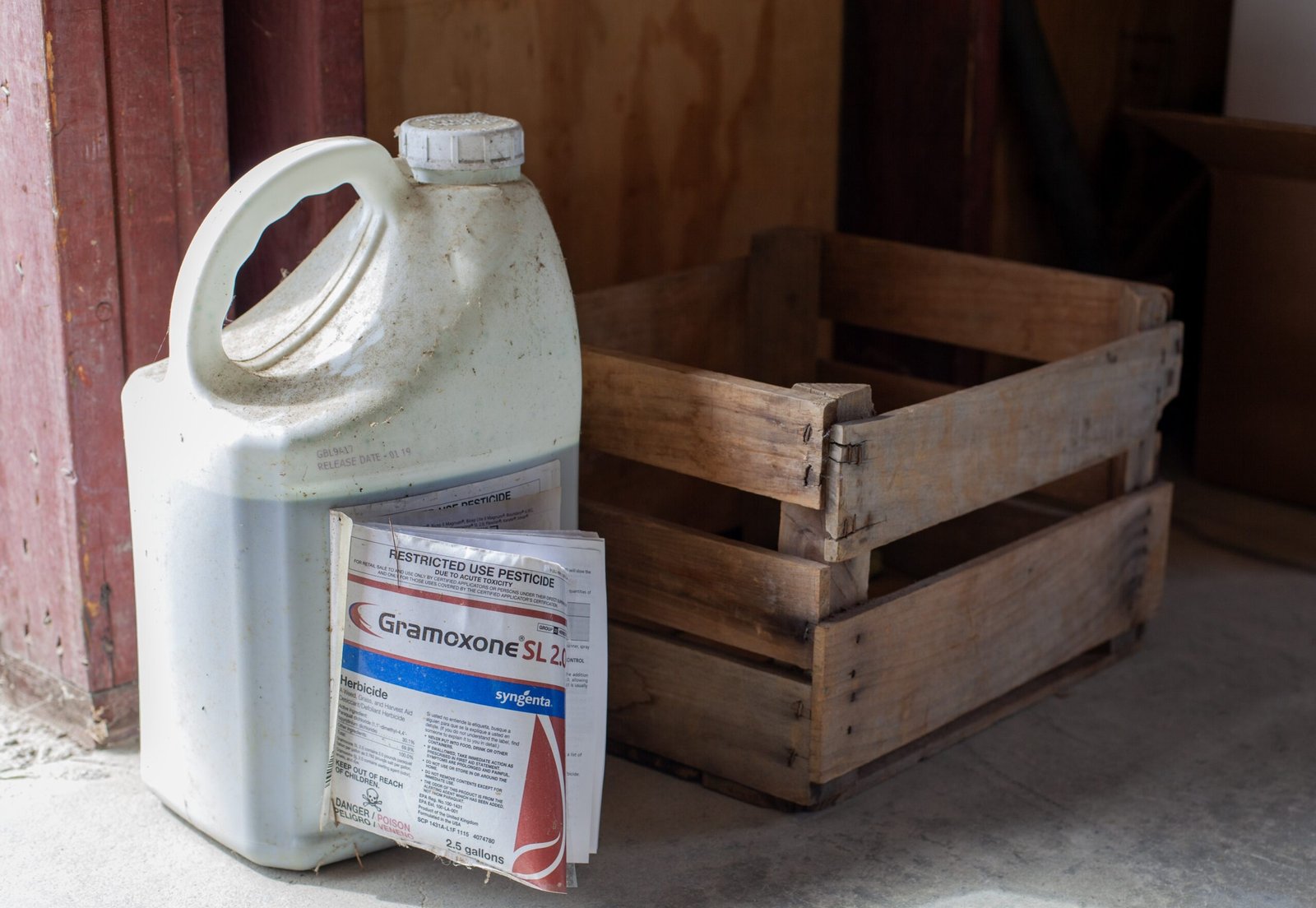
U.S. regulators will hold a forum this summer to examine safety concerns surrounding the herbicide paraquat, which has been used on farmland for decades and has been linked to health risks such as Parkinson’s disease.
The Environmental Protection Agency (EPA) announced Tuesday that it will hold a roundtable with scientists, farmworkers, community activists and others to discuss “documented safety challenges associated with this chemical” and explore “potential solutions and alternatives.”
The agency did not provide a date or location, but said details would be released at a later date. An EPA spokeswoman said she could not yet say whether the event would be open to the public.
The use of paraquat in agriculture and other fields has come under scrutiny in recent years, largely due to a growing body of scientific research linking chronic exposure to brain harm. Similarly, a lawsuit brought by Parkinson’s disease patients revealed internal records showing that paraquat maker Syngenta and former paraquat distributor Chevron had concerns about chronic health problems dating back decades, but the companies failed to warn users and instead sought to hide the risks.
Although the EPA has not confirmed a link between paraquat and Parkinson’s disease, it has expressed concerns about the use of this pesticide. The agency announced in November that new data raised questions about the potential for paraquat to volatilize and travel beyond the spray area, causing “inhalation exposure to non-occupational bystanders.”
The EPA roundtable is expected to discuss “the current state of the science informing EPA’s ongoing reassessment” and “a range of possible safeguards and alternative approaches,” the agency said.
“When new science raises questions, we won’t look away. We require manufacturers to prove that their current use is safe under real-world conditions, and if they fail to meet that standard, we will take decisive action,” EPA Administrator Lee Zeldin said in a statement.
Under intense scrutiny, Syngenta announced in March that it would stop manufacturing paraquat herbicide products and stop selling paraquat-based herbicides by the end of June. Generic supplies of paraquat from other suppliers are not affected.
The company is also trying to end the case with a class action settlement, but many plaintiffs are reluctant to accept the terms.
Paraquat has been used in the United States since 1964 as a tool to kill broadleaf weeds and grasses. Although banned in several countries, Syngenta’s paraquat-based Gramoxone herbicide brand remains popular among U.S. farmers, where it is used to grow soybeans, cotton, and corn, as well as grapes, pistachios, peanuts, and many other crops.
Research showing a link to Parkinson’s disease has led to calls for a ban across the country, including from many state and federal lawmakers. Vermont became the first state to ban pesticides in May.
-
Carrie Gillum is editor-in-chief of The New Lede and a veteran investigative journalist with more than 30 years of experience covering U.S. news, including 17 years (1998-2015) as a senior correspondent for Reuters International. She is the author of Whitewashing: A Story of Herbicides, Cancer, and the Corruption of Science, which exposed the agricultural corruption of the Monsanto corporation. The book won the coveted Rachel Carson Book Award from the Society of Environmental Journalists in 2018. Her second book, the narrative law thriller The Monsanto Documents, was released on March 2, 2021.
She also contributed chapters to a textbook on environmental journalism and a book on pesticide use in Africa.
Mr. Gillum testified about his research as an invited expert before the European Parliament in 2017 and was a featured speaker at the World Democracy Forum in Strasbourg, France in 2019. He has also been a keynote speaker and panel speaker at events and universities in North America, Australia, the Netherlands, Brussels, and France.
Gillam is a regular contributor to the Guardian. Her work has also appeared in The New York Times, Huffington Post, Time, and other outlets.
In 2022, Gillum helped launch The New Lede as a journalism initiative of the Environmental Working Group.
Gillum is a member of the Association of Environmental Journalists.
