




Investigating cancer risk at Green Bay PCB cleanup site
The Milwaukee Journal Sentinel spent two years investigating worker safety concerns at Green Bay’s Lower Fox River PCB Remediation Project.
Local officials and environmental groups say stronger oversight of toxic waste cleanup projects is needed after a Milwaukee Journal Sentinel investigation revealed lax protections for workers at the world’s largest polychlorinated biphenyl cleanup site.
At the Lower Fox River cleanup site where Scott Meisenheimer, 66, worked in 2013, an investigation found that contractor Tetra Tech failed to equip employees with minimum levels of personal protective equipment and enforce decontamination standards.
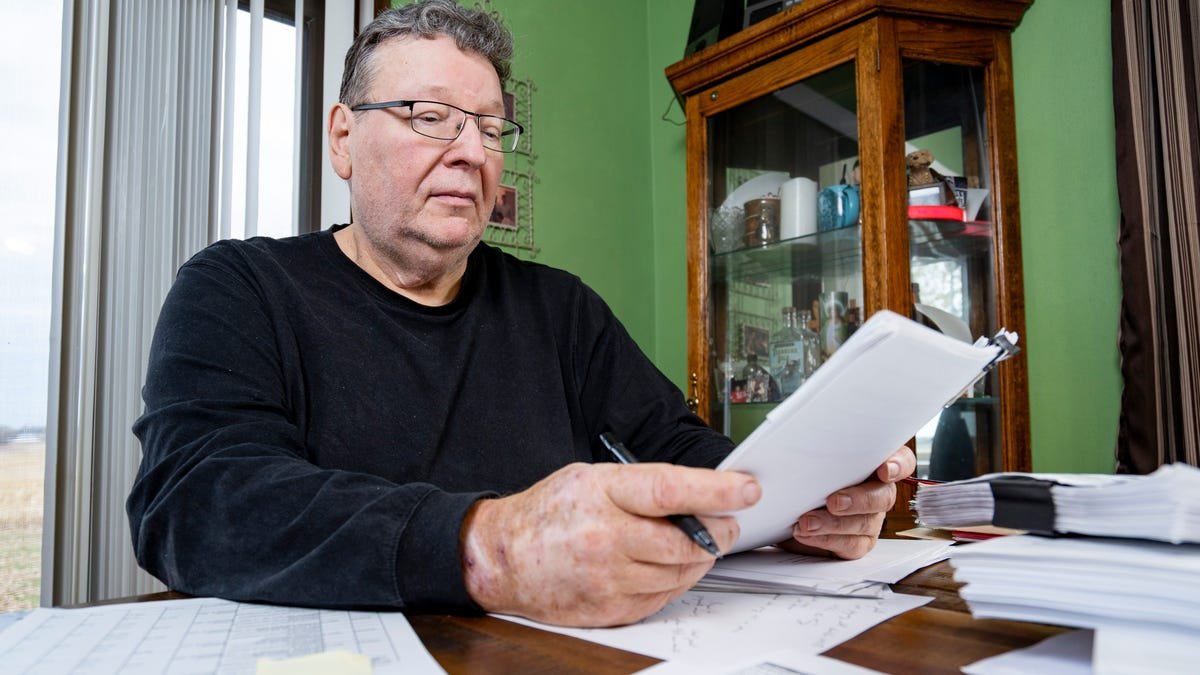
After working in the field, Meisenheimer was diagnosed with cancer four times over 11 years. The two types of cancer he was diagnosed with, non-Hodgkin’s lymphoma and melanoma, have both been linked to PCB exposure, but scientists caution that it is very difficult to link cancer diagnoses to specific events.
Meisenheimer received a $50,000 workers’ compensation settlement from Tetra Tech in 2018 following her initial cancer diagnosis. Under the terms of the contract, Tetra Tech was not responsible for his illness.
Tetra Tech is not paying for ongoing cancer treatment. Meisenheimer is suing the company again.
Outagamie County Executive Thomas Nelson, who was a state lawmaker representing the Fox River area when the PCB removal project began, said Meisenheimer “has legitimate and serious health claims that need to be addressed.”
Nelson said there should have been stronger protections and enforcement at environmental cleanup sites like the one where Meisenheimer worked, where workers come into contact with carcinogens every day.
“Scott deserves answers and, more importantly, the medical care he needs to treat and hopefully cure his cancer. And he doesn’t have to pay a dime,” Nelson said.
Environmental groups call for stronger monitoring of toxic chemicals
The story also sparked a response from Earthjustice, an environmental law nonprofit.
Debbie Chisewer, the group’s lead attorney, said Meisenheimer’s case is a powerful example of why governments working to clean up PCBs should do more to protect workers.
“No one was really checking to see if Tetra Tech was doing its job in a way that was safe for its employees and for the neighbors,” Chizewar said.
Hannah Richerson, director of water policy at the environmental nonprofit Clean Wisconsin, calls PCBs “the original ‘forever chemicals,'” a term often used to describe polyfluoroalkyl substances (PFAS).
Like PCBs, PFAS are a class of widely used synthetic organic chemicals that do not easily break down. Since the early 2000s, there has been growing evidence of the health risks of PFAS, but few regulations exist to allow continued commercial use.
Richerson said regulators and watchdogs should have learned from PCBs and applied those lessons to PFAS. He said the federal regulatory structure for chemical manufacturing remains flawed.
“Lives literally depend on federal and state regulators not repeating the history of PCBs with PFAS and other persistent contaminants,” Richerson said.
Although the Fox River project was declared complete in 2020, PCB removal efforts continue across the United States, including at more than a dozen sites in the Great Lakes region.
Meanwhile, the Trump administration’s moves to roll back worker protections and restrict public access to environmental hazard information have raised further concerns from environmental advocates.
Chizewar said the administration’s attempts to undermine long-standing chemical hazard protections are not supported by scientific research and will put more workers at risk.
“If something is prohibited, we need to take it seriously,” she said.
Chizewer said contractors and government agencies have their own interests in mind when setting policies. For residents and workers, knowing the health risks of chemicals and pressing leaders on how to protect them is the best step toward stricter enforcement.
“It is the government’s job to identify the responsible parties and hold them accountable,” Chizewar said.
Legal battle over PCB removal continues
Kasdorf, the law firm for Tetra Tech and its insurer AIG, responded to the Journal Sentinel report in a letter to the Wisconsin Department of Workforce Development, objecting to Meisenheimer’s latest claims against his former employer and his characterization of the 2018 settlement agreement.
Under the agreement, Tetra Tech and Meisenheimer agreed to “keep future medical costs open, subject to all current factual and legal defenses.”
“Mr. Meisenheimer confuses the concept of leaving a claim open with a legal obligation to pay,” Kasdorf wrote.
As Meisenheimer continues to press his case, local governments across the country are pursuing their own legal battles against PCB contaminants.
The Milwaukee Metropolitan Sewer District is in the midst of a lawsuit against Monsanto, the original producer of PCBs, seeking to pay for the ongoing cleanup of the Milwaukee River.
Unlike the Lower Fox River cleanup carried out under the federal Superfund program and paid for by the paper mills that caused the contamination, the city and the Milwaukee Metropolitan Sewer District have spent millions of dollars cleaning carcinogenic PCBs from sewers and waterways.
Since the article was published, Meisenheimer said she is hopeful that a decade of financial and medical struggles will be resolved.
Meisenheimer’s family has set up a GoFundMe to help with his unpaid medical bills.
Tamia Fowlkes is a reporter for Public Investigator and can be reached at tfowlkes@gannett.com. Caitlin Looby covers the Great Lakes and can be reached at clooby@gannett.com.
To support this effort, please visit jsonline.com/support. Checks can be mailed to Local Media Foundation (memo: “JS Community Journalism”), PO Box 85015, Chicago, IL 60689.
This fundraiser is made possible through a partnership with Local Media Foundation, a 501(c)3 nonprofit organization (tax ID number 36-4427750) and EnMotive Company, LLC, a subsidiary of this publication’s parent company, USA TODAY Co., Inc.
This article was produced in partnership with the McGraw Center for Business Journalism at the Craig Newmark Graduate School of Journalism at the City University of New York.
