


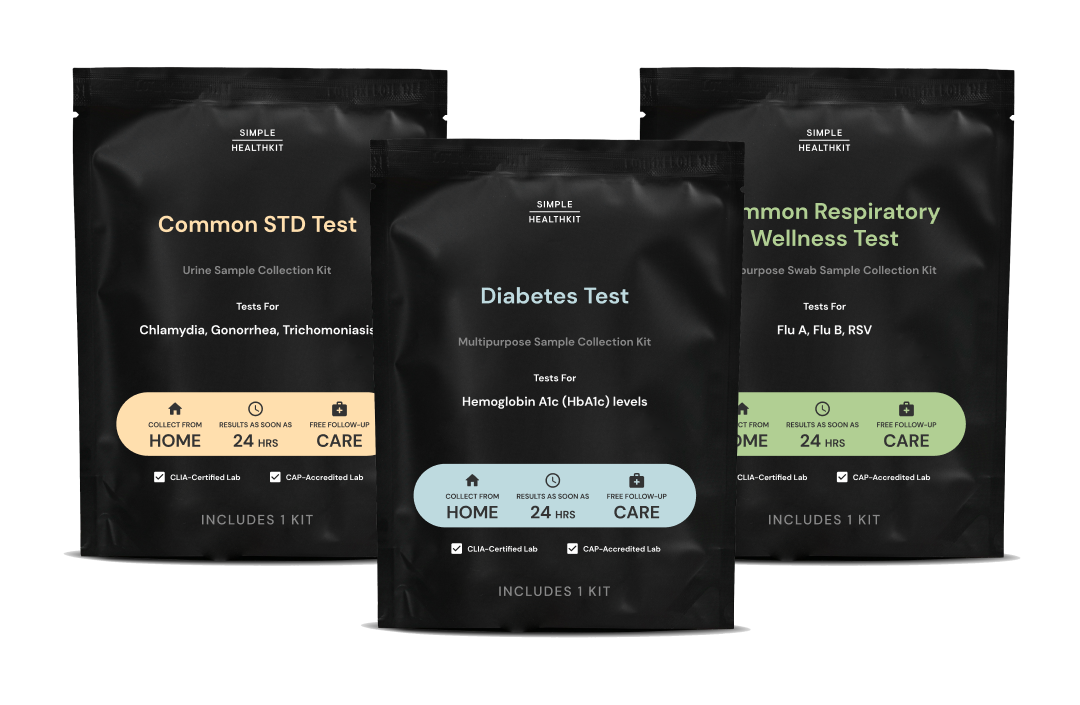
AI startup Doctronic has partnered with at-home health testing platform Simple HealthKit to offer consumers end-to-end diagnostic screening integrated with virtual clinical care.
Simple HealthKit provides an at-home health testing service that allows consumers to personally collect a sample (blood, urine, saliva, etc.) and mail it to an accredited laboratory. The company has a growing portfolio of at-home screening programs across diabetes, chronic kidney disease, colorectal cancer, cervical cancer, sexually transmitted infections and other preventive health conditions.
Simple HealthKit provides home screening kits directly to consumers through its website and retail partners, and also works with health plans, health care providers, and public health programs.
“Through this partnership[with Doctronic]we are initially focused on conditions that can have the greatest immediate impact across national health plans and retail partnerships, with plans to expand to a broader portfolio over time. Our vision is to make high-quality health care available to everyone,” Dr. Sheena Menezes, co-founder and CEO of Simple HealthKit, told Fierce Healthcare.
Doctronic touts itself as the first AI system legally authorized to practice medicine in the United States. The startup offers free personal AI doctors via chatbots to help navigate symptoms and answer medical questions, and can connect users with certified doctors through virtual visits. Doctoronic is available in all 50 states and is being tested for prescription refills in Utah as part of a pilot program.
Doctor Adam Oskowitz, co-CEO and co-founder of Doctronic, told Fierce Healthcare in an email that patients first purchase a Simple HealthKit test and are directed to Doctronic after their test results. “Upon arrival, the AI will already know the test results and will guide the patient for medical evaluation based on that knowledge,” Oskowitz said.
Once screening test results are available, patients with positive findings will be referred back to Doctronic for timely clinical follow-up care. The result, the companies say, is a continuous, closed-loop care experience designed around the patient, leveraging AI, clinical monitoring and collective intelligence.
“We plan to introduce Simple HealthKit to at-risk patients for at-home testing in the near future, and that will follow shortly,” he said.
“Partnering with Doctronic means patients will have access to an AI health assistant to ask questions as soon as they get their results and have full consultation with a real doctor for treatment. That’s the promise of what we’re building together,” Menezes said.
Doctronic’s Simple HealthKit bridges one of the biggest remaining gaps in digital health, from suspecting a problem to receiving treatment, Oskowitz said. “Together, we are building the infrastructure for a new kind of health care.”
Similar to ongoing assessments, Doctoric will measure patients’ ability to properly assess their symptoms and make the right recommendations for next steps, Oskowitz said. “All patients see a human doctor after the AI consultation, so we can compare human recommendations with the AI,” he said.
Menezes said healthcare has traditionally been siled and lacked continuity.
“Too many people are caught between recognizing a health concern, getting tested, and getting the care they need. Together, we are creating one connected journey that reflects the innovations and changing consumer expectations that are shaping health care today, so patients can easily move from concern to testing to treatment without any barriers,” she said.
According to HRSA data, more than 108 million Americans live in areas with primary care shortages, representing approximately 27% to 30% of the total U.S. population.
Simple HealthKit and Doctronic’s integration will help close these access gaps, Menezes argued.
This partnership comes at a time when both companies are experiencing rapid growth.
Doctronic’s platform currently serves more than 300,000 unique users each week and recently became the first AI-native platform in the U.S. to be allowed to renew prescriptions autonomously, company executives said.
Simple HealthKit is expanding its partnerships with national health plans, pharmaceutical companies, governments, and health systems through programs spanning chronic disease, cancer screening, and sexually transmitted disease testing, including corporate partnerships with Amazon and Walmart.
AI-powered clinical care services continue to grow as companies use AI chatbots for symptom checking, triage, and navigation.
Menezes insists that the partnership with Doctonic is “more than just a partnership. It’s a new blueprint for healthcare.”
“The first health guidance using AI, Simple HealthKit’s AI-native engagement platform, home screening, and clinical follow-up are now integrated into one seamless experience. Rather than asking patients to navigate a fragmented healthcare system, we are building a system that guides them every step of the way. We believe this is the future of healthcare, where technology doesn’t replace care, but makes it more accessible, connected, and human.
