


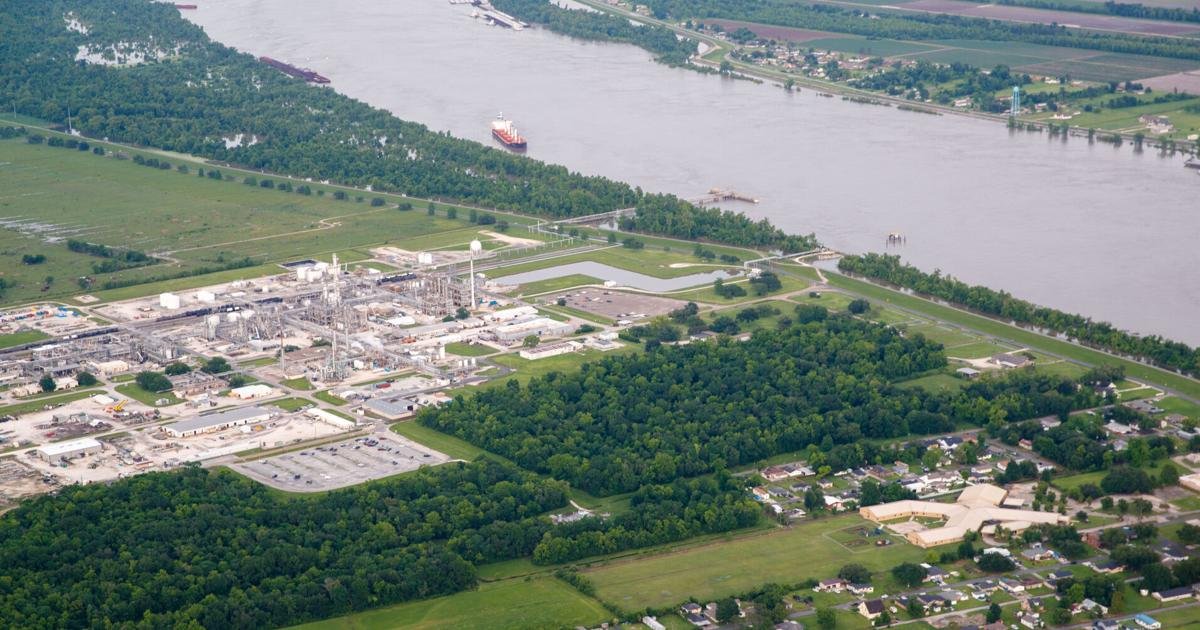
The now-dormant Denka neoprene plant in LaPlace has reached a settlement with the federal government for allegedly mishandling hazardous waste and disposing of material in a landfill for which it was not intended.
Under a federal consent agreement, Denka Performance Elastomers agreed to pay nearly $1 million in penalties to resolve hazardous waste violations. The plant, which ceased production in May 2025, had long been the subject of regulatory action and public concern over its emissions of chloroprene, which is classified as a possible carcinogen.
For at least seven years, Denka workers hauled byproducts that were later determined to be hazardous waste and dumped them outdoors, according to a new federal settlement. The process also released toxic and flammable chloroprene fumes at levels tens to hundreds of thousands of times higher than long-standing federal aviation safety standards.
Chloroprene emissions, which federal regulators have called “excessive and dangerous,” spread around workers and eventually drifted into areas near the plants, which at one time had the highest cancer risk from air pollution in the nation. Regulators said workers were required to wear full-face masks in some jobs where outdoor emissions were suspected.
The company also agreed to clean the site and implement new processes, equipment improvements and worker training programs to reduce emissions if it resumes operations, either under its own control or under someone else’s control. The facility currently has no chloroprene in stock, according to the EPA.
“Denka’s mishandling of hazardous chloroprene waste and numerous legal violations exposed workers and the surrounding community to excess chloroprene and potentially serious health risks,” EPA Assistant Administrator Jeffrey A. Hall said in a statement.
“While this facility has ceased operations for business reasons separate from these enforcement actions, this order ensures that the facility will comply with the law if it resumes operations.”
Denka did not admit to any of the six alleged hazardous waste violations, avoiding fines that could reach up to hundreds of millions of dollars, although the exact amount is not clear.
Denka Performance Elastomers Inc.’s excavator was used on June 22, 2022, to remove polymer from an “external brine pit” wastewater cell, where chloroprene-containing sludge from the neoprene manufacturing process reacts outdoors without discharge controls, U.S. Environmental Protection Agency engineers said. Two years ago, the engineer filed a report and affidavit regarding Denka’s observations in federal court in New Orleans. The EPA is asking Denka to take steps to prevent the public release of chloroprene, a likely human carcinogen. Provided by the U.S. Environmental Protection Agency, documents filed by the U.S. District Court▲
Denka officials said in a statement that the amendment process required under the agreement in early 2022 “reflects additional investment and innovation from our dedicated employees to improve waste handling at our facilities and achieve further emissions reductions.”
“DPE is pleased that this matter has been fully and comprehensively resolved,” the company added.
“I couldn’t slip through the cracks.”
Denka operated the only neoprene production plant in the United States. Synthetic rubber is used in many products, from wetsuits, engine hoses, and fan belts to electrical insulation and mouse pads.
But in 2010, EPA scientists determined that chloroprene, a key chemical component of neoprene, is a likely human carcinogen.
The announcement sparked years of regulatory efforts, community efforts and lawsuits to force DuPont, which invented neoprene in the early 1930s, and Denka, which acquired the plant from DuPont in late 2015, to reduce chloroprene emissions.
The latest agreement stems from an unresolved EPA hazardous waste investigation dating back to 2022.
The outdoor pit seen at Denka Performance Elastomers on June 21, 2022, is one of three brick-lined pits the company uses to treat “chloroprene-containing sludge, wastewater, and solid waste generated in the neoprene manufacturing process,” according to a U.S. Environmental Protection Agency engineer who toured the facility. The process is uncontrolled, allowing volatile and reactive chloroprene, a likely human carcinogen, to be released into the air, EPA inspectors say. Provided by the U.S. Environmental Protection Agency, documents filed by the U.S. District Court▲
Other regulatory actions against the company have been dropped as the focus of the Biden and Trump administrations shifts from 2023 onwards. The Trump EPA is also reconsidering the chloroprene air quality standards that the Biden EPA finalized in 2024.
The latter administration views the former’s emphasis on environmental justice as an inappropriate focus on racism and a legal overreach that undermines economic growth.
Some of the alleged violations, including those related to the handling and disposal of hazardous waste, continued for seven years until an EPA order in late 2022 directed interim changes. However, this violation is also the company’s fault for failing to recognize its waste as hazardous for more than a decade.
Under this law, EPA could impose fines as high as $124,426 plus inflation for each date of violation for each of the six hazardous waste counts. The exact fine is $996,703.35, which equates to approximately eight days of violation at the maximum fine.
Representatives of community groups in Saint John, which have been highlighting concerns about toxic contamination for years, said they welcomed the settlement.
“We’re very happy that this actually didn’t slip through the cracks just being completely removed. All the other protections that have been given to us have been nullified, so this makes us feel really good,” said Tish Taylor, St. John’s Concerned Citizens Program Director.
Mr Taylor said the fine seemed sufficient considering Denka was no longer in operation, but he wanted it to remain closed.
Previous research
Denka has been trying to challenge the EPA’s cancer risk standards for chloroprene for years, arguing that the Environmental Protection Agency’s 2023 Clean Air Act lawsuit against the company, now dismissed, was politically motivated after it spent $35 million to reduce emissions.
The EPA says interim changes in waste treatment have reduced chloroprene emissions by 1 ton, but this is only a small portion of Denka’s overall air emissions.
In 2016, Denka released 119 tons of chloroprene into the atmosphere. By 2024, its last full year of operation, annual emissions had fallen 90% to 12 tons, according to the EPA’s database.
Denka and DuPont were under federal and state investigation before EPA inspectors exposed their hazardous waste treatment processes. The country reached early consent agreements with states to reduce emissions in 2017.
The trail will remain open at the Denka Performance Elastomer Preserve on June 22, 2022, allowing chloroprene, a potential human carcinogen, to leak into the air unabated, according to U.S. Environmental Protection Agency engineers. The engineer, who filed a report on his findings with a federal judge in New Orleans, toured the facility and pointed to several instances where basic work practices such as keeping humanitarian hatches closed and using closed containers to transport chloroprene-containing materials could reduce fugitive emissions of highly volatile chemicals. Provided by the U.S. Environmental Protection Agency, documents filed by the U.S. District Court▲
However, the consent agreement states that hazardous waste disposal outdoors continued. A 2021 on-site inspection found no violations, and the state’s hazardous waste inspection did not flag the process.
This material, known as “polykettle strainer waste” and treated chloroprene and butadiene popcorn waste, is a mixture of chloroprene, butadiene, toluene and other chemicals and was the result of Denka’s batch production of neoprene.
The process involved reacting chemicals, washing and filtering, and transporting them in open carts to open brine pits outside to solidify the material. An excavator was then used to grab the solidified waste and move it to an open bin for landfill disposal, as per the consent agreement.
EPA testing found the material to be highly reactive and could easily ignite. It was also found that large amounts of chloroprene were emitted from waste processing.
As an example, EPA inspectors found that when polykettle strainer waste was taken to an open brine pit, chloroprene levels reached 243,000 micrograms per cubic meter. This is 810,000 times the lifetime exposure standard allowed for factory fence lines.
Brine pits were used to reduce the potential risk of fire or explosion before “polykettle” waste was disposed of in residential or industrial landfills, which are not designated as hazardous waste. The EPA says the process was never approved. Denka will begin using the hazardous waste landfill in early 2023.
The EPA found similar unauthorized processing and disposal of butadiene and chloroprene popcorn, which is now being sent to hazardous waste incinerators.
