


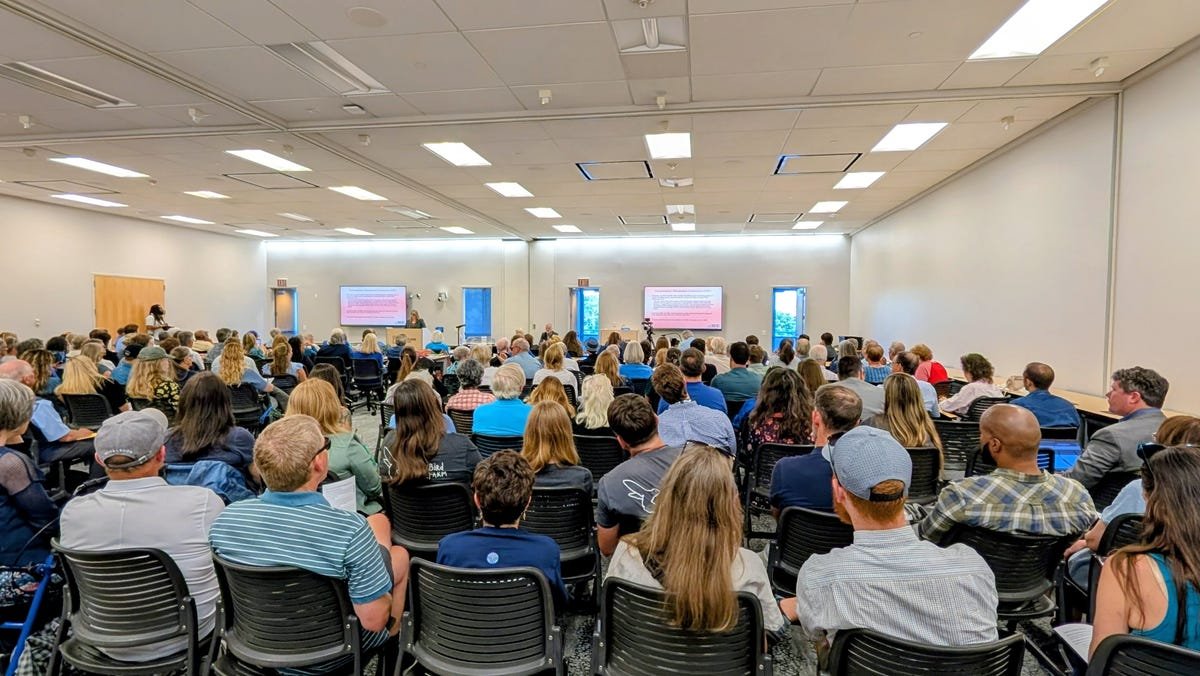
Local chapters of the Climate Reality Project aim to teach people how to engage with neighbors and officials on important environmental issues.
No teeth. It’s embarrassing. It’s embarrassing.
“This commission has written a love letter to the polluters,” said Emily Donovan, co-founder of local environmental advocacy group Clean Cape Fear, to thunderous applause from the audience of more than 200 people packed into the Skyline Center conference room.
When the North Carolina Environmental Control Commission traveled to Wilmington in late April 2026 to hold public hearings on proposed PFAS monitoring and minimization rules, commission members and staff heard from dozens of disgruntled residents who have felt angry and, to some extent, abandoned by state regulators since the Star-News first reported on the presence of unknown chemicals in drinking water in 2017.
The proposed rules would not impose penalties or specific restrictions on companies found to be emitting “permanent chemicals” into the environment, but rather would require industry to largely self-regulate, something that speaker after speaker on April 23 said simply wouldn’t work.
Since President Donald Trump returned to the White House in January 2025, environmental activism, particularly on issues such as climate change and industrial regulation, has been largely on the defensive.
Over the past 16 months, the Trump administration has been aggressively working to downsize the U.S. Environmental Protection Agency. Relax rules protecting wetlands. Moved to close offshore wind farms. Eliminate or reduce regulations that protect air and water quality. Many Republican-controlled state legislatures, including Raleigh’s, have largely mirrored Washington’s direction, arguing the measures are needed to cut red tape and stimulate the economy.
However, the latest report from Yale University’s Climate Opinion Map found that 72% of Americans believe global warming is occurring. In the Wilmington metropolitan area, 61% of adults said they were somewhat or very concerned about global warming, 2 percentage points lower than the national average. This number was several percentage points higher in New Hanover than in Brunswick and Pender counties.
Environmentalists and community activists say large turnouts like last month’s PFAS hearings show there is still frustration and a willingness to galvanize communities to demand change, or at least have their voices heard.
That led a group of Wilmington activists to create a new organization aimed at equipping people with the skills to talk about climate change and other environmental issues in ways that move others, including state and local officials, to action.
“Climate Reality in general is focused on how to inform people and educate them so they can talk to their neighbors in a way that they really understand, rather than just reacting to what’s on the news or on social media,” said James Fisher, co-chair of the new Cape Fear chapter of the Climate Reality project.
Founded and chaired by former Vice President Al Gore, the project aims to “recruit, train, and mobilize people from all walks of life to work for just climate action that accelerates the world’s energy transition and opens the door to a better tomorrow for all of us.”
Fisher said the chapter will work with other climate-focused groups across North Carolina, including existing Climate Reality chapters in Raleigh, Durham and Charlotte, to track legislation, integrate policy efforts and raise awareness about impending decisions that could impact the Wilmington area’s coastal environment.
Some of the local issues the new group will focus on include the large-scale Sledge Forest development planned in northern New Hanover County and the county’s 2050 Long Range Comprehensive Plan, particularly regarding flooding.
“We don’t want to take on too much right away because then we can get bogged down and get overwhelmed quickly,” Fisher said. “But we want to give people these toolkits, and most importantly, like the PFAS comment session, we want to identify courses of action where they can make a difference and have their voices heard.”
The local branch plans to hold a training session on May 17th that will also serve as the organization’s first general meeting.
“We invite you to join our growing community of people who are ready and willing to take action,” Fisher said. “Let’s talk about climate change. Let’s talk about facts. Let’s get some people thinking about climate change.”
The Climate Reality Cape Fear Chapter’s on-site training event at the University of North Carolina Wilmington Marine Science Center will be held May 17 from 2 to 5 p.m. Light refreshments will be provided. To secure your spot, visit https://luma.com/55qi8jqq or email Connect@climaterealitycapefear.org. Information can also be obtained by calling 910-632-0897.
Contact reporter Gareth McGrath at GMcGrath@usatodayco.com or @GarethMcGrathSN on X/Twitter. This article was produced with financial support from Journalism Funding Partners. USA TODAY Network maintains full editorial control of the work.
