


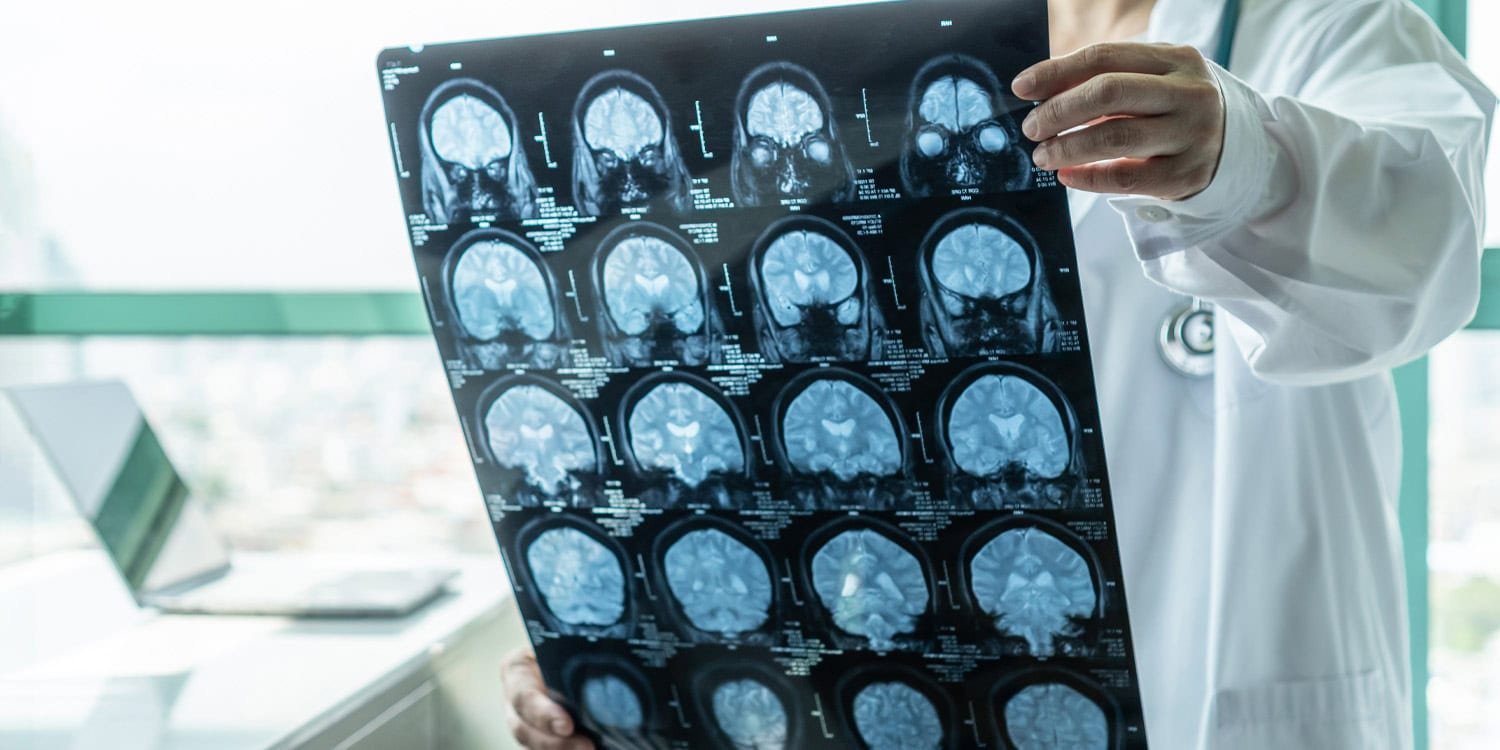
The extent to which unwanted traumatic memories invade a person’s consciousness, and the intensity with which a patient feels that they are reliving the experience, can be shaped by the physical state of specific connections in the brain. This new research Biological psychiatry: cognitive neuroscience and neuroimaging.
Intrusive memories related to trauma are one of the most distressing symptoms experienced by people with post-traumatic stress disorder (PTSD). These memories can appear unexpectedly and are often accompanied by intense emotions, vivid mental images, and a strong sense that the traumatic event is happening again in the present. Intrusive memories are thought to be a hallmark of PTSD, but researchers still know little about the brain mechanisms that influence why some people experience them more intensely than others.
Previous research has emphasized the importance of the hippocampus, a brain region involved in memory, and visual processing areas and networks involved in recalling personal experiences. However, how the physical white matter pathways connecting these regions contribute to intrusive memory experiences remained unclear. White matter refers to the physical “wiring” of the brain, the bundles of nerve fibers that carry signals between brain regions.
To address this question, researchers led by Stephen J. Granger of McLean Hospital and Harvard Medical School studied 114 trauma-exposed adults (87 women, mean age ~33 years) who experienced symptoms of PTSD and at least two trauma-related intrusive memories per week. Participants completed a smartphone-based survey three times a day for two weeks, allowing researchers to assess specific characteristics of intrusive memories that occurred in their daily lives. The research team also performed advanced MRI scans to examine the integrity of white matter pathways in the brain.
The researchers focused on two main pathways. The first, known as the parahippocampal paraparietal cingulate, connects memory-related areas of the brain with areas involved in inward thinking and autobiographical memory. The second inferior longitudinal fasciculus connects temporal areas associated with memory and visual processing areas. The researchers investigated whether the quality of these pathways (measured by fractional anisotropy) was associated with five different aspects of intrusive memory: vividness, visual detail, reliving, emotional intensity, and intrusiveness.
The results revealed that participants with lower structural integrity of the parahippocampal cingulate structure reported significantly more intrusive traumatic memories. This association was the most consistent finding across multiple statistical approaches. Granger’s team proposed that this reduced integrity of connections may reflect a reduced ability of the brain’s memory and attention systems to communicate effectively, potentially making it harder to suppress unwanted memories before they jump into consciousness.
In contrast, decreased structural integrity of the inferior longitudinal fasciculus was primarily associated with strong feelings (and, to a lesser extent, vividness) of “reliving” the traumatic event. Granger and colleagues suggested that damage to this visual-memory link could reduce the brain’s ability to keep past perceptions clearly separated from present ones. They write, “Lower (inferior longitudinal fasciculus) integrity may reflect a reduced separation of perceptual and memory information, potentially contributing to the ‘here and now’ quality of reliving.”
Interestingly, the researchers also tested a third white matter tract (frontoparietal cingulate) as a control and found no association between its integrity and intrusive memory. This strengthens the argument that the observed relationships are specific to memory-related brain circuits, rather than reflecting general differences across brain structures.
Please note some limitations. For example, findings do not prove cause and effect. Because the brain scans were collected at only one time point, it is not possible to determine whether reduced white matter integrity is a pre-existing vulnerability that causes intense memories, or whether repeated traumatic intrusions physically degrade the white matter over time.
The study, “Microstructural integrity of posterior hippocampal cortical white matter is associated with phenomenological properties of trauma-related intrusive memories,” was authored by Steven J. Granger, Boyu Ren, Kevin J. Clancy, Yara Pollmann, Justin T. Baker, and Isabelle M. Rosso.
