


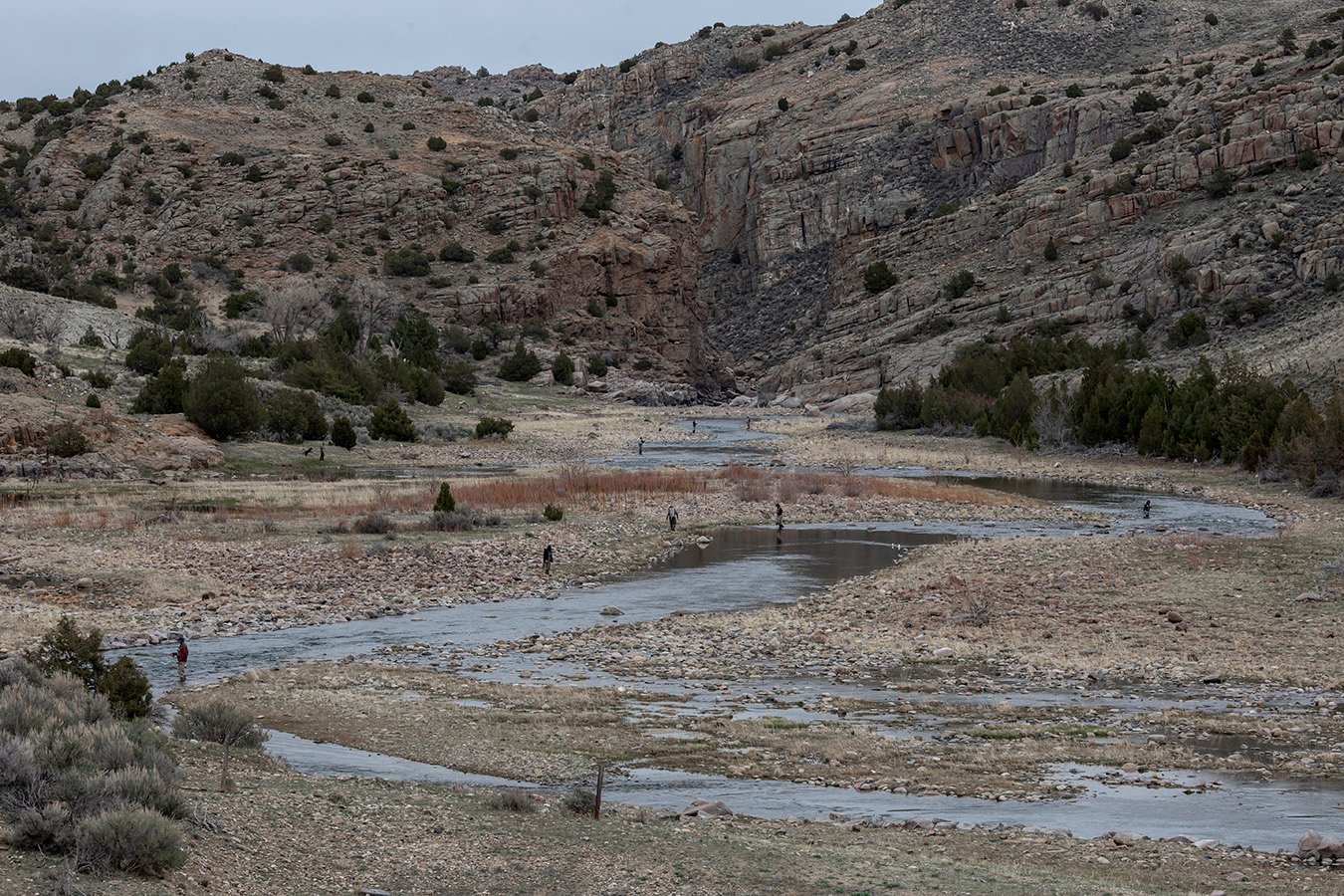
The boat ramp sits in the mud, stuck like a beached sea creature. Algae grows on exposed rocks. And the former fish spawning beds will dry out in the sun.
It’s only early May, but the state’s fisheries biologists are already preparing anglers for a summer of low water and heat flow, slow fish movement and the potential for some waters, especially in the southeastern part of the state, to dry up completely.
In fact, the water level forecast for this summer is so bad that the Wyoming Game and Fish Department issued a press release in April telling anglers to consider keeping the fish they catch within legal limits in many of southeast Wyoming’s lakes. Hot water stresses fish such as trout, so their chances of survival after being caught drop sharply as water temperatures rise. If the drought continues and water does not increase in the coming years, some of those lakes may cease to exist as fisheries at all.
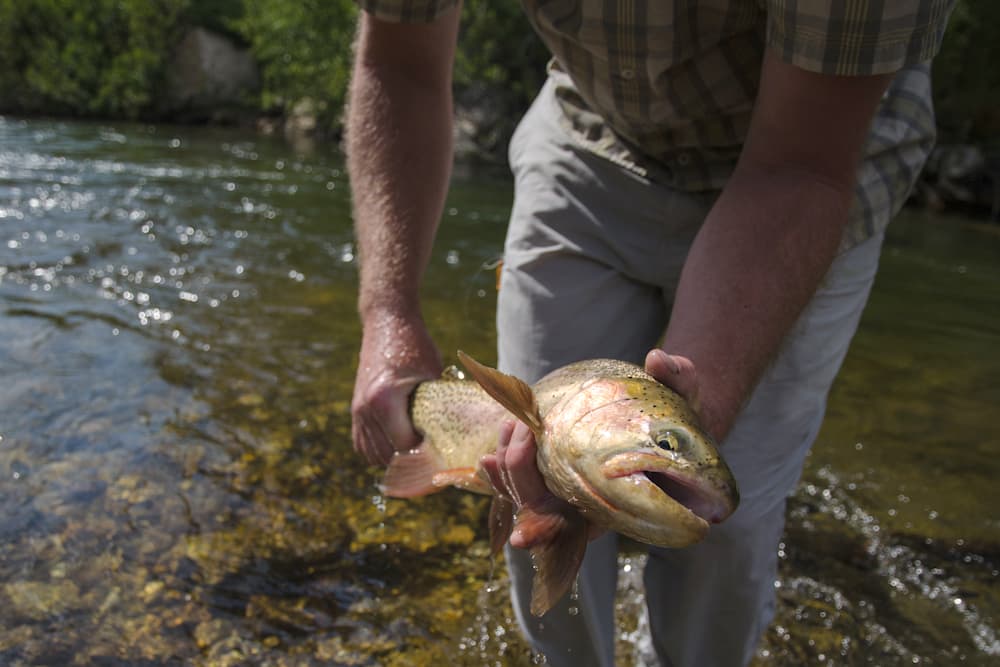 Encountering wild native fish in beautiful locations, like this ferocious trout from the Wind River drainage, is an undeniable perk, but life as a fishing guide also comes with many challenges. “It’s a lot of hard work,” said Jeff Streeter, a 43-year industry veteran. (Matthew Copeland/WyoFile)
With the exception of the northwest corner, snowfall amounts across the state are below average or exceptionally below average. During the winter, there was almost no snow in the lowlands, but in the high mountains it was even less than usual. This combination is harsh on streams, lakes, and reservoirs. Then a heat wave, exacerbated by climate change, hit in March. Temperatures in the 70s and even 80s quickly melted much of the remaining snowpack. Climatologists report that this winter was the hottest and driest on record.
While this will affect everything from mule deer and pronghorn to ranchers looking for water for irrigation, anglers will also feel the pain.
“Conditions are becoming difficult to fish across the state,” said David Zaft, Game and Fish’s deputy director of fisheries. “But many of the places we’re talking about have significant stockpiles so they can rebuild.”
On the other hand, wild fish populations, which rely on natural reproduction rather than stocked fish, are likely to decline in some areas as they wait for rain and snow to fall.
loss of resources
Marce Vasquez has been fishing Plains Lake, a collection of lakes and reservoirs southwest of Laramie, for nearly 40 years, and he’s never seen water levels this low in many of the lakes. He recently teamed up with biologists to survey fish populations and found healthy cutthroat, rainbow and brown trout. But he worries that if water levels continue to drop and summers get hotter, many people won’t be able to come by fall.
“We’re going to lose these resources to local fishermen and people coming in from out of state,” he said.
And it’s not just Laramie Plains Lake. Water managers plan to lower the height of Flaming Gorge Reservoir by about 35 feet over the next year to meet the state’s parched needs along the Colorado River. Colorado itself plans to drain and empty Antero Reservoir, one of Denver’s main water sources, into Cheesman Reservoir to limit excessive evaporation. The Colorado Department of Parks and Wildlife has lifted all bag and possession restrictions and asked anglers to catch and store as many fish as possible while the state considers possible fish recovery efforts.
“We’re going to lose these resources to local fishermen and people coming in from out of state.”
Marc Vasquez
Wyoming biologists are asking people to consider trapping and stocking fish within legal limits in locations such as Wheatland Reservoir 3, Hattie Lake and the Pole Mountain Beaver Pond. And biologists have no intention of stocking some small lakes and reservoirs that normally host species such as trout.
What should anglers do?
For fishing guides in the Laramie area, the drought means asking clients to reschedule June upper North Platte River fishing trips to April or May, said Thomas Barta, an Upper North Platte River guide who works at Four Seasons Anglers in Laramie. We are well past May and with limited water availability, the damless river season is almost over.
“We know that at least here (drought) will dramatically impact our guide season,” he said. “There will be limited places you can go to float.”
When people call the shop asking for recommendations on where to go fishing this summer, he says alpine trips are their best bet.
Game and Fish agree. The fisheries report, issued at the end of April, outlines dire straits in some areas, but also points to bright spots around the state, including parts of the northwest corner where rainfall is somewhat near normal.
Try fishing ponds like Alcoba and Glendo on the North Platte River or Boysen Reservoir on the Wind River. Alpine lakes also offer plenty of opportunities.
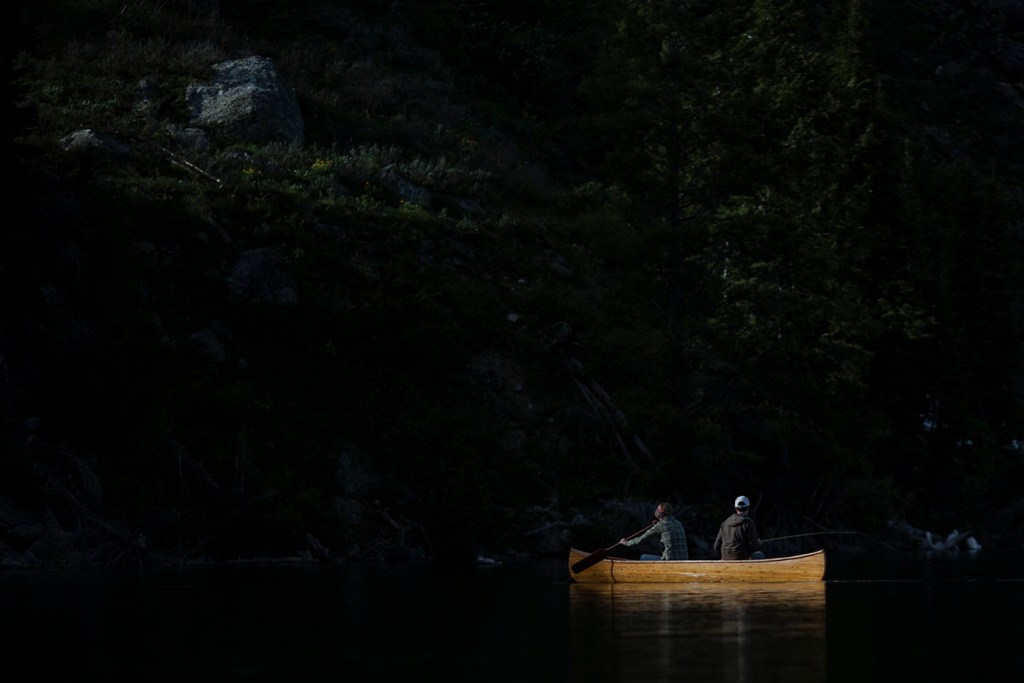 Anglers paddle homemade canoes along the shores of Lake Lee in pursuit of trout in Grand Teton National Park on June 3, 2017. (Ryan Dorgan)
But for anglers like Vasquez, who lives in a drought-stricken area, the drought means less time fishing the lakes he’s learned over the years and more time looking elsewhere. And he won’t be alone. Anglers around the world will seek out lakes, rivers, and reservoirs that have cold enough water to fish safely. In other words, if you happen to have water at someone’s favorite fishing hole, you can expect to see more friends this summer.
Nick Hogberg, Casper area game and fisheries biologist, also urged anglers to be mindful of water temperatures. Once the rivers and lakes start to really warm up, plan to fish primarily in the early morning hours. If the water temperature is too high, even trout released quickly may not arrive.
“If you see that your fish is stressed and it’s really hot, don’t think that just because you can swim away it will survive,” says Hogberg. “There’s a difference between swimming away and surviving.”
Biologists will likely begin asking catch-and-release anglers to voluntarily fish in the morning. Zaft said such fishing restrictions could become mandatory if enough people don’t comply. This is because such fishing restrictions are often implemented in states with many freestone rivers and strong fishing pressure, such as Montana and Colorado.
For now, as Game and Fish waits out more rain and snow, biologists also recommend using barbless hooks for quick releases, not using bait for catch-and-release, and not squeezing fish or putting your fingers in their gills. Hogberg said these are all the same topics biologists offer during the hot summer months.
“But this year, there will be a much wider period of time where fish can be harmed,” he says.
