

Close Menu

    Subscribe to Updates

    Get the latest creative news from FooBar about art, design and business.

    What's Hot

    Hidden atomic gap that could destroy next-generation computer chips

    May 9, 2026

    Heavy crying in East Asian infants may reflect cultural norms rather than insecure attachment, research suggests

    May 9, 2026

    Emotional dysregulation at age 7 is associated with anxiety and depression in teenagers

    May 9, 2026
    Facebook X (Twitter) Instagram
    Facebook X (Twitter) Instagram
    Health Magazine
    • Home
    • Environmental Health
    • Health Technology
    • Medical Research
    • Mental Health
    • Nutrition Science
    • Pharma
    • Public Health
    • Discover
      • Daily Health Tips
      • Financial Health & Stability
      • Holistic Health & Wellness
      • Mental Health
      • Nutrition & Dietary Trends
      • Professional & Personal Growth
    • Our Mission
    Health Magazine
    Home » News » Hidden atomic gap that could destroy next-generation computer chips
    Nutrition Science

    Hidden atomic gap that could destroy next-generation computer chips

    healthadminBy healthadminMay 9, 2026No Comments4 Mins Read
    Hidden atomic gap that could destroy next-generation computer chips
    Share
    Facebook Twitter Reddit Telegram Pinterest Email


    For decades, smaller, more powerful electronic components have driven major advances in technology. Scientists are currently searching for the next breakthrough in computer chip design, and many researchers believe 2D materials could play a key role. These ultrathin materials, made from just one or a few atomic layers, are considered promising candidates for building even smaller electronic devices.

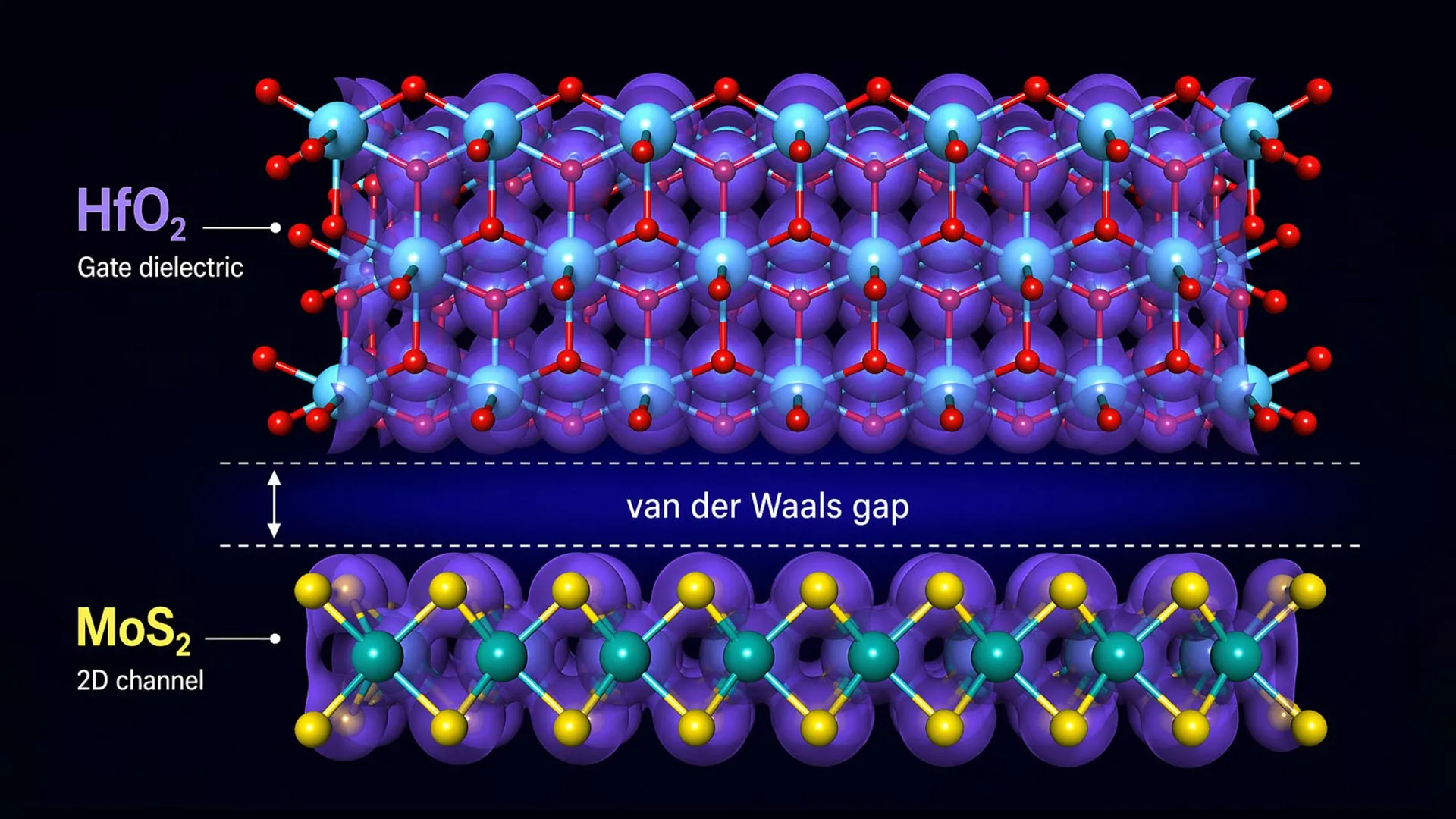
    But new research from the Vienna University of Technology suggests that many of these materials may not work as expected in real-world chip technology. The problem is not just the material itself. Scientists have discovered that when 2D materials are combined with the insulating layers needed in electronic devices, unavoidable atomic-scale gaps form between them. This small amount of separation can significantly degrade performance and become a fundamental barrier to further miniaturization.

    The discovery could help the semiconductor industry avoid spending billions of dollars on approaches that can never overcome these physical limitations.

    Why interfaces matter in 2D electronics

    “For many years, researchers have been fascinated by the surprising electronic properties of new 2D materials such as graphene and molybdenum disulfide,” said Professor Mahdi Pourfas, who conducted the research with Professor Tibor Glasser from the Institute of Microelectronics at the Vienna University of Technology. “But what is often overlooked is that you can’t make electronic devices with 2D materials alone; you also need an insulating layer (usually an oxide). And this is where things get more complicated from a materials science perspective.”

    Modern transistors work by switching semiconductors between conducting and non-conducting states. In future chips, the semiconductor could be an ultra-thin 2D material. This process is controlled by the gate electrode, which must be separated from the active material by an insulating layer.

    To keep devices as small and efficient as possible, insulation layers must be very thin. But a team at the Vienna University of Technology has discovered that this poses a major problem at the atomic scale.

    Small gaps cause big problems

    “For many combinations of 2D materials and insulating layers, the bond between them is relatively weak,” Grasser explains. “They are held together only by the so-called van der Waals forces, which exert only a weak attractive force between the semiconductor and the insulator. As a result, the two layers do not stick together and there is always a gap between them.”

    The gap is only about 0.14 nanometers, thinner than a single sulfur atom. Still, it has a dramatic effect on electronic behavior. For comparison, the SARS-CoV-2 virus is about 700 times larger.

    “This gap weakens the capacitive coupling between the layers. No matter how good the material’s intrinsic properties, the gap can be the limiting factor. As long as the gap exists, it imposes fundamental limits on how small these devices can be made.”

    According to the researchers, much work has focused on the superior properties of the 2D materials themselves, with less attention paid to the interfaces that form inside the finished device. Their research shows that these interfaces may ultimately determine whether future chip technologies succeed or fail.

    “Zipper material” may be the solution

    “If the semiconductor industry wants to succeed with 2D materials, the active and insulating layers need to be designed together from the beginning,” emphasizes Mahdi Pourfath.

    One possible answer is the use of so-called “zipper material.” In these systems, the semiconductor and insulating layers do not remain loosely coupled by van der Waals forces, but are much more strongly coupled. This tighter connection eliminates problematic gaps.

    “Our work is good news for the semiconductor industry,” says Tibor Glasser. “We can predict which materials are suitable for future miniaturization steps and which are not. But by focusing solely on the 2D materials themselves, without considering the inevitable insulating layers from the beginning, we risk investing billions of dollars in approaches that simply cannot succeed for fundamental physical reasons.”


    Source link

    Visited 1 times, 1 visit(s) today
    Share. Facebook Twitter Pinterest LinkedIn Telegram Reddit Email
    Previous ArticleHeavy crying in East Asian infants may reflect cultural norms rather than insecure attachment, research suggests
    healthadmin

    Related Posts

    Scientists say this simple music trick can improve training endurance by 20%

    May 9, 2026

    Physicists discover quantum particle that breaks the laws of reality

    May 9, 2026

    Fur seals that dive deep into the ocean experience delayed cardiac events after returning to land.

    May 9, 2026

    New chemical kills 95% of termites without harming humans

    May 9, 2026

    Ice Age humans in China created surprisingly advanced stone tools 146,000 years ago

    May 9, 2026

    Scientists have discovered a ‘holy grail’ gene that could one day help humans regenerate limbs

    May 9, 2026
    Add A Comment
    Leave A Reply Cancel Reply

    Categories

    • Daily Health Tips
    • Discover
    • Environmental Health
    • Exercise & Fitness
    • Featured
    • Featured Videos
    • Financial Health & Stability
    • Fitness
    • Fitness Updates
    • Health
    • Health Technology
    • Healthy Aging
    • Healthy Living
    • Holistic Healing
    • Holistic Health & Wellness
    • Medical Research
    • Medical Research & Insights
    • Mental Health
    • Mental Wellness
    • Natural Remedies
    • New Workouts
    • Nutrition
    • Nutrition & Dietary Trends
    • Nutrition & Superfoods
    • Nutrition Science
    • Pharma
    • Preventive Healthcare
    • Professional & Personal Growth
    • Public Health
    • Public Health & Awareness
    • Selected
    • Sleep & Recovery
    • Top Programs
    • Weight Management
    • Workouts
    Popular Posts
    • 1773313737_bacteria_-_Sebastian_Kaulitzki_46826fb7971649bfaca04a9b4cef3309-620x480.jpgHow Sino Biological ProPure™ redefines ultra-low… March 12, 2026
    • the-pros-and-cons-of-paleo-dietsThe Pros and Cons of Paleo Diets: What Science Really Says April 16, 2025
    • pexels-david-bartus-442116The food industry needs to act now to cut greenhouse… January 2, 2022
    • 1773729862_TagImage-3347-458389964760995353448-620x480.jpgDespite safety concerns, parents underestimate the… March 17, 2026
    • Improve Mental Health10 Science-Backed Practices to Improve Mental Health… March 11, 2025
    • 1773209206_futuristic_techno_design_on_background_of_supercomputer_data_center_-_Image_-_Timofeev_Vladimir_M1_4.jpegMulti-agent AI systems outperform single models… March 11, 2026

    Demo
    Stay In Touch
    • Facebook
    • Twitter
    • Pinterest
    • Instagram
    • YouTube
    • Vimeo
    Don't Miss

    Hidden atomic gap that could destroy next-generation computer chips

    By healthadminMay 9, 2026

    For decades, smaller, more powerful electronic components have driven major advances in technology. Scientists are…

    Heavy crying in East Asian infants may reflect cultural norms rather than insecure attachment, research suggests

    May 9, 2026

    Emotional dysregulation at age 7 is associated with anxiety and depression in teenagers

    May 9, 2026

    CDC plays little role in MV Hondius hantavirus outbreak

    May 9, 2026

    Subscribe to Updates

    Get the latest creative news from SmartMag about art & design.

    HealthxMagazine
    HealthxMagazine

    At HealthX Magazine, we are dedicated to empowering entrepreneurs, doctors, chiropractors, healthcare professionals, personal trainers, executives, thought leaders, and anyone striving for optimal health.

    Our Picks

    CDC plays little role in MV Hondius hantavirus outbreak

    May 9, 2026

    Brain scans reveal differences in how people with autism connect

    May 9, 2026

    Scientists say this simple music trick can improve training endurance by 20%

    May 9, 2026
    New Comments
      Facebook X (Twitter) Instagram Pinterest
      • Home
      • Privacy Policy
      • Our Mission
      © 2026 ThemeSphere. Designed by ThemeSphere.

      Type above and press Enter to search. Press Esc to cancel.