


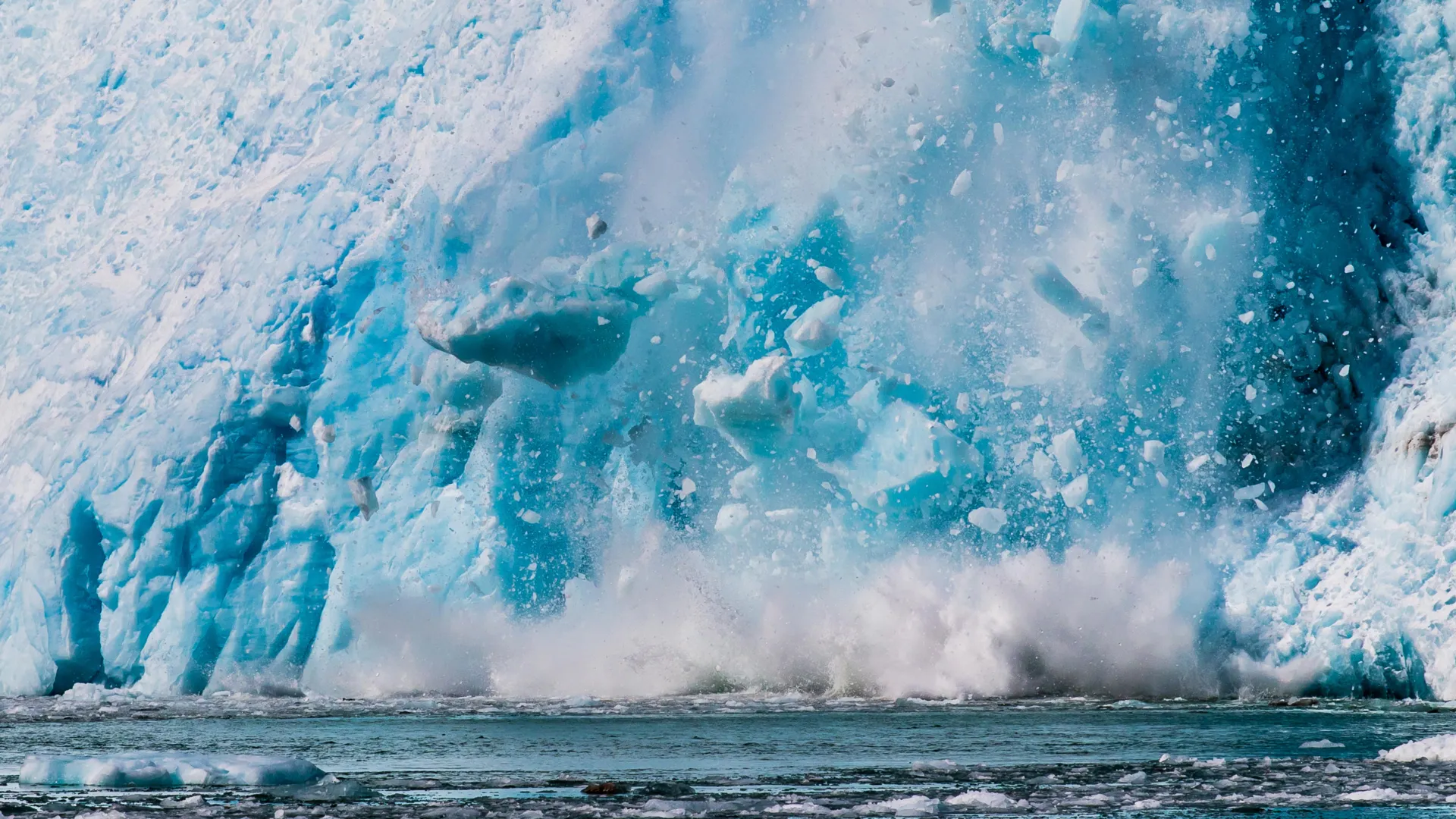
Alaska’s glaciers are extremely sensitive to rising temperatures. A new study using satellite radar observations shows that for every 1 degree Celsius increase in average summer temperatures, glacier melting increases by about three weeks.
One degree Celsius equals 1.8 degrees Fahrenheit.
This study also shows that synthetic aperture radar (SAR) can automatically and consistently monitor glaciers and their snow lines throughout the year. Traditionally, the snow line is usually measured only near the end of the snowmelt season using optical instruments.
Researchers have found that SAR provides more reliable data than traditional surface-based optical methods.
The survey results are nature.
The research was led by Alvin Wells, who recently completed his Ph.D. Graduated from Carnegie Mellon University. Co-authors include Carnegie Mellon University assistant professor David Rounce and Mark Fahnestock of the University of Alaska Fairbanks Geophysical Institute. Rounce previously worked at the Geophysical Institute as a postdoctoral researcher and research associate.
Tracking melting glaciers from space
The research team used radar observations to measure the “melt date” of glaciers. A melt day may represent an entire 24-hour period during which the entire glacier is melting, or it may consist of several days during which melt occurs in different parts of the glacier until the total area affected equals the total surface of the glacier.
An increase in melt days indicates a longer melt season, which contributes to an increase in overall ice loss.
Scientists used data from Europe’s Sentinel 1 radar satellite to monitor seasonal changes in nearly all Alaska glaciers larger than about half a square mile from mid-2016 to 2024.
Synthetic aperture radar works by sending microwave pulses toward the Earth’s surface from a moving satellite or aircraft and combining the returned signals to produce detailed images. SAR does not rely on sunlight, so data can be collected through clouds or in the dark.
Sentinel 1 revisits the same location every 12 days, covering more than 3,000 glaciers across Alaska.
Heatwave accelerates snow melting
The researchers also found that short-term heatwaves can significantly reduce the amount of snow that protects glaciers. During the unusually warm period, glaciers lost up to 28% more protective snow than in normal years. This percentage applies to the scale of individual mountain ranges and does not necessarily affect all glaciers within those regions equally.
“Our ability to quantify these changes is critical,” Wells said. “Melt extent and snow line are proxies for glacier mass balance.”
A glacier’s mass balance refers to the difference in how much snow and ice it gains and loses over time.
“These correlations with temperature are beginning to tell us how much snowmelt and snowline retreat we can expect in future warmer climates across the region,” Wells said.
The snow line marks the boundary between the glacier’s accumulation zone, where snow accumulates and increases mass, and the melt zone, where snow and ice are removed by melting.
Why radar is better than optical surveillance
Glaciologists typically utilize optical instruments to assess the snow line near the end of the snowmelt season, usually in late summer or early fall.
“With optical data, it can be very difficult to see the snow line,” Fahnestock says. “If you delay taking the photo for a day, you might end up with snow all over the glacier and you won’t be able to see where there’s bare glacier at the bottom and where there’s snow and fir on top.”
Fern is partially compacted, granular snow found near the top of glaciers. Over time, it can gradually transform into glacial ice.
Optical observations can be affected by changes in lighting conditions, shadows, cloud cover, and whether the wool looks clean or dirty, Fahnestock said.
SAR circumvents many of these limitations and can provide regular snowline measurements throughout the snowmelt season.
“What Alvin has done is operationalize tracking of glacier surface conditions in a way that can be applied anywhere,” Fahnestock said.
2019 Alaska Heatwave
Researchers took a closer look at Alaska’s intense heat wave that lasted from June 23 to July 10, 2019. This phenomenon affected all glaciated areas in the state except the Brooks Range.
For almost two weeks, temperatures have been 20 to 30 degrees above average in many locations. Several historic records were broken, including a temperature of 90 degrees Fahrenheit at Ted Stevens Anchorage International Airport. Typical summer high temperatures in Anchorage are usually in the mid-60s.
The extreme heat has pushed the glacier’s snowline nearly 350 feet above sea level, according to the study. In a normal year, the snow line does not reach these elevations until about two months later.
As a result, bare ice and pines remained exposed for extended periods of time, increasing overall ice loss.
The authors write that this highlights “the sensitivity of glaciers to short-term climate change.”
Coastal and inland glaciers behave differently
The study also identified consistent differences between glaciers located on the coastal side of the mountain range and those located further inland.
Wells said that although many groups were losing ice at similar rates, the number of melting days differed between the two groups, suggesting that they responded differently to environmental conditions.
Professor Wells said: “This is an important finding because it confirms prior knowledge that glaciers on the coastal side of Alaska’s mountains melt more in the summer and accumulate more in the winter than glaciers on the continental side of the mountains.”
