


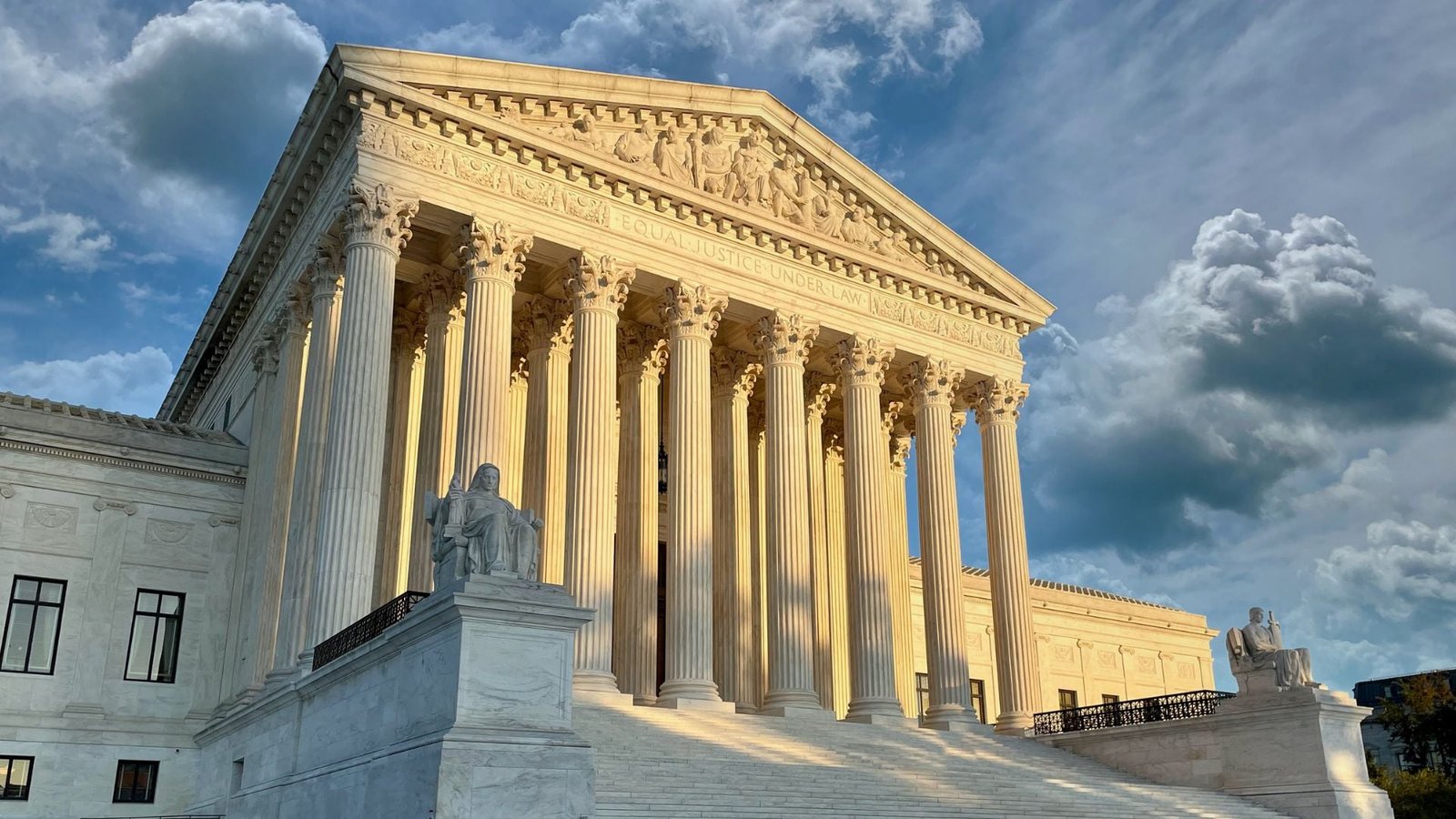
The U.S. Supreme Court has temporarily restored online access to the abortion drug mifepristone.
The ruling comes in response to an emergency request from manufacturers Danko and GenBioPro to overturn Friday’s ruling by a federal appeals court in New Orleans that banned mifepristone from being prescribed over the phone and sent by mail in the United States.
The Supreme Court’s action is an “administrative stay,” giving the court time to consider the request before making a decision. This measure will remain in effect until May 11th and will not disrupt treatment for patients with scheduled appointments. Separate requests from mifepristone manufacturers were filed Saturday afternoon and evening.
The order from the lower appellate court was in response to a lawsuit filed by the state of Louisiana seeking to reinstate the FDA’s requirement that mifepristone be prescribed only through an in-person consultation. The order was a temporary measure to block online distribution of the pills until the lawsuit is resolved.
The in-person requirement was lifted by the FDA in 2021 during the coronavirus pandemic. Louisiana argues that the availability of mifepristone online undermines its 2022 abortion ban.
Danko and GenBiopro said in an emergency filing (PDF) to the Supreme Court on Saturday that the decision by the Court of Appeals’ three-judge panel was “unprecedented.” GenBioPro says:
“The Fifth Circuit’s order created regulatory confusion,” GenBioPro said in a filing (PDF), referring to the lower court action in New Orleans.
“This order is deeply disturbing to pharmaceutical sponsors, healthcare professionals, patients, and the public who depend on FDA’s exercise of scientific judgment and the orderly operation of the nation’s complex drug regulatory system,” the Las Vegas company wrote.
GenBioPro added that women in rural areas or those with “transportation, child care, or occupational constraints” have difficulty meeting health care providers in person. These people currently lack access to “time-sensitive medical care” and face “associated health risks,” the company said.
About a quarter of abortions in the United States are performed via telemedicine, and mifepristone is used in about 60 of those procedures.
Mifepristone is typically used to block the hormone progesterone, causing detachment of the embryo and ending the pregnancy at up to 10 weeks. A second drug, misoprostol, is then used to cause contractions.
In April 2023, the Fifth Circuit Court of Appeals issued a decision banning mail delivery of the pills and limiting the period of use of mifepristone during pregnancy from 10 weeks to 7 weeks. The ruling matched a controversial 2022 Supreme Court decision that threatened women’s reproductive health and overturned the landmark case Roe v. Wade.
However, in June 2024, the Supreme Court upheld mail-order access for mifepristone that had been established by the FDA three years earlier.
Last September, the FDA and HHS committed to reviewing the risk evaluation and mitigation strategy (REMS) for mifepristone. This is a drug-specific prescribing protocol required by the FDA to ensure safe use. That review is underway.
