


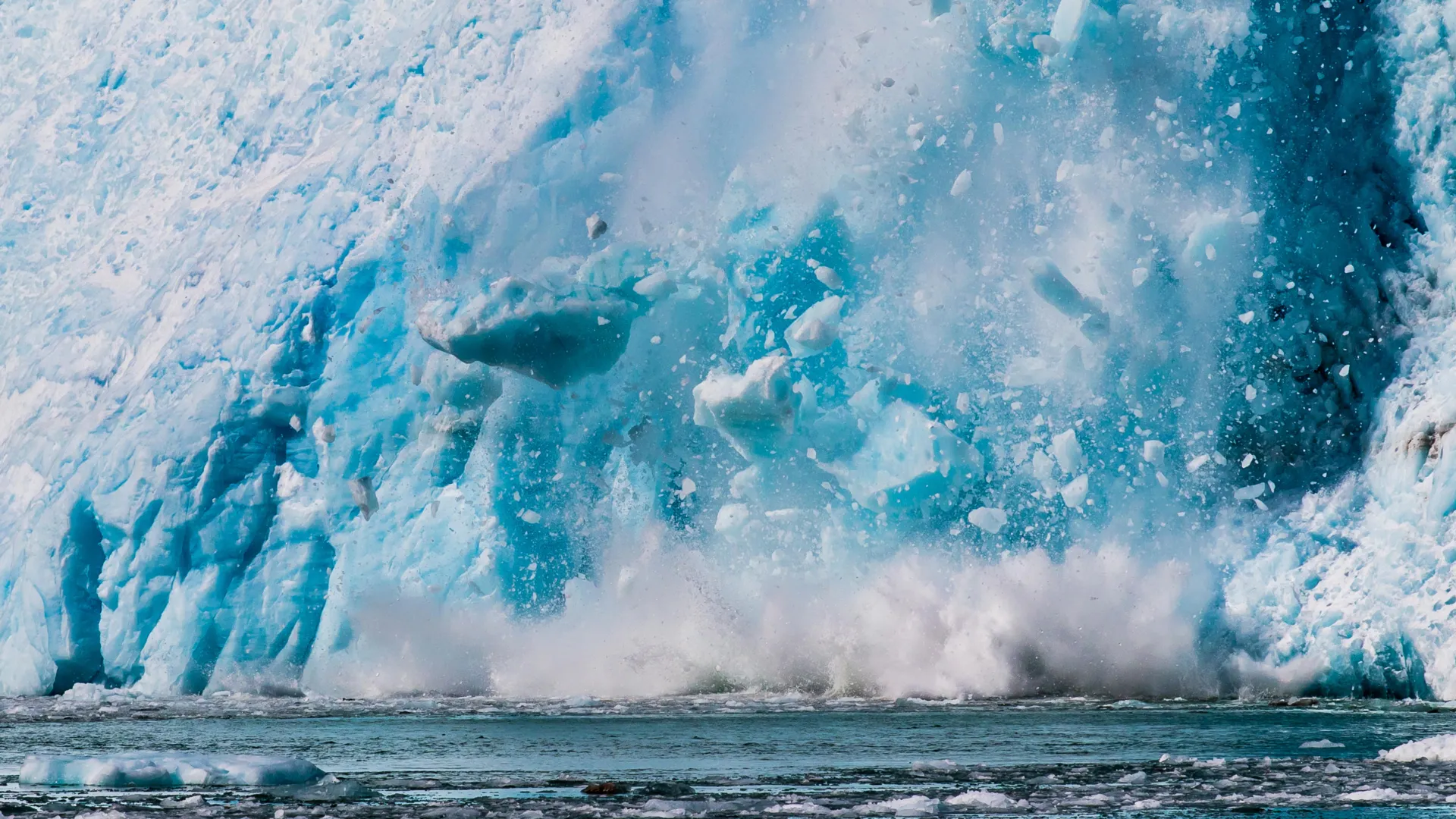
A new study led by the University of Barcelona and published in 2016 reveals that climate change is dramatically changing the way Greenland’s ice sheet melts. nature communications. Researchers found that extreme melt events are now occurring more frequently, covering larger areas, and producing significantly more meltwater than in the past.
Since 1990, the surface area affected by these extreme events has increased by approximately 2.8 million km2 every decade. At the same time, the amount of water released from melting ice is rapidly increasing. Between 1950 and 2023, extreme melt events produced an average of 12.7 gigatonnes of water per decade. Since 1990, this figure has jumped to 82.4 gigatonnes per decade, a six-fold increase.
Record-breaking melt events are becoming more common
Most of the most intense melting episodes have occurred in recent decades. Seven of the 10 most extreme events on record have occurred since 2000, including major events in August 2012, July 2019, and July 2021. These events stand out because of the lack of comparable dynamic precedent, highlighting how abnormal the current situation has become.
The study also shows that each extreme event is currently producing more snowmelt than similar events in the past. When examining similar anticyclonic and cyclonic air mass circulation cases since 1990, meltwater output during these episodes increased by 25% compared to the period 1950–1975. When all extreme events are considered together, the increase is as high as 63%. This indicates a strong thermodynamic effect, meaning that rising temperatures are accelerating melting beyond what can be explained by atmospheric circulation alone.
Northern Greenland emerges as a major hotspot
Northern Greenland is currently one of the regions most affected by these changes, emerging as a major hotspot for extreme melting. Looking ahead, projections based on scenarios with high greenhouse gas emissions suggest that the most severe meltwater anomalies could increase by up to three times by the end of this century.
New method reveals factors behind melt intensification
The study was led by Josep Bonsoms, a postdoctoral researcher and professor at the Department of Geography at the University of Barcelona, with contributions from Marc Oliva, also a professor in the same department. The study was carried out as part of the Antarctic, Arctic and Alpine Environments (ANTALP) research group, which investigated extreme melt events recorded between 1950 and 2023.
To better understand the causes of these changes, the research team used a new classification method that combines types of anticyclonic and cyclonic air mass circulation with regional climate models. This approach allowed researchers to separate thermodynamic effects associated with atmospheric warming from dynamic effects associated with atmospheric circulation patterns.
Global impact and growing strategic importance
These discoveries take on added weight as the world’s attention increasingly focuses on Greenland due to rapid environmental change and its geopolitical implications. “Rapid changes in ice sheets will not only impact the global environment, including potential sea level rise and changes in ocean circulation, but will also place the Arctic at the center of new strategic, economic and territorial dynamics,” said Bonsoms, lead author of the paper.
Understanding the processes that intensify extreme melt is important for predicting future risks and forming informed policy decisions. This research is part of the GRELARCTIC project led by the UB ANTALP research group with Marc Oliva as principal investigator and was supported by an award from the ICREA Academia Programme.
